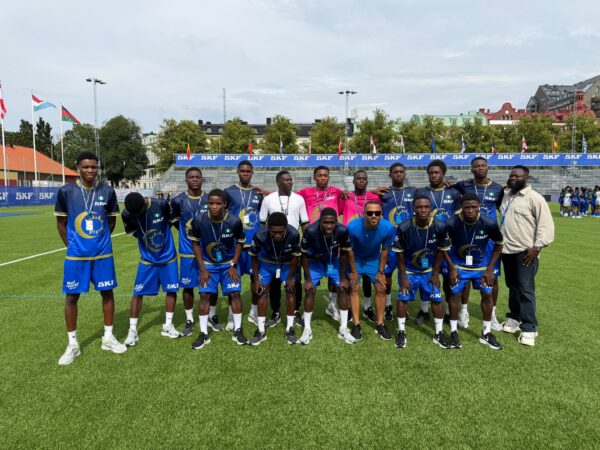

Malawi’s James Woods: business diplomacy feature at Gothia Cup in Sweden
Around 1,900 teams from some 75 countries have gathered in this Swedish port city for the Gothia Cup, the largest youth football tournament in the world. Among those following it this week is James Woods, a Malawian strategic adviser and a diplomat who has spent a decade working at the intersection of governance, sport, media, resources and investment, and who argues that the tournament offers a lesson in how his continent loses money.
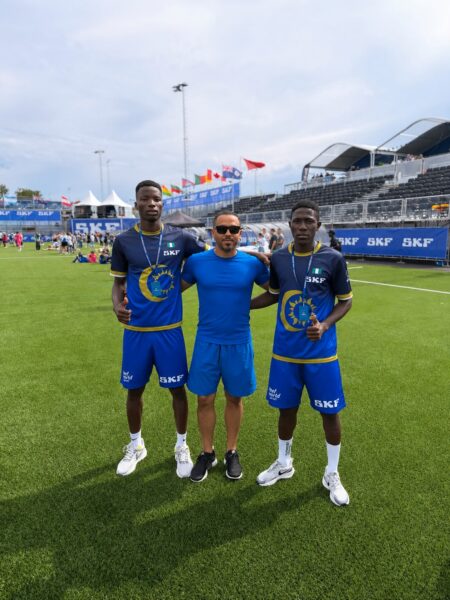
Woods is in Gothenburg on assignment, advising a client — an ultra-high-net-worth family with interests in professional sport.
In an interview with NyasaTimes on the sidelines of the tournament, he set out a case connecting the transfer market on display in Sweden to the mineral politics that occupy much of his advisory work.
Held annually in Gothenburg since 1975, the Gothia Cup is more than a youth competition. On the organisers’ own figures, close to 5,000 matches are played each year across more than 110 pitches, with over 1.3 million players from more than 150 countries having taken part since it began.
Beyond its scale, the tournament has become one of football’s more important marketplaces — a week-long trade fair at which academies audition their best young players and scouts from professional clubs compile shortlists.
Alan Shearer played here in 1985, Andrea Pirlo in 1990, Xabi Alonso in the years that followed. More recently, African academies, particularly from Nigeria, have used the event to place their graduates in front of European recruiters.
For Woods, it is this machinery, rather than the football itself, that matters.
“Everything you need to understand about Africa’s economic problem is on this pitch, if you know where to look,” he said. “Watch where the value goes.”
He draws a direct parallel between the economics of youth football and the mineral trade.
Under the model operated by leading European clubs, talent identification is only the first stage of a pipeline running through coaching, sports science, medical support, competition and commercial development, ending in the sale of a developed player for a fee that can reach tens of millions of pounds.
The raw ability may originate anywhere; the value is added, and captured, wherever the developing takes place.
For the exporting country, the return is typically limited to training compensation or a transfer fee — much as Africa, home to close to a third of the world’s critical mineral reserves, exports the bulk of its cobalt, lithium and rare earths as raw ore, while the processing that multiplies their worth happens elsewhere.
“A gifted boy from Lilongwe, Thyolo or Mzimba is treated by the market as a raw resource,” Woods said.
“The talent is African, grown on our own pitches. But the coaching, the sports science, the medical care, the competition, the branding, all of it happens elsewhere. By the time the player has a market price, that price belongs to someone else.
“The country that produced him, if it is lucky, receives a transfer fee. And a transfer fee is to football what a mineral royalty is to mining. It is the smallest possible slice of the fortune, paid to the party that did the least to capture it.”
The comparison turns on the concept of beneficiation — the mining-industry term for processing raw material into higher-value product before export, and long a stated ambition of African resource policy.
Woods argues football has an exact equivalent in the development of a young player, alongside the image rights, intellectual property and commercial identity that continue generating income long after a transfer is completed.
In both industries, he contends, the decisive assets are the ones exporting nations tend not to own: reliable data, credible certification, and legal title to the value their raw material creates.
Woods’s interest in the transfer economy is not purely academic. He has worked in the professional game for much of the past decade, according to people familiar with his work, on the acquisition and running of clubs across Europe, the Gulf and Africa, on player moves into leading European leagues, and on the image-rights and commercial agreements surrounding footballers who have gone on to appear at the World Cup and the Africa Cup of Nations — much the same territory scouts and agents are working in Gothenburg this week.
The family he advises holds interests across roughly seventeen countries spanning energy, petroleum, mining, critical minerals, shipping, hospitality, agriculture, logistics, telecommunications and finance, and has more recently expanded into sport.
He framed the wider question as one of industrial strategy rather than sentiment, arguing that a country wishing to retain the value of its talent must build the same institutions a serious mining nation builds: academies and data systems, medical and coaching pathways, and the legal ownership required to finish an asset at home rather than export it raw.
“Malawi does not lack talent. Anyone who has watched a Sunday game on a township pitch knows that,” he said.
“What it lacks is the infrastructure to finish what it produces, and the commercial architecture to hold on to the value once it exists. Build that, and the transfer fee stops being charity. It becomes a price, negotiated between people who both understand what is on the table. That is the whole difference between a country that supplies and a country that captures.”
“We keep exporting our best while it is still raw,” he said, “whether it is a mineral in the ground or a fourteen-year-old with a left foot the whole neighbourhood already talks about. Until we learn to keep the value at home long enough to price it, we will keep calling the royalty a victory.”