The Malawi Enterprise Development Fund (MEDF) has recovered K8 billion from a massive K240 billion loan book in just two months—but the figures expose a much deeper problem: over K232 billion remains unpaid, and the fund is now turning to legal enforcement and asset seizures to recover the rest.
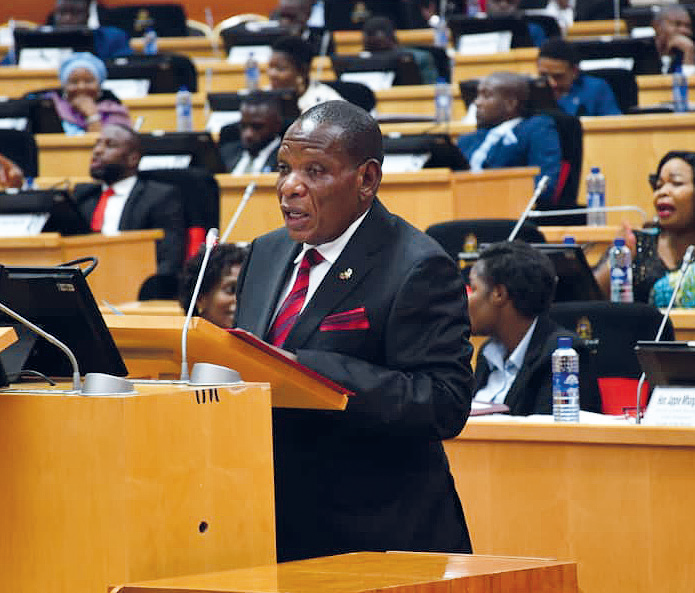
Mwanamveka: Launched MEDF
The recovery followed a 60-day ultimatum issued in early February 2026, where borrowers were warned to settle their debts or face serious consequences. That deadline expired on April 6, with MEDF confirming that only 3.33 percent of the total loan portfolio had been recovered.
Put simply, for every K100 owed, only about K3 has been paid back—leaving the overwhelming bulk of the loans still in arrears.
MEDF spokesperson Elizabeth Mapemba said the K8 billion was collected during the campaign period, but made it clear that the fund is now escalating its recovery efforts.
“The fund is implementing various loan recovery enforcement measures, including collateral confiscation and, where necessary, legal action,” she said.
This means borrowers who pledged assets—such as land, vehicles, or business property—risk losing them if they fail to repay. In cases where collateral is not sufficient or disputes arise, the fund is expected to pursue court action to recover the money.
But while MEDF is presenting the K8 billion recovery as progress, economists say the numbers tell a more troubling story.
Economist Marvin Banda did not hold back, describing the recovery rate as deeply disappointing.
“Recovering 3.33 percent of roughly K240 billion is not a success story. It is a reminder of how deep the politically tied institutional problem runs,” he said.
His assessment points to structural weaknesses in how government-backed loans are issued and managed. Over the years, such funds have often been criticised for weak loan assessments, poor follow-up, and political interference—factors that can encourage a culture of non-repayment.
However, Banda also noted something important: the K8 billion recovery in just two months shows that money can be collected when pressure is applied.
“When pressure is applied, money can be recovered. However, it also reveals something more uncomfortable; that it’s not that many borrowers were unable to pay, they were simply unwilling,” he said.
That observation shifts the issue from capacity to discipline. It suggests that a significant number of borrowers may have treated the loans as grants rather than obligations—expecting little or no enforcement.
The scale of the problem becomes even clearer when looking at how widely the loans were distributed. By December 2025, about 377,460 Malawians had accessed financing from MEDF (formerly Neef). While this shows the fund’s reach, it also highlights the challenge of managing repayment across such a large and diverse group of borrowers.
The legal path MEDF is now taking is therefore not just about recovering money—it is about restoring credibility. By moving to confiscate collateral and initiate court proceedings, the fund is trying to send a strong message that these loans must be repaid.
But experts argue that enforcement alone will not fix the problem. Banda says MEDF must be protected from political influence and operate more like a disciplined financial institution.
“Development finance is not charity; it must be anchored in proper appraisal, realistic cash-flow assessments and disciplined follow-up,” he said.
He added that borrowers also need better support—such as business training and technical guidance—to improve their ability to repay, while those who repay on time should be rewarded to encourage a culture of compliance.
What is now unfolding at MEDF is more than a recovery exercise. It is a stress test of Malawi’s entire model of government-backed lending. The numbers are stark: K8 billion recovered, K232 billion still outstanding.
Whether the ongoing legal actions and enforcement measures will close that gap—or simply expose deeper systemic failures—remains to be seen.
Follow and Subscribe Nyasa TV :
Follow us in Twitter
2 replies on “MEDF Recovers K8bn Out of K240bn: Inside the Weak Recovery, K232bn Still Unpaid and the Legal Fight Ahead”