

Mhango reveals new China deal to finally complete stalled judicial complex
Minister of Justice and Constitutional Affairs Charles Mhango has revealed government has signed a fresh supplementary agreement with the Chinese government to finally revive the long-stalled judicial service complex project sitting directly opposite Parliament in Lilongwe.
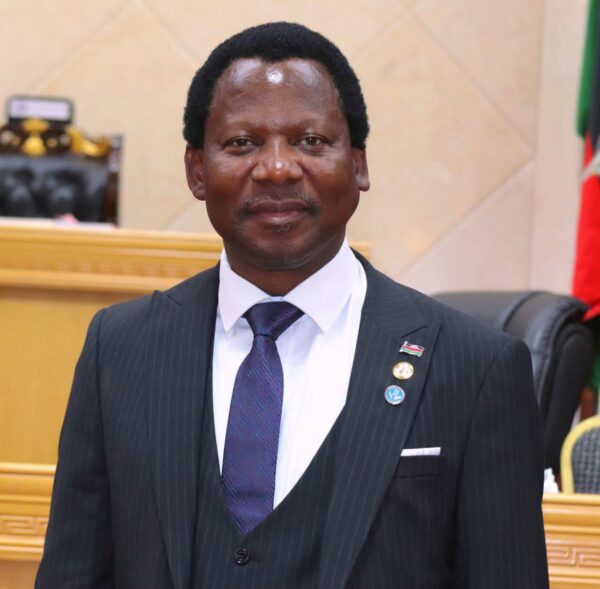
Speaking candidly in Parliament on Monday, Mhango didn’t mince his words in describing the site’s sorry state, branding it a years-long “eyesore” plagued by incomplete fencing and overgrown trees despite its prominent location in the heart of the capital.
The minister confirmed the new agreement dramatically increases the project’s value to approximately 290 million Chinese Yuan, with the additional funding required to account for years of delays and design changes that occurred under the two previous agreements.
“Under this supplementary agreement, the judicial service complex will be completed, and the project will start in earnest once the Malawi government has fulfilled its obligations,” Mhango told MPs.
He explained the project comprises three key components: the main judicial complex opposite the National Assembly, the official residence of the Chief Justice — which will be relocated from Blantyre to Lilongwe — and an entirely new judicial training institute designed to serve magistrates, judges and other judicial staff.
But before Chinese contractors can move in to resume construction, Mhango revealed government must first take responsibility for securing the site by completing its perimeter fence — a seemingly simple task that has nonetheless proven a stubborn obstacle.
The minister pointed to local contractor Terra Stone, who had been working on the fence, revealing the company is still owed money and has been unable to finish the job as a result.
He confirmed the Ministry of Justice is now actively engaging with the Minister of Finance to release the necessary funds so Terra Stone can finally complete the perimeter works.
“Once the Malawi government pays the contractor to secure the site, then the Chinese government is coming with their contractors to take over the site and start construction in earnest,” he explained.
Beyond the high-profile judicial complex saga, Mhango used his address to raise fresh alarm over the escalating vandalism of public infrastructure nationwide, citing troubling examples along the M1 road, as well as culverts and railway lines being stripped of valuable metal for illegal resale.
He warned the growing trend is actively undermining national development efforts and disrupting essential service delivery across the country.
In response, Mhango revealed the Ministry of Justice is now working closely with the Ministry of Local Government and Rural Development, the Ministry of Transport and Public Works, and the Ministry of Homeland Security to draft an entirely new law specifically targeting the vandalism of public infrastructure.
“We cannot use the laws that are there at the moment; we must provide for stiffer punishment, robust investigation, robust control and protection of our public infrastructure,” he insisted, signalling government’s intent to crack down hard on the growing problem.
Mhango confirmed the proposed bill will be brought before Parliament once the relevant proposals have been finalised, as government looks to close the legal loopholes currently allowing widespread infrastructure theft to go largely unpunished.
Follow and Subscribe Nyasa TV :