

Mhango says Malawi cannot borrow its way into industrialisation
Malawi’s banks are still lending, but they are lending less to the sectors that produce goods, create jobs and earn foreign exchange, according to Don Consultancy Group (DCG).
Citing Reserve Bank of Malawi (RBM) figures, the group says annual private sector credit growth slowed to 23.7 per cent in August 2026, down from 26.8 per cent in July and well below the 40.6 per cent recorded in August 2025.
The total stock of private sector credit rose by K5.8 billion in August, compared with K54.9 billion in July, and now stands at about K2.6 trillion.
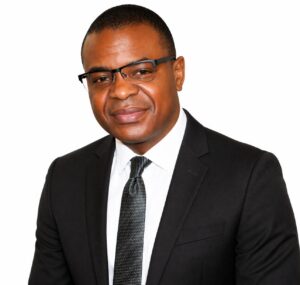
DCG chief economist and executive director Chifipa Mhango said the more pressing question was who was getting the money.
Based on the RBM data, he said, productive sectors were repaying more than they were borrowing.
Manufacturing recorded net repayments of K33.1 billion in August, the largest of any sector. Agriculture, forestry, fishing and hunting recorded net repayments of K20.7 billion, financial services K18.8 billion, construction K5.6 billion, real estate K359 million, and mining and quarrying K121 million.
Mhango said the manufacturing figure was a concern, because factories need working capital and long-term finance to buy machinery, raw materials and to expand.
“When manufacturers reduce their borrowing, it may reflect several underlying developments, including high financing costs, subdued demand, tighter lending conditions, reduced investment appetite or businesses prioritising debt repayment,” the statement says.
The group cautions that repayments should not automatically be read as a sign of distress or falling output, but says the trend warrants closer investigation.
“Malawi cannot realistically pursue industrialisation without ensuring that its manufacturing enterprises have access to affordable and appropriately structured financing,” Mhango said.
On agriculture, Mhango warned that the shift from subsistence to commercial farming, which needs irrigation, machinery, seeds, storage and agro-processing, will stall without suitable finance.
Mining’s net repayments of K120.7 million, he said, raised questions about whether the financial system is ready to support the mining value chain.
Credit is still expanding, but not to producers. Community, social and personal services rose by K45.7 billion, wholesale and retail trade by K14.2 billion, transport and communications by K3.8 billion, restaurants and hotels by K2.4 billion, and electricity, gas, water and energy by K720 million.
Individual and household loans rose by K45.8 billion, and mortgages by K1.7 billion.
Mhango said there was nothing wrong with financing households and trade, but warned that in an economy short of forex, borrowing for consumption without matching domestic production can increase demand for imports and add pressure on reserves.
“The critical question is whether Malawi’s banking system is allocating sufficient financing towards activities that increase domestic production, strengthen value chains, generate exports and create sustainable employment,” the statement says.
The group argues Malawi should judge its banks by what credit produces, not by credit growth alone.
It calls for a stronger partnership between commercial banks, development finance institutions, government and the RBM, including credit guarantees and blended finance for long-term projects, and for the RBM to monitor productive-sector lending more closely.
“Malawi cannot borrow its way into industrialisation if its financial system does not adequately finance the industries, farms and enterprises that produce the goods the country consumes and exports,” Mhango said.
The RBM has been approached for comment and has not yet responded.
Follow and Subscribe Nyasa TV :