

Most Malawian Households Living Hand-to-Mouth as Savings Collapse, Survey Reveals
A new national survey has painted a grim picture of the economic reality facing most Malawians, revealing that the overwhelming majority of households are living hand-to-mouth, unable to save, and increasingly vulnerable to poverty and economic shocks.
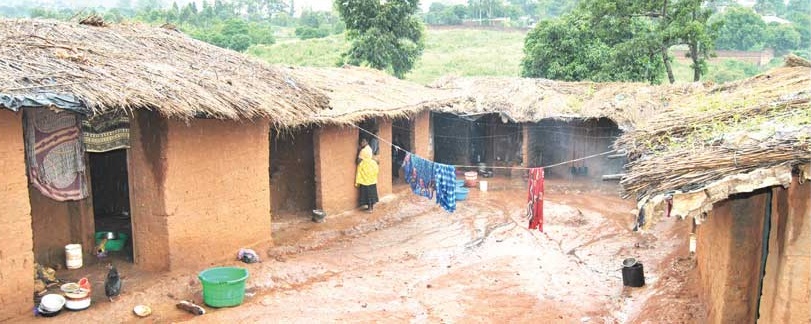
The Sixth Integrated Household Survey (IHS6), published by the National Statistical Office (NSO), shows that only 3.6 percent of households earn enough to put money aside for the future, exposing a severe lack of financial security across the country.
According to the findings, 41.3 percent of households earn just enough to cover their daily expenses, while 25.4 percent say their incomes are so inadequate that they are forced to borrow simply to survive. Combined, the figures suggest that nearly two-thirds of Malawian families have little or no financial buffer to withstand emergencies or rising living costs.
The report further indicates that 75.8 percent of households consider themselves poor or very poor, underscoring the depth of hardship confronting ordinary citizens.
The situation is widespread across both rural and urban areas. In rural Malawi, 40.4 percent of households reported that their income cannot adequately cover expenses, while the figure rises to 45.3 percent among urban households.
Economic governance officer Agness Nyirongo of the Centre for Social Concern warned that the inability to save is one of the clearest signs of deep economic vulnerability because savings help families weather crises and invest in better futures.
“That growth has not translated into meaningful income gains for most households. At the same time, inflation continues to erode purchasing power,” she said.
“The true test of progress is whether ordinary citizens are able to afford decent lives, save for the future and withstand economic shocks without falling deeper into poverty.”
Economist Milward Tobias argued that Malawi’s sluggish economic growth has failed to lift families out of poverty despite the existence of policies intended to address the problem.
He said per-capita income growth has remained close to zero—and at times negative—meaning many households are becoming poorer as income inequality widens.
“The gap is in the lack of decisive and capable leadership to implement what is available,” Tobias said.
Scotland-based Malawian economist Velli Nyirongo said the findings demonstrate that poverty in Malawi is increasingly driven not just by unemployment but by low and unstable incomes, weak savings capacity and inadequate protection against financial shocks.
“If most households are surviving day-to-day and one in four must borrow for basic needs, policy should focus on raising earnings while reducing vulnerability,” he said.
Beyond income challenges, the survey exposes severe deprivation in other aspects of daily life. It found that 67 percent of households lack adequate food, 56.4 percent lack sufficient access to healthcare, and 54.6 percent do not have adequate housing.
The report also identifies soaring prices as one of the biggest pressures on families. It shows that 86.4 percent of households were affected by unusually high food prices, 73.6 percent faced elevated agricultural input costs, and 49.9 percent were impacted by drought.
Meanwhile, World Bank data indicate that Malawi’s economy has grown by an average of just 2.2 percent, well below the estimated 10.6 percent annual growth rate considered necessary for the country to attain lower-middle-income status by 2030.
The findings present a troubling snapshot of an economy where many families are trapped in a cycle of survival, with little opportunity to build savings, accumulate assets or escape poverty.
Follow and Subscribe Nyasa TV :