

Mwanamveka calls for fiscal-monetary co-ordination scross COMESA
Malawi’s Finance Minister Joseph Mwanamveka has urged closer co-ordination between fiscal and monetary authorities across the Common Market for Eastern and Southern Africa (COMESA), arguing that aligned policies are vital to macroeconomic stability in an uncertain global economy.
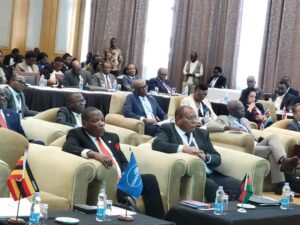
Speaking at the opening of the 2026 COMESA Committee of Governors of Central Banks Symposium in Lilongwe, Mwanamveka said governments and central banks must pursue complementary policies to contain inflation, keep debt sustainable and support long-term growth.
The symposium is jointly organised by COMESA and the Reserve Bank of Malawi, and comes as member states wrestle with geopolitical tensions, supply-chain disruptions and volatility.
Mwanamveka said finance ministries had an equal role to play alongside central banks, in fiscal discipline, debt management and structural reform.
He said shortfalls in meeting macroeconomic convergence targets had led COMESA finance ministers to introduce a peer-review mechanism to strengthen accountability.
He pointed to the bloc’s untapped trade. Intra-COMESA exports rose to US$14.7 billion in 2025 from US$12.8 billion in 2021, but trade within the bloc still accounts for only a small share of its total exports.
He also flagged the large informal economy, which provides jobs but limits domestic revenue and weakens the reach of fiscal and monetary policy.
Mwanamveka highlighted regional payment initiatives, including the COMESA Regional Payment and Settlement System (REPSS) and the Digital Retail Payment Platform (DRPP), which he said could cut transaction costs and ease cross-border trade for small and medium-sized firms.
Reserve Bank of Malawi governor George Partridge said policymakers were increasingly discussing monetary integration, which he described as a long-term goal embedded in COMESA’s founding vision.
“We have already started talking about monetary integration,” he said.
Partridge said greater harmonisation of macroeconomic and monetary policy would be needed for deeper financial integration, and described a future monetary union as the ultimate objective.
He warned that economies could no longer operate in isolation, given how shocks spread across borders, and argued that a co-ordinated regional response would work better than fragmented national policies.
He also said the Pan-African Payment and Settlement System (PAPSS) was operational, with several Malawian commercial banks taking part.
Malawi has chosen to implement it through commercial banks before considering broader central bank-led arrangements.
The symposium brought together central bank governors and senior policymakers from across the 21-member bloc.
Follow and Subscribe Nyasa TV :