

Mwanamvekha: Malawi needs billions in private capital for infrastructure
Malawi’s Public Private Partnership Commission (PPPC) has unveiled a raft of major infrastructure projects worth billions of dollars, as government looks to private sector financing to unlock the country’s development ambitions.
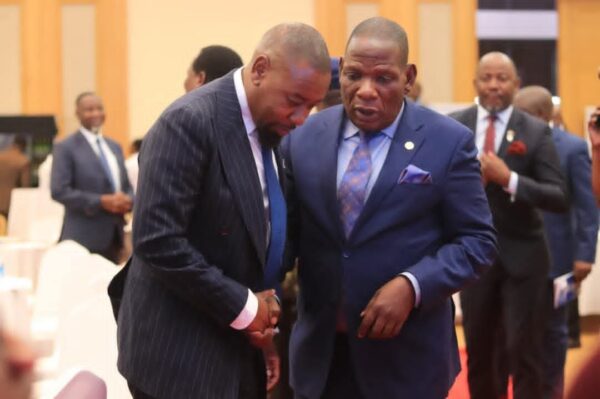
Presenting at the Infrastructure Financing and Partnership Forum in Lilongwe, PPPC chief executive officer Arthur Nanthuru said the opportunities span energy, mining, education, transportation and agriculture, among other sectors.
Among the flagship schemes, Nanthuru said government plans to double electricity access from the current 26% to 50% by 2030, driven in part by the Fufu and Kholombidzo hydropower stations, valued at $702 million (K1.2 trillion) and $500 million (K875.5 billion) respectively.
Other projects in the pipeline include the $968 million (K1.67 trillion) Chilumba–Mbeya railway line, $1 billion (K1.7 trillion) in mining investment, and $165 million (K289 billion) earmarked for education — specifically, accommodation for public university students and staff housing.
Speaking at the same event, Minister of Finance, Economic Planning and Decentralisation Joseph Mwanamvekha stressed the need for a collaborative approach to mobilising resources for the pipeline of public infrastructure projects. He said energy and transportation were currently the sectors most in need of urgent investment to transform people’s lives sustainably, at a time when government remains constrained by heavy debt and high expenditure obligations.
The forum, held under the theme “Mobilising private capital for sustainable infrastructure development,” drew several ministers, senior government officials, financial sector representatives and development partners.
Speaking as guest of honour the previous evening at the PPPC Financing Forum at the Bingu International Convention Centre (BICC) in Lilongwe, Mwanamvekha called for stronger partnerships between government, the private sector, development partners and communities to secure sustainable infrastructure financing, describing infrastructure as critical to achieving the Malawi 2063 vision and its First 10-Year Implementation Plan (MIP-1).
He identified key priority areas including power generation, roads, railways, industrial parks, export processing zones, airports, inland water transport and access to the sea.
Mwanamvekha acknowledged that Malawi faces significant obstacles, including limited fiscal space, high borrowing costs and perceived investment risks.
However, he said Public-Private Partnerships, blended financing models and innovative instruments such as infrastructure bonds and green financing could help unlock the private capital needed to close the gap.
The event was attended by Minister of Information Dr Shadreck Namalomba, Charles Mhango, Deputy Minister of Health Charles Chalambula, Minister of Energy Jean Mathanga, Deputy Minister of Education Francis Folley,
FDH Bank CEO William Mpinganjira, Standard Bank Malawi CEO Philip Madinga, Secretary to the Treasury Dr Cliff Chiunda, and other senior government officials and stakeholders.
Follow and Subscribe Nyasa TV :