

Nankhuni: from ‘errand boy’ to the Bar — a story of resilience
There is a particular kind of story that circulates on Malawian social media every so often — not a political scandal, not an economic crisis, but something smaller and, in its way, more affecting: an ordinary person’s account of an extraordinary personal turning point.
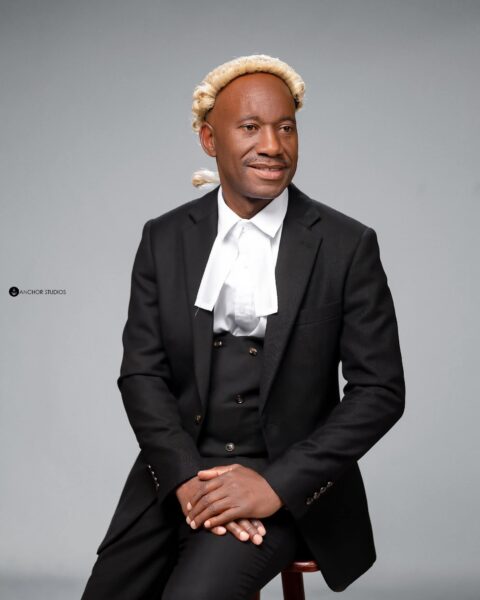
This week, that story belongs to Ian Nankhuni, whose Facebook post describing his admission to the legal profession has drawn attention far beyond his own circle of friends and family.
Nankhuni was formally admitted to practise law in Malawi’s Supreme Court of Appeal, the High Court and all subordinate courts, in a ceremony presided over by Chief Justice Rizine Mzikamanda.
For most newly admitted lawyers, such an occasion would merit a brief note of congratulation and perhaps a photograph in academic robes.
Nankhuni chose instead to frame his admission as the resolution of a much longer and more personal struggle.
“My story is a story of shame, struggle, tears, stagnation, but I sum it as story of resilience,” he wrote, in a post that has since been shared widely.
It is a striking admission for a professional milestone typically presented in more triumphant terms — and it is precisely that candour which appears to have resonated with readers.
Central to Nankhuni’s account is a contrast between how others once perceived him and how he was seen by those closest to him.
“While many saw in me an errand boy, Late Ralph Kasambala and my family saw a legal practitioner in me, inspite of numerous challenges they supported my dream,” he wrote.
The reference is to the late Ralph Kasambala, a senior counsel whose backing, according to Nankhuni, was instrumental in helping him pursue a career in law despite the doubts of others around him.
It is a familiar theme in stories of professional achievement against the odds — the gap between public perception and private belief, and the role that a small number of committed individuals can play in bridging it.
What makes Nankhuni’s telling distinctive is his refusal to sanitise the difficulty of the path. He does not describe a smooth trajectory from ambition to accomplishment, but one marked, in his own words, by shame and stagnation as well as eventual success.
His description of the moment of admission itself carries a similar intensity.
“I have cheated the Devil I have walked on water, Glory to God,” he wrote — language that owes as much to testimony as to conventional professional announcement, and which situates his achievement within a broader framework of faith and perseverance rather than simply career progression.
Nankhuni dedicated the milestone to the memory of Ralph Kasambala SC, describing him by the honorific “Omega OC” in his post, a marker of the esteem in which he evidently held his mentor.
The tribute underscores a dimension of legal life in Malawi, and in many jurisdictions with a strong tradition of pupillage and mentorship, that rarely receives public attention: the extent to which entry into the profession depends not only on individual effort but on the willingness of established practitioners to back candidates whom the wider public, or indeed the profession itself, might otherwise overlook.
Nankhuni closed his post with a note of forward-looking ambition rather than closure: “See you on top of the mountain” — a suggestion that admission to the Bar marks a beginning rather than an endpoint.
Stories of individual perseverance of this kind rarely make conventional news in the way political or economic developments do, and Nankhuni’s post was, on its face, a personal reflection rather than a statement intended for wide public consumption.
Yet its circulation points to something about how Malawians engage with narratives of professional achievement: less through the formal announcements of institutions, and more through the personal, often unpolished accounts of individuals willing to describe not just what they have accomplished, but what it cost them to get there.
For Nankhuni, admission to practise before Malawi’s highest courts represents the formal conclusion of a specific legal and academic process.
But as his own words make clear, the significance he attaches to the moment extends well beyond the courtroom, to a longer and more private reckoning with doubt, support and, ultimately, resilience.
Follow and Subscribe Nyasa TV :