

Navicha calls for economic empowerment to combat gender-based violence
Women’s economic dependence on their spouses is leaving many vulnerable to gender-based violence (GBV), Minister of Gender, Children and Social Welfare Mary Navicha has said, calling for greater investment in initiatives that promote women’s financial independence.
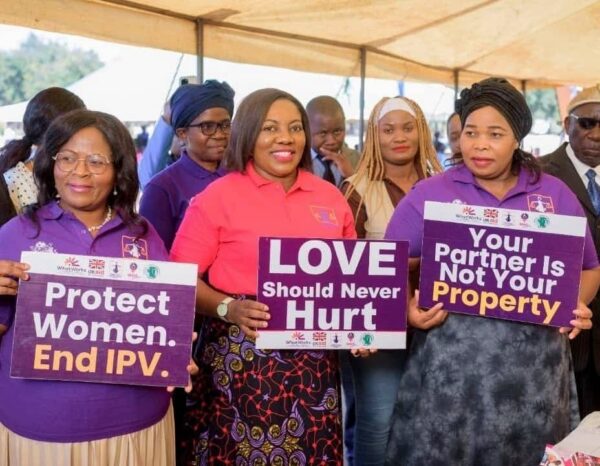
Navicha made the remarks in Balaka on Wednesday after touring activities under the Pamodzi Kuthetsa Nkhanza (PKN) project, where she said poverty and lack of economic empowerment remain among the factors making it difficult for some women to escape abusive relationships or report cases of violence.
She commended organisations implementing the initiative for complementing government efforts to prevent and respond to GBV, while urging them to incorporate economic empowerment components into their interventions.
“Many women continue to suffer physical, emotional and economic abuse because they depend on their husbands as the primary breadwinners, making it difficult for them to report abuse or leave violent relationships,” Navicha said.
She said women who have their own sources of income are better placed to make decisions, seek support and protect themselves from violence.
“When women have their own sources of income, they are better positioned to make decisions, report abuse and protect themselves from violence. Economic empowerment must, therefore, be part of every intervention aimed at ending GBV,” she said.
Meanwhile, Women’s Legal Resources Centre (WORLEC) Executive Director Maggie Kathewera Banda said a baseline survey conducted at the start of the PKN project found that 60 percent of married women in the project’s implementation areas had experienced GBV — significantly higher than the national prevalence rate of 42 percent.
Kathewera Banda said the figure underscored the need for intensified interventions to address harmful social norms, unequal power relations and poverty. She said the project had helped strengthen awareness of GBV prevention and response, resulting in increased reporting of cases to relevant authorities.
“The increase in reporting is encouraging because it demonstrates that survivors are becoming more aware of their rights and have confidence in the community structures and institutions established to support them,” she said.
The PKN project is being implemented in Senior Traditional Authorities Nsamala and Nkaya, as well as Sub Traditional Authority Nyanyala in Balaka, by a consortium comprising WORLEC, Girls Empowerment Network (GENET), and Human Rights for Women and Girls with Disabilities, with support from the Foreign, Commonwealth and Development Office (FCDO).
The project seeks to reduce GBV by strengthening community-based prevention mechanisms, improving access to justice and support services for survivors, and empowering communities to challenge social norms that perpetuate violence against women and girls.
Follow and Subscribe Nyasa TV :