

Of Judge Mtambo’s refusal to recuse himself in Mphwiyo shooting case: Law-journal column on Nyasa Times
Th doctrine of judicial recusal states that a judge may recuse himself from proceedings if he decides that it is not appropriate for him to hear a case before him. A judge must therefore step down in circumstances where there appears to be bias or ‘apparent bias’.
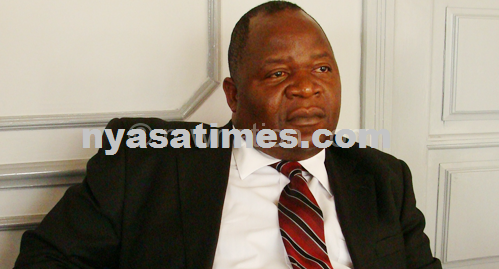
The test for determining apparent bias was set in the House of Lords decision in Porter v Magill [2002] 2 AC 357 at par 102, and states as follows: ‘‘whether a fair-minded and informed observer, having considered the facts, would conclude that there was a real possibility that the judge was biased, the judge must recuse himself’’. It has to be stressed that the test is to be applied having regard to all the facts of the case in question.
The judiciary must ensure that it remains independent at all times and that it is seen to be independent of any influence that might reasonably be perceived as compromising its ability to judge cases fairly and impartially. ‘‘Not only must Justice be done; it must also be seen to be done.’’ This was stated in a leading English case R v Sussex Justices, Ex parte McCarthy [1924] 1 KB 256. The case set the precedence in establishing the principle that mere appearance of bias is sufficient to overturn a judicial decision.
The main reasoning behind judicial impartiality is so that the public at large can have confidence that when they appear before a judge their case will be heard fairly and impartially. The legal system, any legal system, is and must be a central social good in any successful society, state. Thus its substantive, as well as apparent, integrity, without question, is crucial. It is for this reason that the judiciary must do everything possible to maintain the wider society’s trust and confidence in the justice system. And even more so in the justice system in Malawi where there are long-running whispers of ‘judicial influence’ or ‘judge shopping’.
Kumwembe’s assertions
It has been reported that Kumwembe accused Justice Mtambo of apparent bias because of his history with one of the accused and that Justice Mtambo already treats Kumwembe and his co-accused as ‘violent criminals’. In my view it does not matter how the Honourable Judge’s CV found itself in the hands of Kumwembe.
The issue at hand is that Kumwembe raises a serious allegation of apparent bias before a judge who will decide his fate and that of his co-accused in the trial. That alone is reason enough for Justice Mtambo to step aside and let another judge hear the case.
It ought to be said that the concept of bias includes any personal interest in the case or friendship with the participants, but it also extends further to any real possibility that a judge would approach a case with a closed mind or, indeed, with anything other than an objective view; a real possibility in other words that he might in some way have ‘‘pre-judged’’ the case. It can therefore be argued that the accusations that Kumwembe makes raises the very question as to whether Justice Mtambo can ‘objectively’ continue to preside before this case.
The finding of contempt
Given the allegations raised by Kumwembe against Justice Mtambo should Justice Mtambo have stepped aside and let a neutral judge decide on the issue of contempt? In my view he should have stepped aside for the sake of impartiality and transparency. Of course judges shouldn’t just recuse themselves over every allegation raised against them but I would argue that in these circumstances it was the right course of action to take.
Justice Mtambo could have done the justice system a great service by stepping aside to let another judge decide on the contempt issue. This in my view could have served two purposes, to maintain public trust and confidence in the judiciary and secondly to remove any shed of doubt regarding his alleged bias.
He would then, depending on the findings of a neutral judge, have continued to hear the case in the event that the neutral judge found Kumwembe in contempt. This was an opportunity missed and one fails to see how a neutral observer can have confidence in Justice Mtambo hearing this case going forward.
As a consequence, his continued hearing of the case and its eventual outcome will forever overshadow the decision the hounorable judge made in the recusal hearing.
Follow and Subscribe Nyasa TV :