One man, three boardrooms: the conflict of interest paralysing Malawi’s power sector
There is a peculiar arithmetic at work in Malawi’s energy sector, and it goes something like this: take three state-owned companies that must, by the nature of their business, negotiate with one another – settling debts, striking power purchase agreements, haggling over tariffs – and then place a single individual at the head of all three boards.
The result is not merely awkward. It is, as Parliament’s Public Accounts Committee has now formally noted, a governance structure almost perfectly designed to raise the question everyone would rather not ask: on whose behalf, exactly, is anyone negotiating?
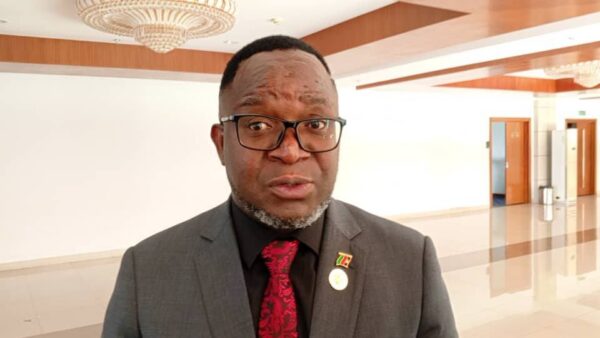
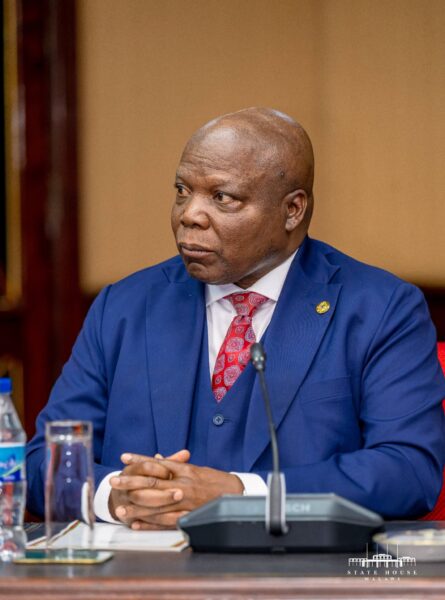
The individual in question is the Secretary to the President and Cabinet, who as head of the civil service also chairs the boards of the Electricity Generation Company (Egenco), the Electricity Supply Corporation of Malawi (Escom), and the Power Market Limited (PML) – the last of these unbundled from Escom and, in a plot twist Malawian readers will recognise, reinstated as the country’s Single Buyer only in April this year after the High Court cleared it to resume operations following an earlier dissolution.
To describe the resulting arrangement as merely untidy would be generous.
PAC chairperson Steven Malondera put it more bluntly: the setup creates an obvious conflict whenever these state utilities must negotiate power purchase agreements, tariffs and debt settlements among themselves – agreements, tariffs and settlements now effectively negotiated with oneself, chaired by oneself, on behalf of three separate entities that are supposed to hold each other to account.
“Good corporate governance is not about who is legally allowed to sit on a board,” Malondera observed, in a formulation that deserves to be pinned above the desk of every parastatal appointments committee in the country.
“It is about whether the arrangement inspires confidence that decisions are independent, transparent and in the public interest.”
It does not, of course.
And the danger here is not confined to abstract questions of process. Where interconnected state companies operate under a single overlapping leadership, the conditions are ripe for precisely the kind of cosy arrangements, preferential dealings and quiet accommodations that ultimately leave consumers – and the wider economy – paying the price.
Malawi has, after all, seen enough public money vanish through weak controls and incurious procurement to know how these things tend to end.
Nor is this the first time the alarm has been sounded.
Former Malawi Energy Regulatory Authority board chairperson Leonnard Chikadya warned as far back as 2022 that the SPC’s presence across utility boards made independent regulation all but impossible – a regulator, he noted, can hardly discipline a body chaired by the very head of the civil service overseeing it.
The overlap, in other words, is not some recent oversight. It is an inherited habit, one that survived successive SPCs including Zanga-Zanga Chikhosi and Colleen Zamba, who chaired boards at Egenco, PML and the National Oil Company of Malawi in turn.
Malondera says Parliament has already flagged concerns over these dual chairmanships to the Executive, without any evident response, and may yet push for legislative changes should the Executive continue to sit on the matter.
That may prove necessary. Governments rarely surrender convenient arrangements voluntarily, however indefensible they look on paper.
The fix, in truth, is not complicated. The state can remain the shareholder in Egenco, Escom and PML without insisting on installing its own chief bureaucrat as chairman of all three.
Independent, commercially minded people exist who could do the job without the built-in conflict – and if Malawi is serious about attracting the investor confidence its energy sector badly needs, it will need to make that separation sooner rather than later.
Investors, as a rule, prefer their power purchase agreements negotiated by people who aren’t quietly negotiating with themselves.