Public anger is boiling over following revelations that six police officers convicted of the brutal murder of Buleya Lule are believed to be among 222 inmates quietly pardoned by President Peter Mutharika, a move that critics say shreds the very fabric of justice and mocks the rule of law.
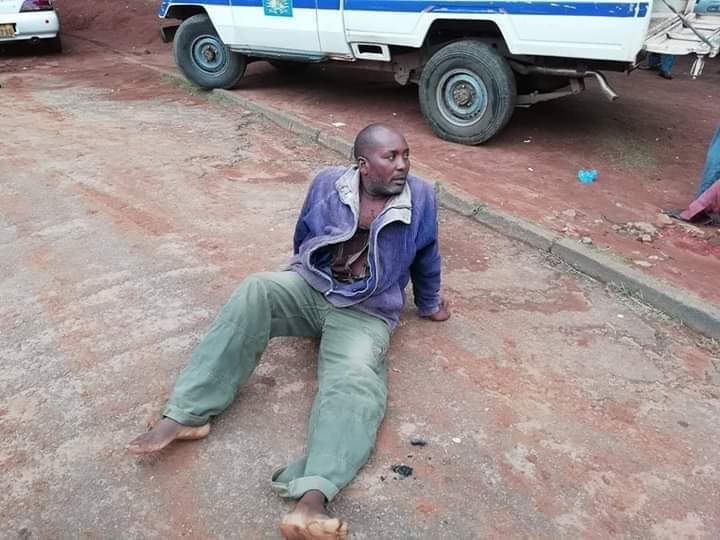
Late Buleya: His killers are now free
Highly placed government sources have confided that some of the convicted officers—jailed for one of Malawi’s most chilling cases of police brutality—have already been spotted walking freely on the streets of Lilongwe, barely a year after a High Court found them guilty of murder.
The six officers were convicted by the High Court in Lilongwe in December 2024 and sentenced on February 28, 2025, to lengthy prison terms. Paul Chipole was handed 20 years. Ikram Malata received 18 years. Richard Kalawire, Innocent Wanda, Maxwell Mbidzi and Abel Maseya were each sentenced to 15 years. All were convicted of murder.
Lule’s death was not accidental, nor was it ambiguous. He was a suspect in the abduction of a person with albinism and died in police custody in February 2019 after enduring severe torture. In a damning judgment, High Court Judge Chifundo Kachale found there was an “enterprise to extract a confession or conduct an unlawful interrogation”—a calculated and criminal abuse of state power that ended in Lule’s death.
Yet today, those convicted of that crime may be free men.
When confronted with the reports, Minister of Justice Charles Mhango—who also chairs the Presidential Pardon Committee—neither denied nor confirmed the release of the convicted officers. Instead, he retreated behind constitutional technicalities, refusing to disclose the names of those pardoned during the Christmas and New Year festivities.
“I can only confirm that Section 89(2) of the Constitution of Malawi is very clear that the President may pardon convicted offenders, grant stays of execution, reduce sentences, or remit sentences,” Mhango said.
He stopped short of explaining whether murder convicts were eligible, offering only that judgments in impeachment cases involving the President or Vice President cannot be pardoned. For a public demanding clarity, accountability and moral leadership, the response landed as evasive and deeply unsatisfactory.
Human rights bodies have reacted with alarm and caution. Malawi Human Rights Commission (MHRC) Commissioner Teressa Ndanga said the commission had not yet independently verified the releases but was actively investigating.
“We are in the process of verifying the same and will later make a position known,” Ndanga said.
But civil society organisations have been far less restrained.
Centre for Human Rights Education, Advice and Assistance (CHREAA) Executive Director Victor Mhango warned that secrecy and mixed signals from government are eroding public trust.
“When ministries issue conflicting interpretations on such a sensitive issue, it undermines confidence in both the pardon process and the credibility of government institutions,” he said. “At a minimum, the government owes the public a clear legal explanation and full disclosure of the criteria used.”
Centre for Human Rights Rehabilitation (CHRR) Executive Director Michael Kaiyatsa was even more blunt, warning that pardoning convicted murderers—especially state agents—without transparency fuels perceptions of impunity.
“In cases involving serious crimes such as murder, transparency around the criteria and rationale for pardon is essential,” Kaiyatsa said. “Without it, victims’ rights are trampled and public trust in the rule of law collapses.”
For many Malawians, this is not just about a pardon. It is about whether police officers can torture and kill, be convicted by a court of law, and still quietly walk free through political mercy. It is about whether justice in Malawi is real—or merely symbolic.
As rumours harden into sightings and official silence deepens suspicion, one question now dominates public discourse: if convicted killers in uniform can be released without explanation, who, then, is the law really meant to protect?