

CDF Bill Heads Back to Parliament Amid Political Warfare as DPP Vows to Block Any Revival
The already explosive Constituency Development Fund (CDF) Constitution (Amendment) Bill of 2025 is heading back to Parliament—but now under the shadow of open political confrontation, with the Democratic Progressive Party (DPP) declaring it will flatly refuse to support any attempt to revive the bill.
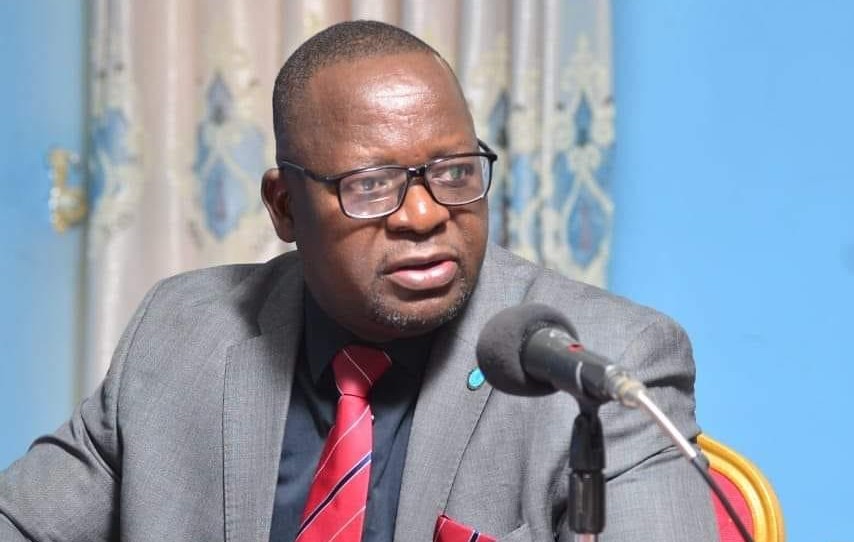
The bill is expected to return to the National Assembly after the expiry of the mandatory 21-day constitutional waiting period following President Peter Mutharika’s decision to withhold assent. But what was once a technical constitutional process has now degenerated into a full-blown political standoff that threatens to paralyse Parliament.
Mzimba South MP Emmanuel Chambulanyina Jere, who sponsored the bill, confirmed that the matter will return to the House strictly in line with constitutional procedures. He said the President has already communicated his reasons for withholding assent and responsibility now lies with Cabinet ministries directed to address the concerns.
“Now that the President has given reasons for the withheld assent, I hope the directed ministries will work on the assignment given,” Jere said, adding that Parliament intends to re-table the bill once the constitutional timeline lapses.
But Jere’s optimism sharply contrasts with the hardline position taken by the opposition DPP.
DPP spokesperson Shadreck Namalomba has drawn a clear political red line, warning that DPP members of Parliament will not vote for another CDF bill—under any circumstances.
“The DPP will not support another CDF bill,” Namalomba said bluntly. “Our position is clear. This bill was fundamentally flawed, dangerous to decentralisation, and opened the door to abuse of public funds. We will not be party to legitimising that.”
Namalomba’s declaration effectively signals that even if the bill returns to the House, it faces a fierce political blockade that could derail its passage and plunge Parliament into another legitimacy crisis.
Under Section 73 of the Constitution, once a President withholds assent, a bill cannot be debated again for 21 days. After that period, Parliament may, within three months, re-debate and pass the bill by a majority—after which the President is constitutionally compelled to assent to it.
However, with the DPP now openly refusing to back the bill, the numbers required to force assent are far from guaranteed.
President Mutharika announced on Tuesday that he had withheld consent from the bill, which Parliament had unanimously passed late last year. The proposed law sought to amend the Constitution by introducing an entirely new chapter on the CDF, defining its purpose, governance framework and guiding principles.
Human Rights Defenders Coalition (HRDC) has welcomed the President’s decision, describing it as a rare victory for constitutionalism and the public interest.
In a statement issued on January 7, 2026, HRDC Chairperson Michael Kaiyatsa said withholding assent reaffirmed the supremacy of the Constitution and protected democratic governance.
“The decision safeguards decentralisation by preserving the constitutional role of local government authorities in development planning and implementation, while preventing the politicisation of development resources,” Kaiyatsa said.
He warned that concentrating control of public funds in political offices without strong accountability mechanisms would severely undermine governance and community development.
In justifying his decision, President Mutharika directed the Ministers of Justice and Constitutional Affairs and Finance and Economic Planning to draft guidelines for the management of CDF to ensure development continues without compromising financial integrity.
Legal experts, however, remain divided over the President’s use of the term “withheld consent,” with some arguing it amounts to outright rejection, while others maintain the bill must legally return to Parliament.
Parliament’s Legal Affairs Committee chairperson, Gilbert Khonyongwa, said the House now has three options: abandon the bill entirely, amend it, or re-table it in its current form.
“If Parliament passes it again without amendments, the President will have no choice but to assent,” Khonyongwa said—though that scenario now appears politically uncertain.
Local government authorities have thrown their weight behind the President. Malawi Local Government Association Executive Director Hadrod Mkandawire praised Mutharika for defending constitutionalism, decentralisation and the rule of law.
“We are profoundly grateful to the State President,” Mkandawire said. “We urge the Ministries of Justice and Finance to ensure the guideline-drafting process is inclusive, transparent and consultative.”
As the constitutional clock ticks, the fate of the CDF bill now rests not only on legal procedure but on raw political numbers. With the DPP digging in its heels and refusing to vote for any revival, the bill’s return to Parliament is shaping up to be less a legislative exercise—and more a decisive test of power, principle and political will.
Follow and Subscribe Nyasa TV :