
Malawi lands ministry investigates its own title deed blunder
- Government launches investigation into how GM Properties Limited obtained legal ownership of Area 26 land despite failing to compensate families it was ordered by the High Court to pay
Malawi’s Ministry of Lands, Housing and Urban Development has admitted it may have issued a title deed to a private developer in breach of its own procedures — and has now launched an investigation into how GM Properties Limited obtained legal ownership of land in Lilongwe’s Area 26 without first compensating the families it was legally required to pay.

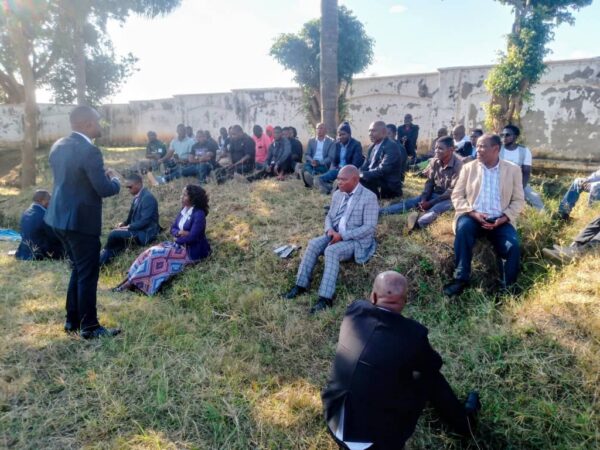
The admission came on Tuesday during an impromptu meeting between senior ministry officials and residents of Area 26, called after newspaper reports revealed that GM Properties Limited had given occupants until 4 July 2026 to vacate — despite having never paid the compensation a High Court order requires it to make before any eviction can take place.
“Just like you, we are also in a state of disbelief that our very ministry and office issued the title deed to a developer who had not met his obligations,” Commissioner of Lands Muhammad Selemani told residents gathered at the meeting.
The candour of that admission was striking. It was not a regulator defending a process under external scrutiny. It was the ministry that issued the deed acknowledging, in public and before affected residents, that something appears to have gone seriously wrong.
Ordered from above
Selemani was clear about what had prompted the sudden engagement. Minister of Lands Chimwemwe Chipungu had directed the meeting following instructions from above — a reference that officials present took to mean President Professor Arthur Peter Mutharika had taken a personal interest in the matter.
“We are here on a directive from our Honourable Minister of Lands, who himself received instructions from above to engage the community and listen to their concerns,” Selemani said.
The political signalling was deliberate. In disputes of this kind — where poor urban residents face displacement by a private developer holding a government-issued title deed — ministerial and presidential attention can shift the calculus rapidly. Whether it translates into meaningful action remains to be seen.
Selemani declined to provide a timeline for the completion of the investigation, saying only that findings would guide the ministry’s next steps on both the title deed and the stalled compensation process.
A community in limbo
The Area 26 dispute is not new. Residents have spent years petitioning government for intervention, arguing that displacement without compensation violates their constitutional rights and strips families of both land and shelter.
At the centre of the legal dispute is a High Court order directing GM Properties Limited to compensate affected residents before moving them from their ancestral land.
That order, residents say, has never been complied with. The developer nonetheless obtained a title deed — and has now set a deadline for residents to leave.
For Senior Group Village Headman Kwindanguwo, Tuesday’s meeting offered the first tangible sign that the state was prepared to take their situation seriously.
“The meeting has given us confidence that our concerns are being heard,” he said. “For a long time, we have been asking government to intervene so that we are compensated before we are moved from our land.”
He went further, calling on the ministry to consider nullifying the title deed entirely — arguing it had been obtained through a process that bypassed legal obligations.
A test of institutional accountability
The Area 26 case has come to represent something broader than one community’s struggle with one developer. It sits at the intersection of several fault lines in Malawian land governance: the vulnerability of customary landholders in peri-urban areas, the opacity of title deed issuance processes, and the gap between court orders and their enforcement.
That the ministry responsible for issuing the contested title deed is now investigating the circumstances of its own decision is either an encouraging sign of institutional self-correction — or a reflection of how far the process had already broken down before external pressure forced a response.
Residents say they will continue to demand that GM Properties Limited comply with the High Court order before any eviction proceeds.
The investigation has begun. The deadline of 4 July remains on the calendar.