

Oxfam Malawi calls to abolish ‘regressive’ hospital user fees, rule out introduction of NHIS scheme
Oxfam Malawi has appealed to government to scrap user fees in public hospitals, saying it contradicts the Universal Health Coverage Policy, which recommends that countries should reduce the burden on households when accessing healthcare.
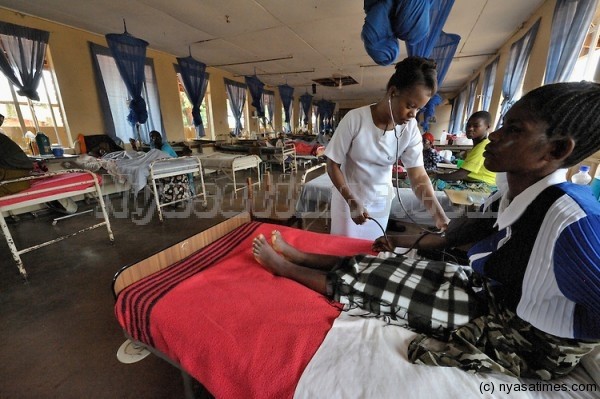
The Oxfam Malawi report hich aims at addressing inequality says user fees for treatment, care and services have proven to be “the most regressive and damaging way” to generate funds for health system costs.
“The Government of Malawi must urgently abolish use fees across its facilities, with immediate suspension of hospital bypass fees and existing fee-paying wards,” reads the report.
Oxfam Malawi has appealed to donors to strongly challenge the use fees, which it said is dangerous and harmful policy, and appealed to development partners to restore budgetary support and ensure interventions in healthcare are well funded.
Government has been advised to urgently increase public spending on health and beyond state-run facilities, the government is advised to implement the recently planned expansion of Christian Health Association of Malawi (CHAM) service-level agreements, to ensure an essential health package can be provided for free by CHAM facilities when there is no nearby public health clinic.
gwe titled Closing the Divide in Malawi which propose solutions to reducing inequality in the country, Oxfam International regional director for Southern Africa Nellie Nyang’wa
observed that user fees in the health sector is undevelopmental as it infringes the right to access health care for all especially for the vulnerable groups.
“We have done free primary education and the same can be done with secondary education as well as the health sector. However, the problem with free primary education was the lowering of standards at the time it was introduced,” she said.
Oxfam in Malawi Interim Country Director, Lingalireni Mihowa said her organisation already engaged government on the proposal to introduce user fees in district hospitals.
“We had fruitful discussions and the response we got was that what will be introduced is bypass fees for those who bypass a health centre and go to a referral centre as a penalty for doing so,” she said.
However, he said the issue hasn’t been finalised yet saying there is need to look at better ways of financing the health sector but not user fees.
Reacting to the report, chief director of Economic Planning and Development, Peter Simbani, said some of the recommendations by Oxfam would not be taken on board as they needed further discussions, but government still needed budgetary support.
Simbani told journalists on the sidelines of the launch of the report that the issue of user fees requires further discussions.
Hecould not give an immediate answer saying there is need to discuss this recommendation by Oxfam with all relevant stakeholders.
“Services offered in public hospitals are readily available and as such there is need to engage in discussions with Oxfam in Malawi on the proposed recommendations so that we strike a good balance,” he said.
But Member of Parliament for Dedza East, Juliana Lunguzi, who is also chairperson of the parliamentary committee on health, has a different view on user fees in health facilities saying free health care is not a reality.
“Communities are already paying for health services in hospitals which are accessible in remote areas despite them being Christian Health Association of Malawi (CHAM) facilities.
“Let’s be realistic, almost 75 percent of the budget is donor funded so if we say free health care for all where is government going to get money to finance such activities,” she said.
Lunguzi is backed by most health experts who are in favour of expansion or introduction of user fees in public health facilities to improve service delivery.
The Malawi Health Equity Network (Mhen) calls proposals to introduce or expand user fees as an ‘elitist view’ to punish the poor.
Mhen executive director George Jobe does not also support plans of paying wings in central hospitals, whose costs are to be borne by patients.
“We have always said that public hospitals can have an initiative to be paid by medical scheme firms that refer their patients there, especially at central hospitals, but there should never be out-of-pocket payments made by patients as some are already struggling to make such payments at Cham facilities whenever service level agreements (SLAs) are not serviced,” Jobe said.
He said government should instead work towards addressing the inefficiencies in the system, which include corruption and wastage of resources.
Oxfam has also asked government to halt its plans to, among others, introduce a National Health Insurance Scheme (NHIS).
It said the introduction of NHIS will “exacerbate inequality” and leave the poorest behind in accessing healthcare in Malawi.
“Evidence from other countries has shown that a NHIS scheme is unlikely to raise significant additional revenues for health, especially outside of the formal sector,” reads the report.
Oxfam calls on government to clamp down on drug pilferage and to increase resources allocated to the health sector in line with the Abuja Declaration. It requires funding for the healthcare services to be no less than 15 percent of the national budget.
Follow and Subscribe Nyasa TV :