

RA’s K246 Billion Road Plan Sparks Fierce Debate Over Cost, Quality, and Accountability
The Roads Authority’s (RA) proposed K245.78 billion road rehabilitation and maintenance programme has triggered a heated national debate, with governance experts questioning value for money and procurement transparency, while engineers and transport operators defend the scale of investment as necessary to rescue Malawi’s collapsing road network.
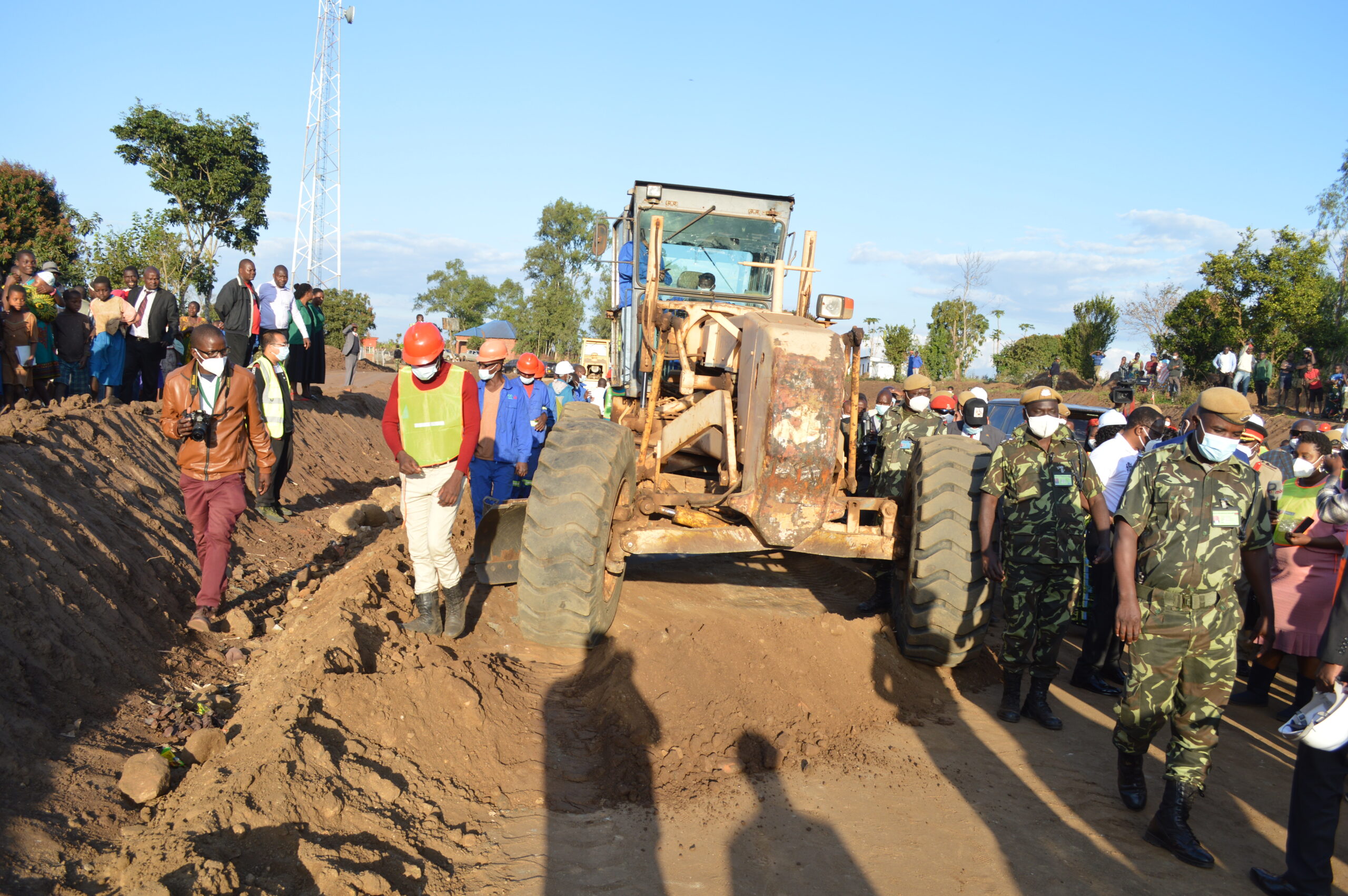
At the centre of the controversy is a notification of intention to award contracts issued on May 27, 2026, targeting major works on the M10 and M1 road corridors—two of the country’s most critical transport arteries.
The scale is staggering.
Of the total package, K149.47 billion (about 61%) has been allocated to upgrading the Golomoti–Chantulo section of the M10 Road to bitumen standard. The project has been split into two large contracts: Unik Construction Engineering Limited is earmarked for Lot One valued at K74.05 billion, while Mota-Engil Africa is expected to handle Lot Two valued at K75.41 billion.
The remaining K96.31 billion (about 39%) is directed at periodic maintenance works on the M1 Road between Bunda Turn-off and Kameza Roundabout, including pothole patching and drainage improvements. These contracts are expected to go to two joint ventures—DEC/ACH/Mungo JV (K51.6 billion) and Mkaka/PBM JV (K44.7 billion).
But the figures have ignited controversy far beyond the technical details.
Questions Over Value for Money
Governance and accountability experts argue that the expenditure is excessive, especially at a time when newly constructed roads are deteriorating at alarming speed.
They point to recurring patterns of premature road failure across the country, raising uncomfortable questions about construction quality, supervision, and procurement discipline.
The most cited example is the Karonga–Songwe Road, which developed structural defects shortly after completion despite a reported investment of K24.7 billion under the 2023/24 Public Sector Investment Programme. The road, constructed by Zhejiang Communication Construction Company, was completed in 2019 but began showing serious defects within a short period.
Similarly, the 102-kilometre Karonga–Chitipa Road, completed in 2008, reportedly suffered damage barely a month after its official opening in 2013—fueling long-standing concerns about durability standards in public infrastructure projects.
For critics, these cases are not isolated—they are evidence of a systemic failure.
“A Revolving Door for Contractors”
Centre for Social Accountability and Transparency Executive Director Willy Kambwandira said taxpayers are trapped in a costly cycle where roads are repeatedly repaired instead of being properly built to last.
“It is unfortunate that taxpayers are repeatedly paying for repairs on roads that should remain in good condition. Road maintenance has increasingly become a revolving cycle that benefits contractors and some government officials more than citizens,” Kambwandira said.
His remarks reflect growing public frustration that billions are being spent, yet road conditions continue to deteriorate at a pace that outstrips investment.
Procurement Discipline Under Scrutiny
Human Rights Defenders Coalition (HRDC) Chairperson Michael Kaiyatsa also questioned the justification for the scale of expenditure, particularly on maintenance works.
While acknowledging the importance of road rehabilitation, Kaiyatsa said the absence of detailed technical and cost breakdowns makes it difficult to assess whether the figures reflect real value.
“It is difficult to justify the figure in the absence of full technical and cost disclosure. For routine works like pothole patching and drainage improvements on an already existing and heavily trafficked corridor, K96 billion is extremely high,” he said.
His concern points to a deeper issue: whether procurement processes in the roads sector are sufficiently transparent to withstand public scrutiny.
Transporters Welcome Investment—With Reservations
Not everyone is critical.
The Transporters Association of Malawi (TAM) has welcomed the planned investment, arguing that deteriorating roads are significantly increasing the cost of doing business.
TAM spokesperson Frank Banda said poor road conditions lead to higher operating costs through vehicle damage, increased fuel consumption, and frequent repairs.
“Transporters welcome the Roads Authority’s continued efforts to rehabilitate and maintain key road corridors. However, equal attention must be paid to quality control, contractor performance monitoring, and long-term maintenance planning to ensure roads achieve their intended lifespan and deliver sustainable economic benefits,” Banda said.
For transport operators, the debate is not about whether roads should be fixed—but whether Malawi can afford continued failure.
Engineers Defend Costs, Blame External Pressures
The Malawi Engineering Institution (MEI) has offered a more technical defence of the project costs.
MEI President Ronald Gundamtengo said the figures are partly justified by rising global construction costs, especially fuel and bitumen, which are key inputs in road works.
He also attributed premature road deterioration to weak routine maintenance systems and the impact of successive tropical cyclones that have damaged infrastructure across the country.
“The current key cost determinants for road works are diesel and bitumen. Recent increases in diesel prices have had a multiplier effect on project cost estimates. Bitumen is imported and remains exposed to foreign exchange availability risks,” he said.
Gundamtengo urged government to strengthen routine maintenance systems and improve technical capacity within implementing agencies to ensure long-term value from infrastructure spending.
A Bigger Question Looms
Beyond the competing arguments lies a more uncomfortable national question: why do roads built at billions of kwacha fail so quickly?
For critics, the answer lies in procurement weaknesses and accountability gaps. For engineers, it is a mix of funding constraints, environmental shocks, and rising input costs. For transporters, it is a daily economic burden that cannot be ignored.
What is not in dispute is the scale of the new investment—or the public anxiety surrounding it.
As RA pushes ahead with its K246 billion programme, Malawi finds itself once again at the crossroads of infrastructure ambition and accountability reality.
And the outcome will determine not just the condition of its roads, but the credibility of how billions in public funds are spent.
Follow and Subscribe Nyasa TV :