

RBM Deputy Governor Simwaka warns Malawi’s inflation fight requires more than interest rates as he outlines path to single digits
Reserve Bank of Malawi (RBM) Deputy Governor Kisu Simwaka has warned that Malawi’s stubbornly high inflation cannot be defeated by monetary policy alone, arguing that the country must address deeper structural weaknesses, including foreign exchange shortages, fiscal pressures, and climate vulnerability.
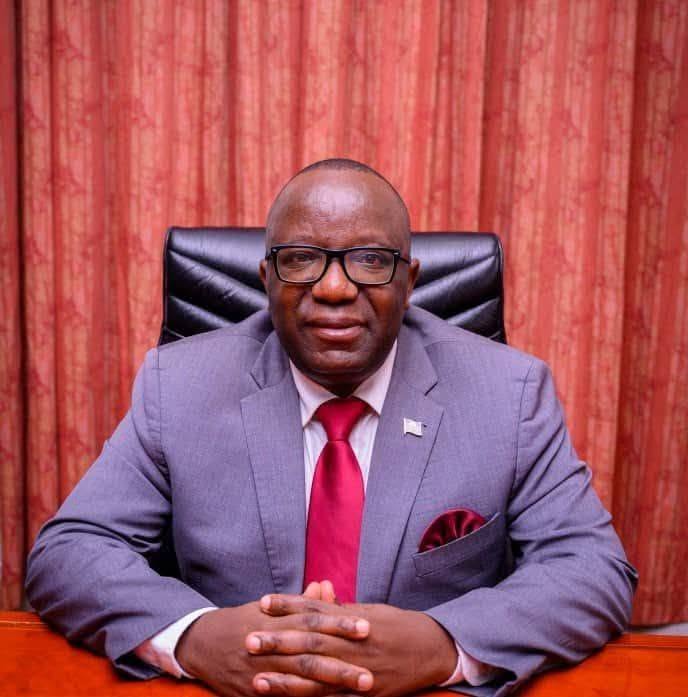
Simwaka says Malawi’s inflation crisis has persisted because the economy lacks the foundations required for monetary policy to work effectively.
For the past five years, Malawi’s inflation rate has remained above 20 percent, far above the Sub-Saharan African average of 8.8 percent, with several neighbouring countries, including Tanzania, Rwanda, Mozambique, Zambia, and Zimbabwe managing to return inflation to single-digit levels.
According to Simwaka, the difference is not accidental.
“The pathway to single digit inflation is clear. We must rebuild the foundations on which monetary policy can operate,” he says.
He argues that while the RBM has a mandate to achieve price stability, the central bank cannot succeed alone without coordinated action from government and other key institutions.
“Monetary policy cannot deliver single digit inflation if those foundations are weak. It requires fiscal discipline, foreign exchange strength, lower import dependence and credible policies,” Simwaka says.
Exchange rate remains a major inflation trigger
Simwaka identifies exchange rate instability as one of Malawi’s biggest drivers of inflation, saying the country has one of the highest exchange rate pass-through effects in the region.
He estimates that between 55 and 60 percent of exchange rate movements are transmitted into domestic prices in Malawi, compared to about 25 to 30 percent in countries with stronger foreign exchange buffers.
“This means when the kwacha loses value, the impact is quickly felt through prices of goods and services,” he says.
He attributes this vulnerability to several factors, including low foreign exchange reserves, which remain below two months of import cover, a fragmented foreign exchange market and heavy dependence on imported essentials such as fuel, fertiliser, medicines and food.
“In these conditions, the exchange rate does not absorb shocks. It transmits them directly into domestic prices,” Simwaka says.
He argues that strengthening foreign exchange reserves and reducing import dependence are critical to reducing inflation pressures.
Food insecurity turning weather shocks into inflation crises
Simwaka also points to food prices as another major inflation trigger, saying Malawi’s dependence on rain-fed agriculture has made inflation highly vulnerable to climate shocks.
Food accounts for about 55 percent of the Consumer Price Index basket, meaning changes in food prices have a significant impact on overall inflation.
“This is not a monetary policy failure. It is an agricultural vulnerability. Monetary policy cannot manage weather,” he says.
According to Simwaka, countries such as Tanzania and Zambia have been able to contain food inflation better because of stronger agricultural systems, including greater irrigation capacity.
“Every dry spell becomes an inflation problem in Malawi because we have not made agriculture sufficiently climate-resistant,” he says.
He recommends expanding small-scale irrigation, improving the targeting of agricultural support programmes, maintaining strategic grain reserves and investing in local fertiliser and input production.
Fiscal pressures weakening inflation fight
The former deputy governor further warns that government borrowing and fiscal pressures are limiting the effectiveness of monetary policy.
He says persistent expenditure pressures and revenue shortfalls have increased domestic borrowing, which crowds out private sector credit and complicates liquidity management.
“When fiscal pressures translate into central bank financing, you compromise the fight against inflation,” he says.
Simwaka argues that monetary and fiscal policies must work together, saying a central bank cannot stabilise prices if government policies are creating additional inflationary pressures.
He calls for revenue-led fiscal adjustment, including broadening the tax base, reducing arrears, removing unnecessary tax exemptions and controlling non-essential expenditure.
Inflation expectations becoming entrenched
Another challenge, according to Simwaka, is that prolonged high inflation has changed how households, businesses and workers make economic decisions.
“When inflation stays above 20 percent for years, expectations adjust backwards,” he says.
He explains that businesses begin increasing prices, workers demand higher wages and landlords adjust rents based on previous inflation trends, creating a cycle where inflation becomes self-perpetuating.
Breaking this cycle, he says, requires strong policy credibility and consistent action.
The road to 5 percent inflation by 2030
Simwaka believes Malawi can achieve and sustain low inflation if it adopts a coordinated approach similar to countries that have successfully stabilised their economies.
He recommends rebuilding foreign exchange reserves to three or four months of import cover, diversifying exports beyond tobacco into mining, agro-processing, legumes and services, and improving diaspora remittance flows.
“The objective is not to fix the exchange rate. The objective is to reduce volatility and restore confidence,” he says.
He also calls for stronger measures to ensure food security, including expanding irrigation to 500,000 hectares within five years and maintaining a 90-day strategic grain reserve.
Simwaka says inflation expectations must also be anchored by ensuring wage and contract adjustments are aligned with inflation targets rather than past inflation trends.
“Credibility is earned by consistent action,” he says.
Malawi can break the inflation cycle
Concluding his analysis, Simwaka says Malawi’s inflation challenge is serious but not impossible to overcome.
“The economy is not an outlier. Other countries in the region have shown that single-digit inflation can be achieved and sustained,” he says.
He argues that price stability requires a complete economic system built on an independent central bank, disciplined public finances, adequate foreign exchange reserves, reduced import dependence and credible policy implementation.
“If we put this system in place, five percent inflation by 2030 will not be an aspiration. It will be an outcome,” Simwaka says.
He adds that controlling inflation remains essential not only for economic growth and investment but also for protecting ordinary Malawians whose purchasing power has been eroded by rising prices.
Follow and Subscribe Nyasa TV :