

RIP tobacco? Malawi’s golden leaf industry in free fall as prices, buyers and earnings collapse
For decades, tobacco was Malawi’s economic lifeline—the “green gold” that financed imports, earned foreign exchange and sustained millions of rural households. Today, however, the industry’s latest figures paint the picture of a sector in unmistakable decline, raising serious questions about whether Malawi’s dependence on tobacco has finally reached its breaking point.
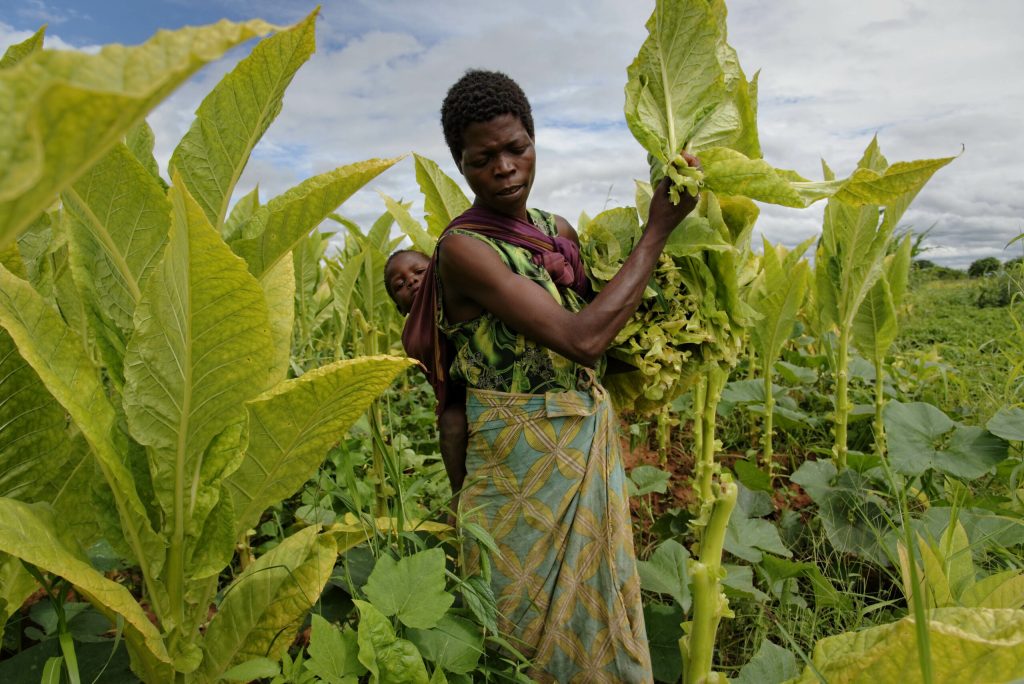
Three months into the 2026 marketing season, more than half of the country’s projected tobacco crop has already been sold. Yet, instead of celebrating a successful season, the industry is grappling with collapsing revenues, falling prices, shrinking buyer participation and growing frustration among farmers.
The numbers are sobering.
According to the Tobacco Commission (TC), farmers have sold 99 million kilogrammes of tobacco over the past 12 weeks, generating just US$202 million (K353 billion) at an average price of US$2.04 per kilogramme.
During the same period last year, Malawi had sold 126 million kilogrammes, earning US$319 million (K558 billion) at an average price of US$2.52 per kilogramme.
That represents a staggering US$117 million (36.7 percent) drop in export earnings despite the country expecting a crop of about 197 million kilogrammes this season.
Perhaps even more alarming is that prices continue to fall despite supplies rapidly drying up—a complete reversal of normal market behaviour where prices typically strengthen towards the end of the selling season as volumes decline.
Tama Farmers Trust president Abiel Kalima Banda says farmers feel betrayed.
They were repeatedly told that low prices resulted from excess production. But with most of the crop already sold, he argues, it has become increasingly evident that production may actually fall below the official estimate of 197 million kilogrammes.
If that proves true, the low prices cannot be blamed on oversupply alone.
“Our farmers do not have much tobacco remaining. We are certain production will be well below the initial projection,” Kalima Banda said.
“The most worrying thing is that we were made to believe low prices were a result of overproduction. But it now appears we either produced in line with demand or even below it. Farmers therefore feel they have been duped.”
Another worrying indicator is the shrinking number of buyers.
This season, only eight buyers are participating in Malawi’s tobacco market, down from 11 last year. Fewer buyers inevitably mean weaker competition for leaf, reducing farmers’ bargaining power and placing downward pressure on prices.
Meanwhile, the auction system—which was once the pride of Malawi’s tobacco industry—is increasingly becoming marginalised.
While contract tobacco is enjoying an uptake rate of 97.2 percent, auction tobacco has managed only 41.3 percent, meaning nearly six out of every 10 bales offered at auction are being rejected.
The Tobacco Commission acknowledges the problem and says discussions with buyers are continuing.
For many analysts, however, the latest figures point to structural challenges that go far beyond one poor marketing season.
Global anti-smoking campaigns continue to reduce cigarette consumption in many developed countries. Multinational tobacco companies are diversifying into alternative nicotine products, while environmental and health concerns are prompting governments worldwide to tighten tobacco control measures.
At home, Malawi’s heavy dependence on one crop leaves the economy vulnerable to fluctuations in global demand and buyer decisions.
The contrast with last season could hardly be sharper.
In 2025, Malawi produced 221 million kilogrammes of tobacco and earned a record US$542 million at an average price of US$2.46 per kilogramme.
Just a year later, average prices have dropped to US$2.04 per kilogramme, revenues are sharply down and farmers are questioning the market’s credibility.
Unless prices recover dramatically in the remaining weeks of the season, 2026 could go down as one of the most disappointing tobacco marketing seasons in recent years.
For a country where tobacco still accounts for the bulk of merchandise export earnings, the message from the auction floors is becoming impossible to ignore.
The industry that once defined Malawi’s economy is no longer guaranteed to deliver prosperity. For many farmers, the warning signs are already flashing. The question is no longer whether tobacco is under pressure. It is whether Malawi has prepared itself for life after its once-golden leaf.
Follow and Subscribe Nyasa TV :