

Salima-Lilongwe water project set to miss January 2027 deadline
Lilongwe has long known the taps will not run reliably. The flagship Salima-Lilongwe Water Supply Project was supposed to end that. It is now at risk of missing its January 2027 deadline, and the reasons say as much about how Malawi finances big projects as they do about the engineering.
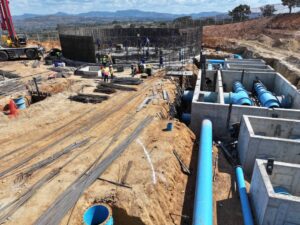
The project is worth $315 million, about K546 billion. It is being built by the Salima-Lilongwe Water Supply Company (SLWSC) with Khato Civils-South Zambezi Joint Venture as contractor.
It began on January 20, 2025, and is due for completion on January 19, 2027. By the time a progress report was prepared, 91.7 per cent of the contract period had passed, yet physical works stood at 18.9 per cent.
Money is the main problem.
Government has secured $100 million, about K173 billion, from local commercial banks. That leaves $215 million, about K372 billion, unfunded.
Around $95 million has been paid to the contractor for designs, procurement, mobilisation and ongoing construction.
Engineering designs are about 90 per cent complete, but procurement is only 20 per cent done, a delay the report puts largely down to shortages of foreign exchange.
The resettlement strand is also lagging. Of the estimated K12.835 billion needed to compensate people affected by the project, only K901.8 million, roughly seven per cent, has been paid.
The Centre for Social Accountability and Transparency (Csat) has been blunt. Its executive director, Willy Kambwandira, said the prolonged delays, lack of transparency and funding problems risked turning the project into “a conduit for siphoning taxpayers’ money rather than delivering essential public services”.
He called for an independent audit and questioned whether parliamentary oversight was working.
For residents, the frustration is more immediate. Safari Mbewe, executive director of the Water and Environmental Sanitation Network (Wesnet), said Lilongwe was in a water crisis, with taps unable to run around the clock.
“Water is life,” he said. “I call upon government to do everything possible to fund this project.”
Government’s answer is that the project is a special purpose vehicle, financed through that structure, and that it is an important investment.
Ministry of Finance spokesperson Williams Banda said government remained committed to securing the funds and to ensuring the project is completed, though the ministry did not say how the gap would be closed.
Others were more cautious. Mzuzu University economist Christopher Mbukwa said the project remained bankable but that political factors were slowing it.
The project may yet be finished, but as things stand, Lilongwe’s wait for reliable water looks set to run into 2028.