

“Stop Cheering Wrongdoers!”: Chakwera Calls Out Malawi’s Moral Decay
President Lazarus Chakwera used the occasion of Malawi’s 61st Independence Day not for fanfare—but for a fierce and thoughtful call to rebuild the nation’s foundation on values, not vanity.
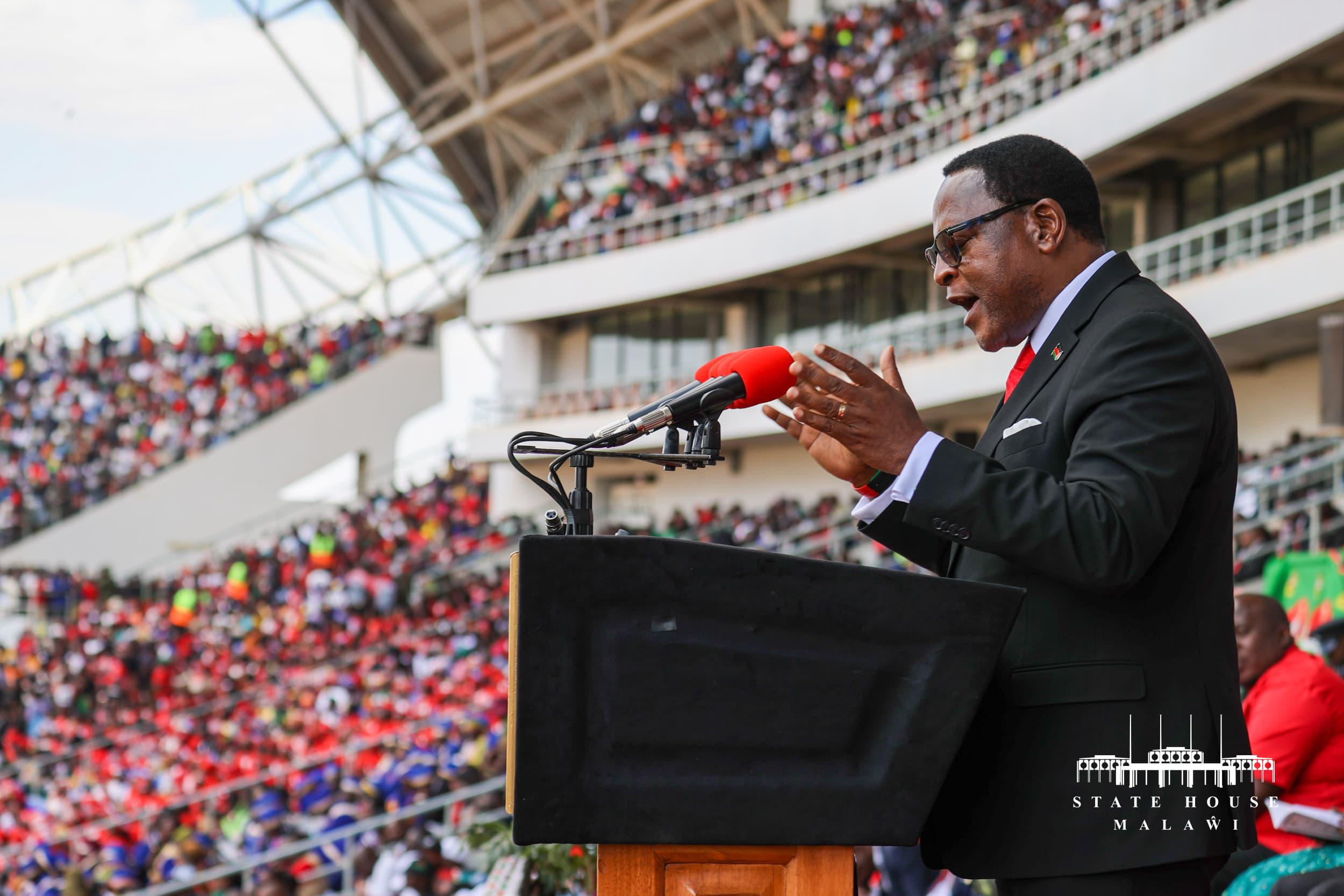
Addressing thousands gathered at Bingu National Stadium in Lilongwe on Sunday, Chakwera declared that Malawi cannot move forward without first reconstructing the moral and cultural pillars that hold a nation together.
He stressed that true nation-building is not a hurried process. Drawing a powerful analogy between development and architecture, the President said, “You cannot build a strong house on a weak foundation.” He insisted that the same applies to building a nation—strong foundations are essential for lasting development.
In his Chichewa-language speech, the President laid out what he believes to be the broken foundations of Malawi that must be repaired. First and foremost, he emphasized the importance of rebuilding national character and culture.
According to Chakwera, Malawi cannot thrive if its citizens abandon cultural values or choose to overlook moral decay. He pointed out that even if infrastructure like roads and hospitals are built, it means little if people with corrupt tendencies steal medicine or vandalize developments for personal gain. He warned against the tendency of citizens to turn a blind eye to individuals who are known to have destructive behaviors, saying that cheering on wrongdoers is one of the key things that has damaged the nation’s foundation.
Chakwera questioned the conscience of the nation by asking: What kind of country allows wrongdoers to lead churches, hold jobs, sit in courtrooms, or influence every sector from banking to government? He denounced a culture that tolerates, enables, or excuses such behavior, stating clearly that Malawi must not normalize laziness, corruption, backbiting, slander, entitlement, or jealousy. A nation of people who wait for others to fall just so they can rise will never prosper, he said. What the country needs, the President argued, is a moral reawakening—a reinstallation of discipline, integrity, and mutual service.
He then turned to the importance of hope in the national psyche. Chakwera warned against the creeping defeatism that has gripped many Malawians—the dangerous mindset that nothing works in Malawi or that no one is worth trusting. Without hope, he said, nothing functions. Farmers don’t plant, students don’t study, workers lose motivation, broken relationships remain unrepaired, and people stop saving or planning for the future. Hope is not a luxury, Chakwera argued, but a necessary foundation for both individual and national progress. He challenged Malawians to stop entertaining voices that strip them of their optimism and urged them to be givers of hope, not destroyers of it.
The President further stressed the importance of justice as another foundational value that must be restored. He bemoaned the dishonesty and fraud that has become routine across sectors and warned that when corruption and lies dominate a country’s work ethic, progress becomes impossible. Whether it is selling goods, distributing public resources, building infrastructure, or reporting on events, Chakwera called on Malawians to do everything fairly and truthfully. He condemned the habit of manipulating recruitment processes, inflating prices, misreporting facts, or abusing positions of trust. In his view, restoring justice and truth in daily operations is non-negotiable if Malawi is to move forward.
Chakwera did not stop there. He addressed the rising culture of political violence, courtroom warfare, and social media outrage, saying these are enemies of peace and development. He warned that Malawi cannot flourish in a climate of constant conflict, where every disagreement leads to protests, lawsuits, or online chaos. He condemned the impulse to use state power to silence opponents and emphasized that true development only thrives in an environment of peace. Citizens must speak to each other, not over each other; they must engage with differences through dialogue, not destruction. Chakwera reminded Malawians that, as the elders once said, “war does not build a village.”
He underscored this point by recognizing the presence of Botswana’s President, Advocate Duma Gideon Boko, who was guest of honour at the event. Praising the peaceful electoral conduct in Botswana, where recent elections were held without violence or contestation, Chakwera said this is the kind of maturity Malawi must strive for. He asked Malawians to learn from Botswana’s example and guard peace as a priceless national asset.
In conclusion, President Chakwera’s speech was not celebratory in the conventional sense. It was a sobering but visionary reminder that while 61 years of political independence is worth honouring, it means nothing if the moral, cultural, and ethical foundations of the country remain cracked. “Let us wish each other peace on this Independence Day,” he said, “and let us approach each other with peace tomorrow and the day after.”
On a day often filled with pomp and praise, Chakwera stood firm with a different message: Malawi’s next chapter will not be built on speeches or symbols—but on the strength of its values.
Follow and Subscribe Nyasa TV :
Bitter truth Mr president 🙌🙌🙌🙌🙌🙌