

Tales of Malawi’s Gold Rush: Chaos, Death Risks and a Landscape in Ruins
At 11am, the gold-rich hills of Mtsiriza reveal a crisis deepening out of sight of State regulators: rivers choked, forests uprooted and farmland swallowed by pits as thousands scramble for gold in a dangerous, largely unregulated rush.
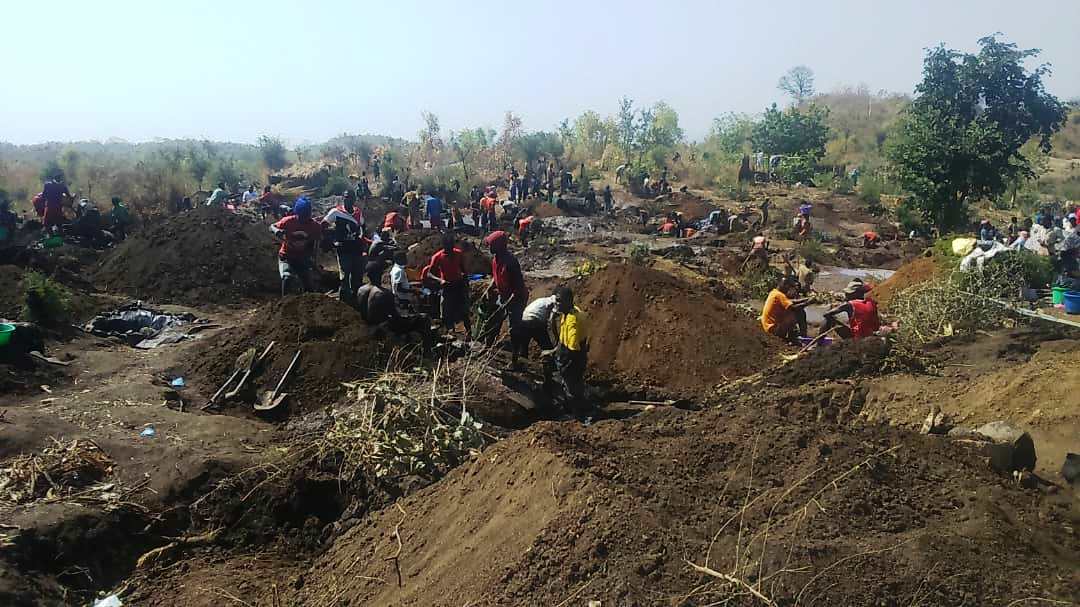
Masauko Boyson, 24, stands watch over the shattered landscape in Traditional Authority Mwansambo’s area. He calls the desperate hunt for gold “big boys’ business”, a pursuit where, he says, “the difference between life and death is razor thin.” Boyson fled Kasungu’s lethal minefields five years ago after a collapsed tunnel killed eight miners on September 31. He escaped another collapse in Mtsiriza, emerging with scars across his back.
The gold rush intensified in 2020 after explorers discovered glittering particles flowing through streams around Tsokonombwe. Thousands poured in, including farmers, fishermen and migrant miners from Kasungu, abandoning traditional livelihoods for uncertain fortunes. Makeshift hostels now line the hillsides, powered by diesel generators as crushers pound rocks and workers sift soil for tiny gold grains.
While locals dig by hand with shovels and picks, wealthier players have deployed excavators, tearing open vast pits with no environmental restoration. One machine, now rusting after a breakdown, left behind an excavation the size of a netball court. Miners descend into the pits using unstable wooden ladders, working barefoot and without safety gear as no occupational health or mining inspectors visit the area.
The uncontrolled activity has severely altered waterways and hills, with loose soil choking rivers and heightening the risk of flooding. Despite visible environmental destruction, the Malawi Environmental Protection Authority (Mepa) insists it is “coordinating well” with the Ministry of Mining. Yet artisanal miners continue operating without Environmental and Social Impact Assessments, and mining officers remain based in Lilongwe, leaving district environmental officers overwhelmed.
Nkhotakota environmental officer Jane Kayira says between 500 and 1,000 people now crowd some mining sites, abandoning farming and fishing. She warns that pressure on natural resources is growing unchecked as her office lacks staff and funding to intervene. Policy expert Mavuto Bamusi links the collapse in enforcement to powerful political and business interests who benefit from chaotic mining operations. He says the illegal gold trade is undermining national economic prospects at a time the country relies on food aid for millions.
Mining regulators also admit they lack capacity to respond effectively. Mining and Minerals Regulatory Authority director general Samuel Sakhuta says criminal networks in gold hotspots have made some areas unsafe for officials, limiting enforcement. Local communities say they have seen little benefit from mining despite bearing its social and environmental costs.
Residents lament losing fertile farmland to buyers who turn it into pits. In Kasungu’s Gogodi mines, where eight miners died, group village head Siliuka warns that future generations may have no land left to grow food. In Nkhotakota, miner Harold Musumba, who sold 0.3 milligramme of gold for K9,000, says the rush is impoverishing communities instead of enriching them.
Gold buyers from urban centres prefer selling to foreign smugglers who pay more than the Reserve Bank of Malawi, the only legal buyer. This has fuelled a thriving parallel market and intensified illegal mining. Mining expert Ignatius Kamwanje warns that the national gold-buying initiative, without strict control, is encouraging unsustainable and dangerous extraction.
Although Malawi aims to raise mining’s contribution to the economy from one percent to 12 percent by 2027, the rapid, unregulated growth is raising fears the long-term damage to land, water systems and livelihoods will outweigh any economic gains. Experts warn the current model could deepen poverty rather than reduce it, leaving behind a devastated landscape where the promise of gold has delivered more loss than prosperity.