

Tax Policy Shock Triggers Investor Losses on Malawi Stock Exchange
Investors on the Malawi Stock Exchange have suffered a sharp reversal in fortunes, recording a 3.8 percent loss in the first quarter of 2026, following panic triggered by a proposed 30 percent capital gains tax that has since been withdrawn.
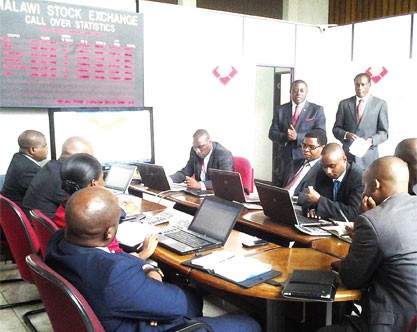
According to a market performance report covering January to March, the bourse has taken a significant hit—marking a dramatic contrast to the same period last year, when investors enjoyed a remarkable 69.52 percent gain. The downturn highlights how sensitive Malawi’s stock market remains to policy signals, particularly those affecting investor returns.
MSE Chief Executive Officer John Kamanga says the damage was done the moment government floated the idea of introducing a 30 percent capital gains tax on shares. The announcement, he explains, triggered a wave of panic selling as investors rushed to offload their holdings in fear of reduced profits.
“The market reacted immediately,” Kamanga noted, pointing out that uncertainty—not just the tax itself—was enough to shake confidence and push share prices downward.
Although government later scrapped the proposed 30 percent tax before implementation, replacing it with a 2 percent withholding tax, the reversal came too late to prevent losses already incurred during the sell-off.
But even the revised tax has failed to restore full confidence.
Frank Hawara, General Secretary of the Malawi Minority Shareholders Association of Listed Companies, says investors are still in the dark about how the new 2 percent withholding tax will be applied.
“It remains unclear whether this tax will be deducted from profits or from the capital itself,” Hawara said—raising concerns that the lack of clarity could prolong uncertainty and keep investors cautious.
The development is particularly striking given the strong performance of the Malawian stock market just a year ago. In 2025, the Malawi Stock Exchange ranked among the top-performing markets globally, with some investors recording returns exceeding 100 percent—an extraordinary surge that had positioned the bourse as a rare bright spot in the region.
Now, that momentum appears fragile.
The episode underscores a deeper issue confronting Malawi’s investment climate: policy inconsistency and poor communication. For investors, it is not just about the tax itself, but the unpredictability surrounding it. Sudden announcements—especially those affecting returns—can trigger swift and costly reactions in a market where confidence is everything.
As authorities move forward with the 2 percent withholding tax, market players are watching closely. What they want now is not just lower taxes—but clarity, stability, and assurance that policy decisions will not continue to disrupt the fragile gains of Malawi’s capital markets.
Follow and Subscribe Nyasa TV :