
The productivity paradox: what Malawi’s parliament passed, and what it left behind
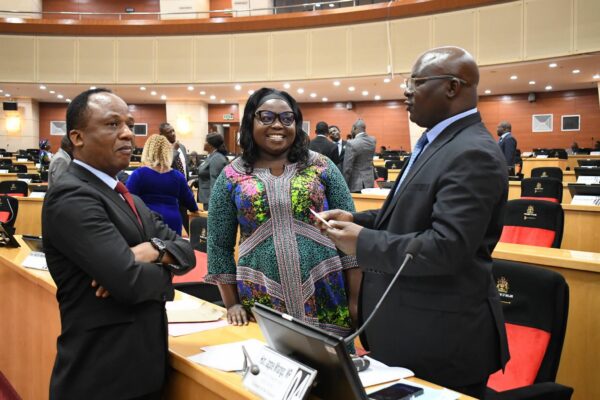
Malawi’s parliament has brought down the curtain on its Third Meeting of the 52nd Session in Lilongwe, with Speaker Sameer Suleman formally adjourning proceedings sine die – Latin for “without a fixed date” – bringing to a close a sitting that has been anything but quiet.

The adjournment marks the end of a whirlwind period in the August House that has seen MPs push through a remarkable wave of legislation, transforming huge swathes of Malawi’s financial and regulatory landscape in a matter of weeks, even as one of the country’s most closely watched corruption probes appears to have quietly slipped away without resolution.
In scenes that will likely be remembered as one of the most productive stretches in recent parliamentary history, lawmakers passed no fewer than 12 separate bills during the session, an achievement Finance Minister Joseph Mwanamvekha hailed as a rare and welcome display of unity among MPs.
Among the flagship pieces of legislation to clear parliament was the landmark Economics Society of Malawi (ESOMA) Bill, which will for the first time bring the country’s economists under formal regulation – putting an end to what officials described as a free-for-all in which virtually anyone could brand themselves an “economist” without any formal qualification or oversight, misleading businesses and the public alike.
Alongside it, MPs rubber-stamped a sweeping package of financial reforms designed to drag Malawi’s banking sector into the digital age, including the Banking (Amendment) Bill, the Financial Services (Amendment) Bill, the Securities (Amendment) Bill, the Microfinance (Amendment) Bill, the Financial Cooperatives (Amendment) Bill, and the Bills of Exchange (Amendment) Bill – the latter formally setting in motion the phasing out of paper cheques in favour of digital payment systems.
The session also saw the passage of the Deposit Insurance Corporation Bill, strengthening protections for ordinary bank depositors, as well as the Payment Systems Amendment Bill and the Financial Crimes Amendment Bill, both designed to bring Malawi’s legal framework in line with its rapidly evolving digital economy.

But while government MPs were quick to celebrate the flurry of legislative activity, the session closed under something of a cloud, after Parliament rose without ever receiving a long-awaited report into the controversial K128 billion purchase of Blantyre’s Amaryllis Hotel by the Public Service Pension Trust Fund (PSPTF).
The Public Accounts Committee (PAC) had been explicitly cleared by Speaker Suleman himself to conclude its inquiry without hearing evidence from former Secretary to the President and Cabinet Colleen Zamba, whose repeated failure to appear before the committee had stalled proceedings for months.
Yet despite that green light, the report failed to materialise before the session’s close, leaving campaigners furious and pensioners none the wiser over what happened to their retirement savings.
National Anti-Corruption Alliance chairperson Michael Kaiyatsa was among those to voice frustration at the delay, warning that ordinary Malawians had waited “too long for answers” on the scandal-hit deal, while cautioning that further delays risked eroding public trust in parliament’s ability to hold the powerful to account.
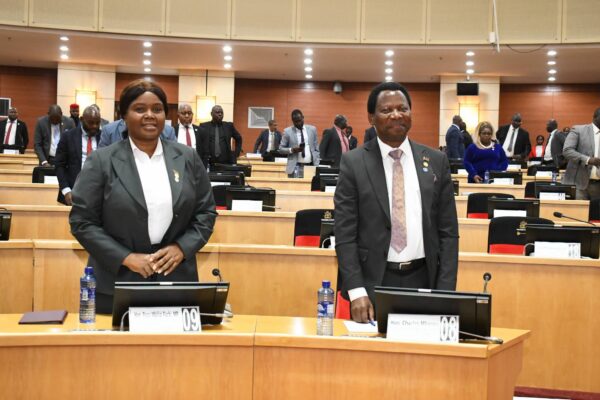
Speaker Suleman’s decision to formally close the sitting sine die – rather than setting a fixed date for MPs to reconvene – effectively leaves the timeline for any further business, including the still-elusive Amaryllis report, entirely open-ended, a move likely to frustrate campaigners further still.
Responding directly to a blistering closing address from Leader of the Opposition Simplex Chithyola Banda – in which he accused government of presiding over a foreign exchange crisis so severe that Malawians cannot access medicine, spare parts or exam fees – Leader of the House Jappie Mhango insisted government remained committed to lifting Malawians out of the country’s current economic difficulties.
Mhango acknowledged the scale of the challenges facing the country, but said government was gradually working through them rather than ignoring them.
Defending the productivity of the session, Mhango outlined the full scope of business dealt with over the five weeks parliament had been sitting, revealing that MPs had needed an additional week of sittings simply to clear a mounting backlog of parliamentary business.
He also pointed to the sheer volume of scrutiny ministers had faced during the sitting, revealing they had fielded more than 400 questions from MPs over the course of the five weeks – a figure he suggested underscored the seriousness with which government had engaged with parliamentary oversight, even as questions over the Amaryllis Hotel scandal remained unanswered.
Despite the unresolved controversy, government figures were keen to strike an upbeat tone as the session concluded, pointing to what they described as a historic burst of law-making that will leave a lasting mark on the country’s financial and regulatory landscape for years to come.
Speaking after the raft of bills were passed, Mwanamvekha praised MPs across the political divide for their cooperation, noting that securing broad support for even a single piece of legislation can often prove difficult, let alone a dozen bills in quick succession.
Whether that same spirit of cooperation will extend to finally delivering answers on the Amaryllis Hotel scandal, however, remains to be seen. With parliament now adjourned indefinitely, campaigners, pensioners and ordinary Malawians alike are left waiting once again – this time with no clear date on the calendar for when, or if, those long-promised answers will finally arrive.
For now, the doors of the August House in Lilongwe have closed on what has been a session of striking contrasts: sweeping reform pushed through with remarkable speed on one hand, and a stalled corruption probe left hanging indefinitely on the other – a juxtaposition unlikely to be lost on ordinary Malawians watching from the sidelines.