

Three in four Malawians drinking contaminated water, shock survey finds
Nearly three in four Malawians are drinking water contaminated with faecal matter, even though most households say they use improved water sources, according to a National Statistical Office (NSO) survey.
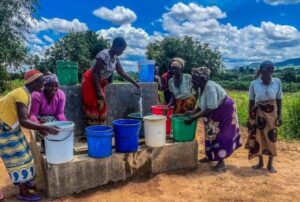
The NSO found faecal contamination in the drinking water of 74.6 per cent of the population when it was tested in the household, compared with 35 per cent when it was tested at the source.
Its report says contamination rises sharply between the water source and the home, pointing to transport, handling and storage as the weak points.
The findings are alarming because 91.2 per cent of households use improved sources such as boreholes, protected wells and piped taps.
But only 8.9 per cent enjoy safely managed drinking water services, the report found.
“Faecal contamination, which shows that water may have come into contact with human or animal waste, was found in drinking water of 74.6 percent of the population when it was tested in the household, compared with 35.0 percent when it was tested at the source,” the report says.
The report also found that rural communities are especially vulnerable, with women and girls often bearing the burden of collecting water from distant sources.
The gap between urban and rural areas is wide. Basic service reaches 93.2 per cent of urban residents but only 68.9 per cent in rural areas.
Water Services Association of Malawi (Wasama) executive director Vitumbiko Mkandawire said the findings should be a reminder that an improved source is not the same as safe water.
He called for more investment in piped and reticulated systems, especially in rural areas, and stronger water safety plans nationwide.
Horizon Action executive director Mwandira said the figures were alarming and called for strict measures to stop contamination between collection points and the consumer.
The study drew on the Integrated Household Survey 2025 and the Malawi Demographic and Health Survey 2024. It was released to mark African Statistics Day.
Follow and Subscribe Nyasa TV :