Tony Blair and Malawi’s economic crossroads — but can charisma diplomacy fix a battered economy?
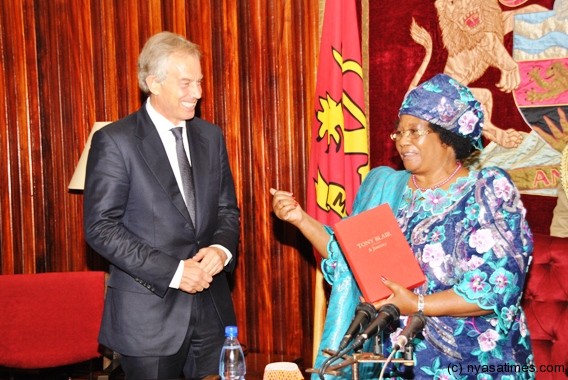
There is a certain symmetry to President Arthur Peter Mutharika reaching for Tony Blair as he tries to convince the world that Malawi is open for business again.
Both men are practised in the art of the comeback: Mutharika returned to State House after a period out of power promising renewal, while Blair has spent the years since Downing Street reinventing himself as a kind of global political consultant to leaders who need his particular brand of credibility by association.
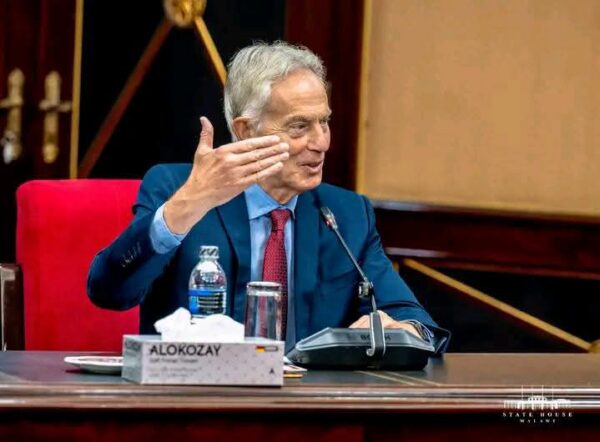
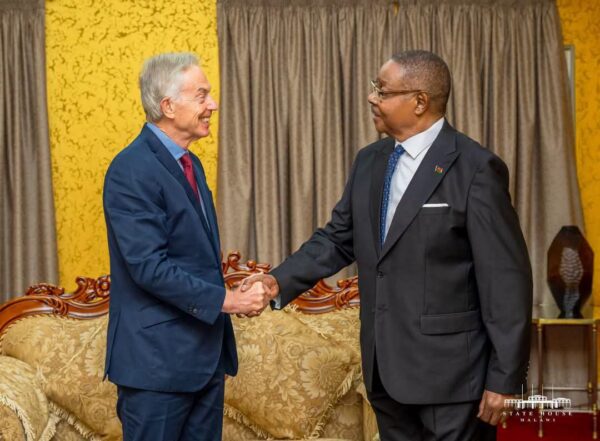
Their meeting at Kamuzu Palace this week, ostensibly about investment and economic recovery, tells us as much about the limits of Malawi’s room for manoeuvre as it does about any concrete plan to fix the country’s finances.
The headline pitch was mining and energy — the two sectors where Malawi’s underexploited resources theoretically offer the clearest route to foreign capital, and where previous governments have made similarly hopeful noises without much to show for it.
Mutharika wants Blair’s Institute for Global Change to lend its Rolodex to the search for “credible investors,” a phrase that does useful work: it implicitly concedes that Malawi has, in the past, attracted the other kind.
The substance of the meeting, as relayed by State House, rested on what Mutharika called his Four Fs — Food, Forex, Fertiliser and Fuel — a mnemonic that reduces Malawi’s economic crisis to a shopping list.
It is, in fairness, not an unreasonable shorthand for the immediate pressures facing any Malawian government: chronic foreign exchange shortages that choke import-dependent sectors, fertiliser access that determines whether smallholder farmers eat or don’t, and fuel supply chains that seize up with wearying regularity.
Mutharika’s claim that supplies have stabilised and fertiliser imports resumed will be tested against the lived experience of Malawians over the coming months rather than against a press statement from the Palace.
More interesting, and more revealing of where the real constraints lie, was the President’s request for Blair’s help with debt restructuring. This is the part of the story that ought to draw more attention than the investment rhetoric.
Malawi’s public finances remain under sustained strain from external debt служing costs that eat into the very fiscal space Mutharika would need to fund the fertiliser plant he has promised by 2027 or the broader recovery agenda he describes.
Attracting new investors while simultaneously trying to renegotiate old debts is not a contradiction, exactly, but it does suggest a government hedging across multiple fronts because none of them offers a clean, sufficient path out.
Blair’s own contribution to the exchange was, characteristically, long on affirmation and short on specifics: warm words about Mutharika’s mandate and the “significant potential” of Malawi as an investment destination, without any detail on what exactly the Institute would do differently from the many donor-adjacent bodies that have made similar promises to African governments before.
This is not a criticism unique to Blair — it is the standard register of this kind of diplomacy, in which validation of the incumbent’s leadership is the currency being exchanged for access and, presumably, a fee.
Blair’s Institute does not operate for free, and Malawi’s government has not said what the arrangement costs the country, if anything, or what it expects in return beyond introductions.
None of this means the meeting was pointless. Small, aid-dependent economies with limited diplomatic reach often do need intermediaries with better address books than their own foreign ministries, and Blair’s network, whatever one thinks of its provenance, is real.
But the gap between a photo opportunity at Kamuzu Palace and an actual mining licence signed with a credible international operator remains wide, and Malawians have heard variations on this pitch — the promise that the right relationship, the right adviser, the right investor conference will finally unlock the country’s mineral and energy potential — for the better part of two decades.
The Four Fs may be stabilising, as the President insists. Whether Tuesday’s meeting moves the needle on the harder structural questions — debt sustainability, credible institutions, a business environment that survives contact with actual investors rather than just their advisers — is the test that will matter rather more than what was said in the room.