

Why Malawi Needs a Second Vice President: Justice Mwaungulu’s Case for Internal Checks in the Presidency
Retired Supreme Court Judge, Justice Dunstan Mwaungulu, has weighed in on the ongoing debate about the office of the Second Vice President, making a compelling case for its importance in Malawi’s constitutional order. His reflections come as President Peter Mutharika faces mounting calls to appoint Enock Chihana, son of the late Chakufwa Tom Chihana—the only person to have ever held the office since its creation.
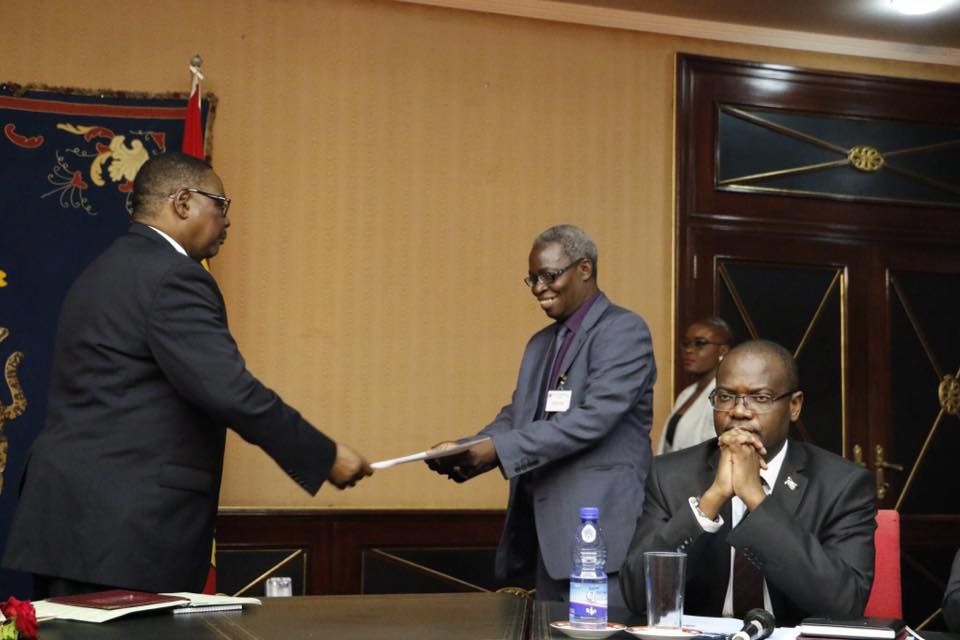
In a strongly worded Facebook post, Justice Mwaungulu dismissed claims that the budgetary implications of the position make it unnecessary. “I do not think that the budget for the second Vice President is really an issue! If it is an issue, it is not an important one! Because government can vire from reduced operations to meet the budget!” he wrote.
For Mwaungulu, the office’s importance lies not in cost, but in constitutional design. He argued that Malawi’s Constitution deliberately broke away from the “one-man show” of the 1966 order by requiring internal checks and balances even within the presidency. “The Vice President is not only the Presidency directly involved and cohering executive authority with the President—where, in a sense, the President is first among equals—the Vice President is an internal check and balance on executive excess,” Mwaungulu explained.
He went further to say that introducing a second vice president only strengthens this principle: “Consequently, adding a third President to the presidency strengthens the internal checks and balances! Because, as my constitutional theory discloses, stronger branch internal checks and balances make the branch stronger against and for checks on other branches!”
Critics have long questioned the office’s necessity, citing its duplication of roles and the burden on public finances. But Mwaungulu countered that the broader constitutional principle—ensuring accountability and diffusing power in the executive—outweighs any cost concern. “The appointment must be in the public interest,” he wrote, noting that the courts could in theory review whether such appointments truly serve that interest.
The debate takes on sharp relevance in the current political climate. Since his swearing-in, President Mutharika has yet to appoint Enock Chihana as second vice president, despite growing expectations and the historical symbolism of Chihana’s father being the only Malawian to have previously held the office under Bakili Muluzi.
Supporters argue that appointing Chihana would not only honour constitutional intent but also strengthen inclusivity and internal balance in the presidency at a time when national unity is desperately needed. As Justice Mwaungulu’s reflections suggest, the office is more than an expenditure line—it is a safeguard against executive overreach and a reinforcement of Malawi’s democratic experiment.
The question now remains: Will Mutharika embrace the spirit of the Constitution by filling the post, or will Malawi once again sideline a position that was designed to deepen accountability at the highest level of government?