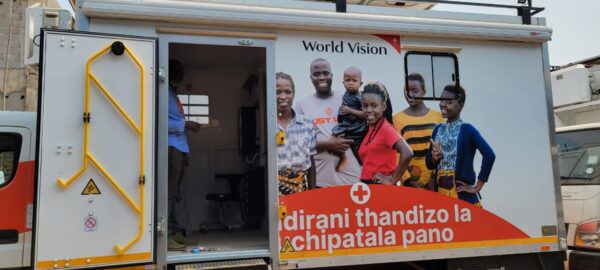

WVI Malawi rolls out K500 million mobile clinics to boost health access in hard-to-reach areas
World Vision International (WVI) Malawi has procured two solar-powered mobile clinics worth over K500 million to expand access to essential health services in some of the country’s hard-to-reach communities.
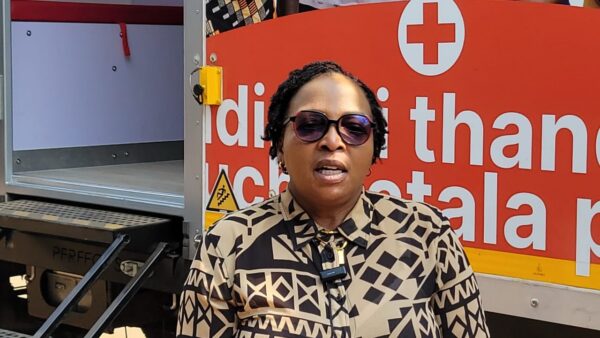
The Special Purpose Vehicles (SPVs), procured under the Global Fund Grant 7 (GF-G7), will provide integrated health services in Balaka, Chikwawa, Mulanje and Thyolo districts.
The mobile clinics are expected to be officially handed over in the last week of August to the Ministry of Health, Ministry of Local Government and district councils for deployment in collaboration with implementing partners.
Speaking ahead of the handover, WVI Malawi Global Fund Chief of Party Rose Nyirenda said the investment would strengthen community-based health service delivery, particularly for people living in hard-to-reach areas.
“As principal recipient of the Global Fund grant for HIV and TB, we are focusing on key and vulnerable populations in hard-to-reach areas. These vehicles will enable us to provide integrated community services including HIV, TB, malaria, sexual and reproductive health, and non-communicable diseases,” Nyirenda said.
She said the mobile clinics would also provide treatment for other illnesses presented by communities, making them a broader primary healthcare platform rather than facilities dedicated to HIV, TB and malaria alone.
The self-contained clinics are equipped with separate examination areas for men, women and children, vaccine and medicine storage and refrigeration facilities, medical equipment for routine assessments, handwashing and infection-prevention facilities, and solar-powered air conditioning.
Nyirenda said the vehicles had been designed to operate on rural road networks and would be used for community-based case finding, TB services, HIV testing, treatment and prevention, malaria interventions and general primary healthcare.
“We will collaborate with district councils and implementing partners to deliver these services in line with government policy on integrated service delivery,” she said.
Health advocates welcome investment
The investment has received support from health rights advocates, with the Malawi Health Equity Network (MHEN) describing the mobile clinics as an important intervention for underserved communities.
MHEN, which also chairs the Universal Health Coverage (UHC) Coalition in Malawi, said the initiative could help address geographical barriers that prevent some communities from accessing essential health services.
MHEN official Jobe said the organisation welcomed the investment by WVI Malawi and thanked the Global Fund for financing the initiative.
“MHEN welcomes World Vision Malawi’s investment in mobile clinics as a significant step towards improving access to essential health services for people living in hard-to-reach areas,” Jobe said.
He said the integrated approach could bring HIV, TB, malaria, sexual and reproductive health and other primary healthcare services closer to underserved populations while contributing to Malawi’s progress towards Universal Health Coverage.
At the same time, Jobe cautioned that mobile clinics should complement rather than replace permanent health infrastructure and other investments in the health system.
“This is to ensure sustainable and equitable healthcare for all Malawians as the Ministry of Health aspires to have health facilities within 5km of every person,” he said.
Parliamentary Committee on Health Chairperson Dr Anthony Masamba also welcomed the initiative, saying the mobile clinics would improve access to primary healthcare for rural communities.
“This is a very good initiative. People from rural areas will have an opportunity to access primary healthcare. It will also decongest district and community health facilities as communities will access services within their hard-to-reach areas,” Masamba said.
The deployment comes as Malawi continues to grapple with challenges of ensuring equitable access to health services, particularly in rural and hard-to-reach areas.
WVI Malawi is a principal recipient of Global Fund grants supporting HIV and TB interventions.