

A scathing yet honest account of Malawi’s economy: A review of George Chaponda’s book
Dr George Thapatula Chaponda, I should mention from the beginning, proves in his new book The Struggle for Economic Independence and Development in Malawi (1960-2015) that he is both a tried and tested international diplomat and politician.
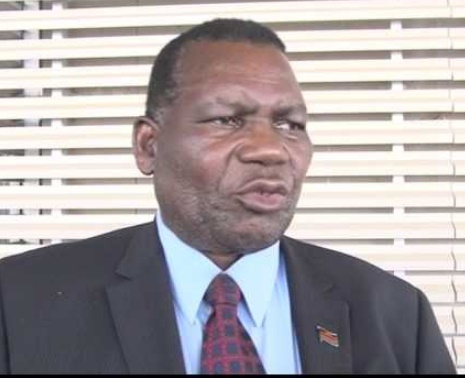
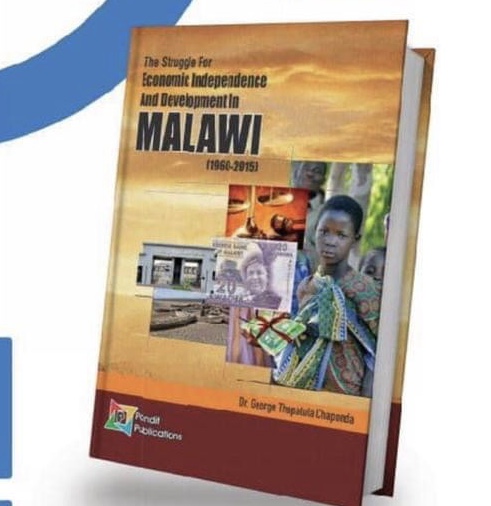
He has seen it all having worked at United Nations for 19 years and as a politician having served in such cabinet portifolios as Minister of Education, Minister of Local Government, Minister of Justice and Constitutional Affairs, Minister of Foreign Affairs as well as Minister of Agriculture, Irrigation and Water Development.
For 15 years now he has served and represented the people of Mulanje South West as MP.
And reading through his book—with a sober mind—one gets a feeling of the author’s crave to see that Malawi turns its tables around for the better.
The book applies a holistic approach to the study of the fight for economic self-rule in Malawi. This has been done by looking at the historical perspectives through the lens of political development before and after political independence. It looks at various strategies applied by the country in the fight for economic independence, including sectors of the economy that the country prioritized through the years.
The varied approaches applied by different successive political leadership have been substantiated to determine the level of the fight for economic independence. The book sets itself apart from other historical books by not only stating the facts as they were but also offering an analysis of the facts, and where necessary, offering comparative statistics.
It starts with a rebuttal of the general consensus in economics and politics today that aid has a crippling effect and could be the reason the country is backward in its struggle for economic independence. The author brings to light countries that have benefitted from aid in their fight for development and economic independence by introducing the idea of aid typology.
Aid is of varying types and each type comes with its own conditions. Some types of aid indeed could cripple, but anyone who generalizes that all aid is crippling has got a narrow understanding of aid. It is advised therefore that government must select the type of aid that will advance its policies unlike those types that will limit it.
After all, the book argues, it is the donors who most of the times come with the aid, so government can simply asses for the best offer. The issue of aid dismissed, the author turns to the structure of the economy, the focus is on specific sectors of the economy that validate the country’s state of economic development. These sectors include agriculture, social development, education, health and economic. The policies that determine how the structure functions are key to the struggle for economic independence.
The Malawian political structure is such that, of the three branches of government, the executive dominates. The author laments for example that the legislature meets at the mercy of the executive. It is therefore dependent on the willingness of the executive if the struggle is to be won. It is highlighted that during the Dr. Bingu wa Mutharika regime, there was an attempt to have some independence in how the government system functioned, cabinet ministers could be investigated and summoned to court to answer charges on corruption whilst they were in office.
And previous to that during the Kamuzu Banda regime “the civil service was relatively honest, disciplined, of high-status, professional, and hardworking (perhaps out of fear) but not well paid. Today the bulk [though not all] of the bloated civil service is lazed, demoralized, distracted by their private businesses, and more easily corrupted but well paid. Using their positions, some civil servants have ‘succeeded in appropriating a significant share of [the state’s] resources and in redistributing part of their social [i.e., their own patronage] networks.”
Such unstable political system makes it difficult for a progressive struggle for economic self-rule. The author argues that “had the country had very good health care, education and political systems it could have potentially precipitated economic independence. It is argued, therefore, that one of the major challenges faced by the country to attain economic independence is power change. Regime change in Malawi has been ineffective with successive governments discontinuing workable and tested economic development policies of their predecessor regimes. As each successive government threw away the baby with water, the struggle for economic independence for Malawi suffered huge blow.”
Chaponda’s account offers a great deal of fodder for thought. It is a timely and handy resource for politicians, economists, topnotchs in the civil service, students studying economics as well as any patriotic Malawian wishing to make a positive difference to their country.
- Biza I. Mulambia is a fourth year Bachelor of Social Science (Economics) student at the University of Malawi, Chancellor College.
Isn’t this teh same guy who embezzled our tax money through ADMARC??? Of course he likes aid! Chifukwa he gets to eat it! There politicians are all the same. No respect for this thief ndipo azivaya
Let him retire gracefully. Malawians no longer need him. They alot of very good talented young politicians with proper ideas to be given a chance.
The book is on Amazon now. Wonderful honouble
By the way, this book urges on the importance of foreign aid. For those of you who have read “Dead aid by Dambisa Moyo, how can you compare the two books?
This man was destroyed by Nankhumwa aka Malemia the Form Form gurus
Our leaders have always been blessed with intelligence and ability. Unfortunately, however, they were ethically challenged which resulted in their becoming rich while the nation became ever poorer.
This is a must have
I hear it’s a good book
Sometimes I wonder why this man decided to join politics, he
had already achieved a lot before it. Anyway
looking forward to read the book
Great book written by a great mind
I had no idea this Chaponda guy was this experienced. Politics
is indeed dirty and can just dent someone’s image.
I just got a copy on Amazon , I hope sindinabetse
It’s a must read. Congrats!
Machine from my beloved DPP
Politics aside, This man is smart!
Reading the book with a sober min. key word “ sober mind” one
will see that Malawi has great minds
& one is George Chaponda.
George chaponda can’t be a well of wisdom now after those nasty shenanigans he pioneered, it’s a shame that looks more wiser now since power slipped from his hands, a corrupt baron himself, Chaponda offers no solutions
The next big thing after bingu’s ‘ The African Dream’, Great book! Congrats Hon. Chaponda
You made it, sir..! Please lead us to a better path.
I will get a copy &
donate it to President Chakwera mwina nkusinthako zinthu
Admarc gate man? Just one of the many IDIOT THIEVES who have made sure that Malawi remains one of the poorest on the planet. Quota (hate) architect, who punished and denied deserved intelligent students from pursuing their university dream, hence starving the country of the much needed development.
You and your Mutharikas are idiot 😈s. Nde uli apa preaching chani you dirty mulakho? Chitsilu.
Book lanyatwa! Zofunika izi one Malawi one nation
This man never gives up tikanakhala enafe tikanachoka ku Malawi
after his issues koma there he is, serving his country with knowledge. God
bless you sir!
Great book for book worms
Mango Kabwafu, kuda
Nice we need more of these books
Truth be told , Chaponda is a genius
I hate to burst your bubble, but judging from the review; it gives no insight. Maybe the book is actually good but the reviewer was shallow. Maybe the book itself is shallow. Perhaps its the both of you.
It’s a good book
Kuchotsa nsanje ndi ndale George Chaponda is one of the
best and intelligent people I have interacted
with.
Urge him to write about Maizegate as well. It seems the
version we know and what the newspapers told us are different. How come up
until now, Tonse govt hasn’t arrested
him? Is APM still shielding him as all of us claimed 3 years ago? A book would be a great way to enlighten us I suppose.
Mbambande!
You could have found it deep if you were objective but your subjective ass can not match the wisdom of this undergrad, can it? He displays a floating mind that you have not managed to attain in your so many years of practice. Mwakula akulu, it’s high time you get balanced.
My STD 4 English teacher, Mr Y.S.F.C Chinyamula told me that once you use “high time” the objective tense becomes past. Just a question. Or was I misled by someone willimg to teach though being denied of “risk allowances?”
Umalize degree yakoyo and do a Master’s at reputable University outside Malawi and then you will begin writing sense other than ass kissing this idiot
This man’s image was dented because his closeness to APM koma ndi wanzelu mukuluyu Tonse government can learn one or two
Kumawelenga kumachotsa umbuli
How
much and where can I get a copy?
I have only read a few chapters and so far I like how he
argued in the book without being partisan or biased towards the regimes he himself
served as a cabinet minister. Respect.
But do you realize that at his age he is far much better than you??