

Legal Experts Slam Marginalisation of Vice-Presidents, Call Practice ‘Morally Wrong’ and a Waste of Public Resources
A growing chorus of legal scholars and political analysts has criticised the continued sidelining of vice-presidents in Malawi’s governance, arguing that while the Constitution permits the President to delegate duties to Cabinet ministers, consistently bypassing the Vice-President raises serious moral, constitutional and governance concerns.
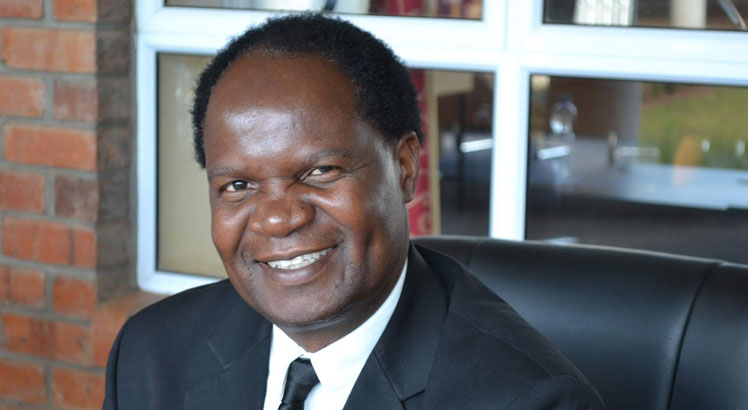
The debate comes amid increasing scrutiny over instances where Cabinet ministers have represented the President at official functions despite the availability of the country’s vice-presidents.
Former Minister of Justice and Constitutional Affairs Fahad Assan, who participated in drafting Malawi’s Constitution, described the practice as fundamentally inconsistent with the spirit in which the office of Vice-President was created.
“I personally intervened when there was a proposal to amend the Constitution to allow the President to remove the Vice-President,” Assan recalled. “A President and Vice-President both contribute to the votes. But now it’s like, as they say, ‘use and dump’. That is constitutionally and morally wrong.”
His remarks reflect a broader concern that vice-presidents, despite helping secure electoral victories, are often relegated to the political sidelines once governments assume office.
Adding to the criticism, University of Malawi law professor Garton Kamchedzera argued that the problem stems from a dangerous conflation of the ruling party with the State itself.
According to Kamchedzera, many political actors fail to distinguish between party interests and constitutional obligations, treating government positions as extensions of party structures rather than institutions established by law.
“The Vice-President is chosen not because he or she has a high status in the party, but to help win votes,” he observed. “However, the Constitution regards the Vice-President as the legal successor and Number Two to the President.”
He warned that this constitutional role can clash with political factions or influential groups that view the presidency as a vehicle for controlling power and state resources.
Private practice lawyer Bright Theu also questioned the political wisdom of overlooking the Vice-President when assigning presidential responsibilities. While acknowledging the President’s legal authority to delegate duties, he suggested that repeatedly choosing ministers over the Vice-President undermines established protocol and sends troubling signals to the public.
He argued that citizens naturally expect the Vice-President to assume leadership responsibilities whenever the President is unavailable and cautioned that ignoring this expectation fuels perceptions of internal political conflict and instability.
Human rights lawyer Justin Dzonzi echoed the constitutional perspective, insisting that political preferences cannot override the law.
“We cannot bend the law to fit political idiosyncratic tendencies,” Dzonzi said, suggesting that constitutional offices should be respected regardless of shifting political dynamics.
Political scientist Boniface Dulani framed the issue as both a governance and economic concern. He argued that dysfunctional relationships within the presidency ultimately disadvantage ordinary Malawians, who finance the offices through public funds.
“When those entrusted with the presidency fail to work together, the country is shortchanged,” Dulani said. “Effectively, taxpayers pay for multiple officers occupying the presidency, yet receive the benefit of only one, resulting in inefficiency and unnecessary expenditure.”
The debate has intensified as observers note that vice-presidents have, at various times, appeared to play diminished public roles while Cabinet ministers continue to represent the President at numerous official engagements across the country.
Supporters of the current arrangement point to Section 89(6) of Malawi’s Constitution, which allows the President to exercise powers personally or delegate them in writing to a Cabinet minister or another government official. Legally, therefore, the President is within his constitutional authority to appoint ministers to carry out certain functions.
However, critics contend that legality alone does not settle the matter. They argue that persistently overlooking the Vice-President risks eroding the significance of the nation’s second-highest constitutional office, weakening public confidence in executive governance and creating the perception that political considerations are taking precedence over constitutional convention and democratic accountability.
As the debate continues, legal experts appear largely united on one point: while the Constitution grants the President broad discretion in delegating responsibilities, the long-term health of Malawi’s democracy depends not only on adherence to the letter of the law but also on respect for its underlying principles and institutions.
Follow and Subscribe Nyasa TV :