

AFSTA Congress 2026: Africa Cannot Fix Food Security Without Fixing Seed Policy
AFSTA Congress 2026 in Cape Town that was attended by Mr Nessimu Nyama Secretary General of Seed Trade Association of Malawi (STAM) and Lilian Chimphepo, Chief Environmental Officer at the Malawi Ministry of Natural Resources and Environmental Affairs who featured as a panelist, delivered a blunt warning to African governments: unless seed laws, regional trade systems and innovation rules are modernised, the continent will keep talking about food security while undermining the foundation of agricultural productivity.
If African governments are serious about food security, climate resilience and agricultural growth, they need to stop treating seed policy as a technical side issue.
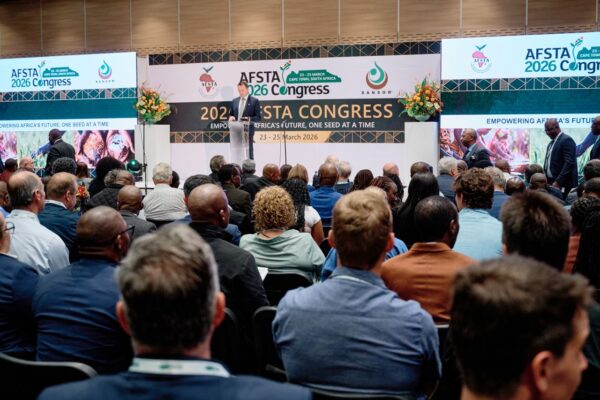
That was the clearest lesson from the 2026 Congress of the African Seed Trade Association in Cape Town, held from 23 to 25 March at the Century City Conference Centre.
Too often, public debate around agriculture begins at the wrong end of the chain. We argue about fertiliser prices, food imports, grain shortages and emergency relief after productivity has already failed. But productivity starts with seed. If farmers cannot access quality, climate-resilient, affordable seed on time, the rest of the food system is already under pressure.
AFSTA President Amadou Sarr said it plainly. “Seeds are not just agricultural inputs; they embody our future.” He described them as essential to food security, sustainable development and “Africa’s economic prosperity,” adding that they represent “the promise of a resilient Africa” under the pressure of climate change, population growth and rising food demand. That is exactly how policymakers should see seed: not as a side issue, but as strategic infrastructure.
The congress brought together more than 500 delegates from 46 countries. Those numbers matter because they show the seed sector’s growing strategic weight. But attendance is not the real story. The real story is that the seed sector is evolving faster than many African policy systems.
AFSTA’s Secretary General laid out how the organisation has restructured itself around market access, strategic partnerships, biotechnology, phytosanitary issues, intellectual property and advocacy. He said AFSTA had undertaken “a bold and deliberate institutional transformation” and updated its constitution and bylaws to improve governance and transparency. The private seed industry is adapting. The question is whether governments are doing the same.
In many countries, the answer is no.
Seed laws remain fragmented. Variety release procedures are often slow and duplicative. Cross-border seed movement is delayed by avoidable bottlenecks. Regulatory uncertainty still hangs over breeding innovation. The result is predictable: fewer choices for farmers, slower diffusion of improved varieties and weaker incentives for companies and breeders to invest.
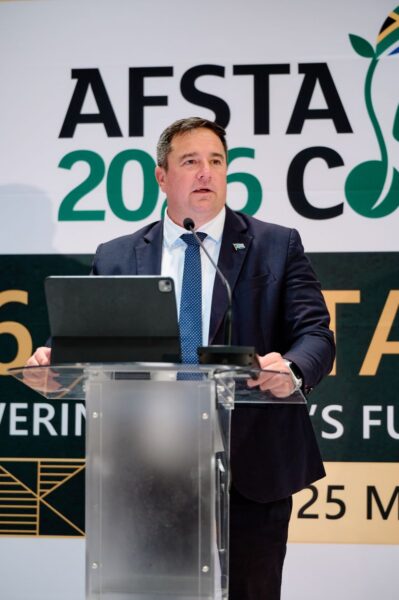
South African Agriculture Minister John Steenhuisen made the issue unmistakable. In his keynote, he called seed “the starting point of productivity, the carrier of innovation, and the foundation upon which resilient food systems are built.” He also warned, in effect, against policy isolationism, saying that “Africa’s agricultural future will not be shaped in silos, but through collaboration, innovation and shared progress.” That is the point many governments still miss. Africa needs rules that protect quality and breeder rights, but it also needs regulatory systems that move at the speed of science.
This is not an argument for deregulation. It is an argument for better regulation.
Africa needs seed rules that are science-based, efficient and regionally coherent. It needs stronger seed authorities, better phytosanitary systems and clearer intellectual property frameworks. It needs public policy that understands that innovation and inclusion are not opposites. Farmers, especially smallholders, need access to better seed, but breeders and seed companies also need an environment where investment is worth making.

There is already enough evidence that progress is possible. AFSTA says it has helped strengthen seed system capacity in countries such as Zambia and Burkina Faso, trained hundreds of industry professionals, and supported biotechnology engagement in Nigeria, Ghana, Malawi and Kenya. Through partnerships with WorldVeg and IITA, it has also facilitated the transfer of more than 100 high-yielding, climate-resilient and nutrient-dense varieties. This shows that Africa does not lack capability. What it lacks, too often, is policy speed and consistency.
Public post-congress reactions from international participants underline the same point. The International Seed Federation said the congress created “practical dialogue” and a “shared focus on the policy and trade conditions needed to strengthen the regional seed sector.” The Ethiopian Seed Partnership and Ethiopian Seed Association likewise framed the event as a serious forum for stronger international seed partnerships in support of African productivity and food security. Those are not casual endorsements. They are signals that external partners left Cape Town talking not about protocol, but about policy.
International collaboration can help Africa move faster — provided it is practical and policy-focused. Euroseeds offers one useful example. It represents the European seed sector and has long argued for science-based regulation, innovation, competitiveness and more efficient seed trade across borders. But AFSTA Congress 2026 showed that the opportunity is wider than one partner or one region.
 The International Seed Federation brings global coordination and contributes technical credibility on seed testing and quality systems. ACTESA, CORAF, WorldVeg and IITA connect regulation, research and regional delivery. The Indian Chamber of Agriculture extends South-South commercial and technology exchange. That is the model African policymakers should embrace: not imitation, but smart exchange. Learn from European experience. Use global seed-sector coordination. Work with international research and trade partners. Build seed systems that are African-led, globally connected and fit for a climate-stressed future.
The real danger is delay. Climate shocks are intensifying. Farmer needs are changing. Population growth is relentless. A continent that waits too long to modernise seed policy will not just miss commercial opportunities; it will deepen food insecurity.
The message from Cape Town should therefore be heard in every agriculture ministry, every trade ministry and every regional bloc secretariat. Seed policy is economic policy, food policy and climate policy all at once.
Africa cannot fix food security without fixing seed policy. And it cannot fix seed policy without urgency.
Follow and Subscribe Nyasa TV :