

Analysis: A good first year, on paper, but paper doesn’t keep the lights on
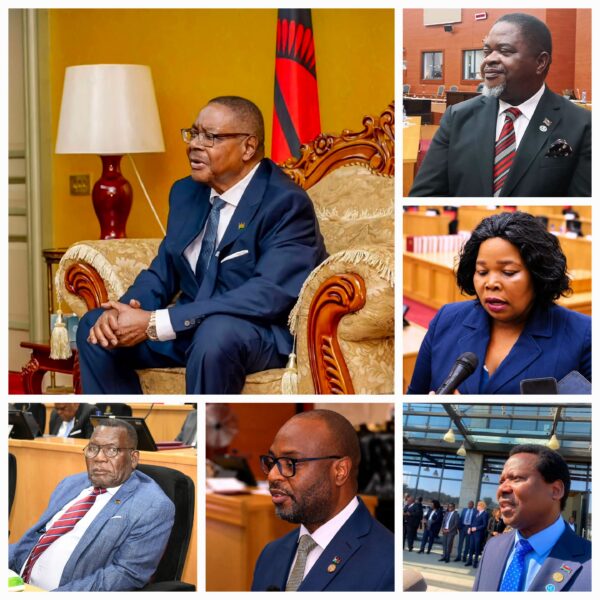
That’s the mark President Peter Mutharika has been given — in a report card on his first year in office.
And on the face of it, that’s a pretty good grade. Free secondary education, actually happening. A farm subsidy programme that’s reaching more people with less of the cash going missing along the way. Inflation down. Fuel available. A state broadcaster that, by most accounts, has stopped sounding like it works for one party.
If you’re the president’s team, you’ll want to be shouting about that list from the rooftops. And to be fair to them, it’s not nothing.
But here’s the thing about report cards. They tend to be kindest to the person who can hand out the marks and the discipline in one go — a president who decides to cut official travel, clear a pension backlog, or install new leadership at the prosecutors’ office can more or less just do it. Sign it off, make it happen.
What’s much harder to just “make happen” is a power station. Or a hospital pharmacy that’s actually stocked. Or a mine that goes from memorandum of understanding to men in hard hats digging rock out of the ground. And it’s precisely those jobs — the ones that need machinery, money and years, not just willpower — where this government is coming unstuck.
Look at where the marks fall away. Energy: 4.8. Mining: 4.2. Health: 4.0. Youth and sport: 3.5. Trade: 3.5. These aren’t obscure corners of government. They’re the ministries that decide whether an ordinary Malawian’s day involves the lights staying on, a chemist that has the drugs the doctor just prescribed, or a job for a young person leaving school. And on all three, the report card says: not yet.
So what’s actually going on here? I’d put it like this. Malawi’s government has spent its first year doing the things that are within its gift — discipline, tone, a bit of housekeeping — and largely not yet doing the things that require the state itself to work better. Those are two very different tasks. The first one, you can manage from the president’s office with a phone call and a bit of resolve. The second one needs ministries that function, procurement that isn’t leaking, and — let’s be honest — money that isn’t easy to find in an economy this tight.
There’s a political risk in that gap, and it’s not a subtle one. Voters generally don’t grade governments on inflation charts or IMF negotiations. They grade them on whether the lights came on last night. Right now, in large parts of Malawi, they didn’t — for four to six hours, most days. That’s the kind of thing people notice a lot more than a renegotiated loan programme, however sensible that renegotiation might be.
And it’s worth saying — this isn’t really about any one minister having a bad year. The health minister, the energy minister, the mining minister: read the small print, and it’s less “these people aren’t trying” and more “these are jobs where trying isn’t, on its own, enough.”
A minister can announce a solar project. Getting it built and connected to the grid is a different order of task entirely. That’s the trap: announcements are basically free. Delivery costs money, time and competent institutions — three things Malawi has never had in abundance all at once.
Which brings us to the bit of this report that’s easy to skip past: what happens to a vice-president who isn’t really being used. Jane Ansah has just lost two of the portfolios she did have. It’s part of a pattern — Malawi has form here, going back through several administrations — where the number two ends up doing very little of substance. On one level, fine, that’s the president’s prerogative. On another level, it means an awful lot rests on one office, one in-tray, one person’s bandwidth.
When a government’s entire good news story is basically “the man at the top has been disciplined,” you’d quite like to know there’s some depth behind him too.
None of this means the government is in trouble, exactly — not yet.
A 7.6 for the president, with clear, real wins to point to, buys you goodwill. But goodwill isn’t a renewable resource. It gets spent. And it tends to get spent fastest on the things people actually live through: the blackout, the empty pharmacy shelf, the mine that was promised and never opened.
So the question for year two isn’t really “can this government be disciplined?” We know the answer to that already. It’s “can it deliver?” And on today’s evidence, that’s still very much open.