

ANALYSIS | CABINET OF SHADOWS: Who is Truly Steering the Ship of State?
The Office of the President and Cabinet (OPC) recently issued a press release that was ostensibly meant to calm a nervous nation. Instead, it did the exact opposite. By launching a defensive, deeply flawed broadside against public skepticism, Chief Secretary Justin Saidi did not douse the flames of rumors regarding President Peter Mutharika’s grasp on power; he poured aviation fuel directly onto them.
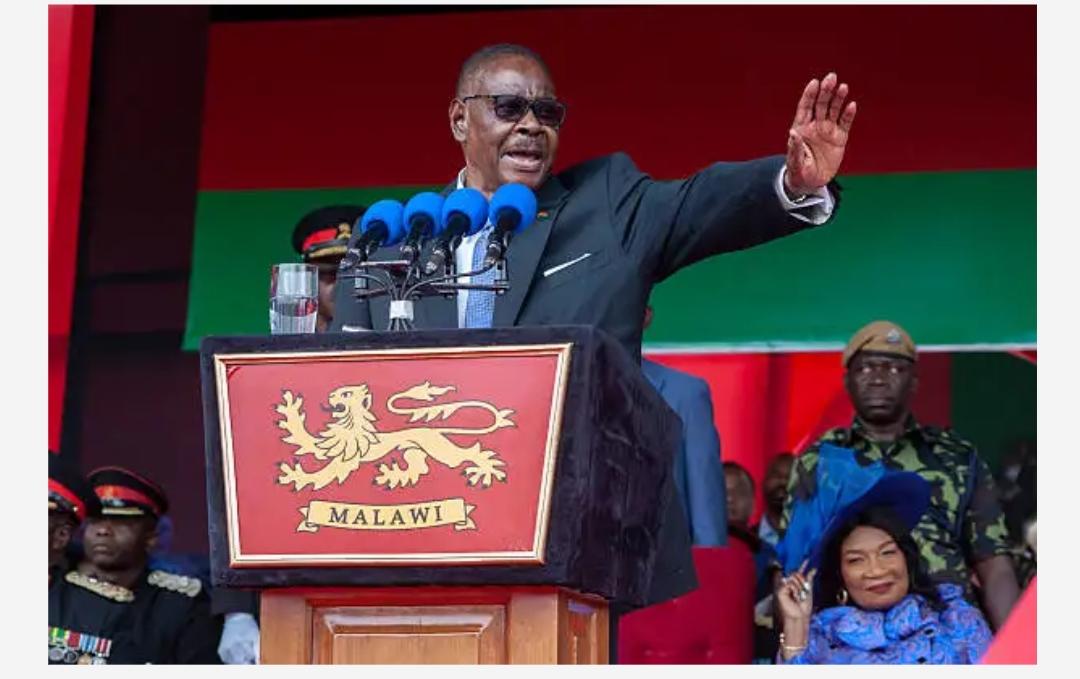
When a government feels compelled to formally declare that its leader is “personally convening and chairing” his own Cabinet meetings, it has already lost the argument. True power is visible; it does not require a bureaucratic permission slip or a lecture on patriotism to be believed. The OPC’s statement is a masterclass in political gaslighting, but a closer look at the text reveals an administration tangled up in its own contradictions, raising a terrifying question for every Malawian: Who is actually holding the gavel behind the closed doors of Kamuzu Palace?
The Photographic Paranoia and the Missing President
Let us look first at the glaring inconsistency in how the government handles visual evidence. The OPC insists that President Mutharika chaired the Cabinet meeting on May 27. Yet, look closely at what the State House actually released to prove this: photos of the ministers, photos of First Vice-President Jane Ansah, and photos of Second Vice-President Enoch Chihana.
Notice what—or rather, who—is missing?
In an era where every state apparatus possesses high-definition digital cameras and instant social media access, the administration failed to produce the one piece of evidence that would have silenced the critics instantly: a clear, undeniable, unedited image of President Mutharika actively leading that room. Instead, we are given a photographic roll call of subordinates. By staging a media proof-of-life that excludes the primary subject, the State House has effectively validated the very rumors it seeks to destroy. If the President was there, why hide him behind a wall of ministerial portraits?
The “Austerity” Farce: Bypassing the Constitutional Deputies
The most damning exposure of government duplicity lies in Justin Saidi’s patronizing defense of the President’s constant delegation of authority. The OPC wraps this patterns of absenteeism in the noble flag of national sacrifice, claiming the President’s reliance on proxies is driven by:
“…an implementation of the government’s austerity agenda and the prudent stewardship of public resources.”
This is not just a weak excuse; it is an insult to the intelligence of the Malawian electorate.
If this administration were genuinely consumed by a desire to save public funds, it would utilize the existing, constitutionally mandated executive infrastructure. Malawi has an expensive, taxpayer-funded governance structure that features not one, but two Vice-Presidents. Both First Vice-President Jane Ansah and Second Vice-President Enoch Chihana sit at the President’s immediate disposal, equipped with the staff, security, and institutional stature designed specifically for state representation.
Yet, the President routinely bypasses his elected deputies, opting instead to delegate high-level national events to appointed Cabinet ministers—specifically fueling the narrative that Minister of Foreign Affairs George Chaponda is operating as a de facto Prime Minister.
[The Executive Hierarchy]
       President
          │
          ├──> (Bypassed) ──> 1st VP (Jane Ansah)
          ├──> (Bypassed) ──> 2nd VP (Enoch Chihana)
          │
          └──> [Actual Power Delegation] ──> Appointed Ministers (e.g., Chaponda)
There is absolutely zero economic logic in ignoring your constitutionally elected deputies to assign state duties to line ministers. It does not save a single tambala. What it does do is expose an internal fracture within the executive branch. It reveals a Presidency that does not trust its own official successors, preferring instead to empower a select circle of appointed loyalists. This isn’t “prudent stewardship”—it is the consolidation of a kitchen cabinet operating in the shadows.
The Patriotism Trap: Weaponizing Loyalty to Conceal Weakness
Perhaps the most sinister element of the OPC’s communique is its attempt to criminalize public curiosity. To suggest that citizens asking valid questions about the health, presence, and activity of their Head of State is “unpatriotic” and a “deliberate attempt to undermine confidence” is a authoritarian tactic designed to stifle accountability.
In a democracy, confidence is not something citizens owe to a government; it is something a government must continuously earn from its citizens. Malawians are facing severe economic hardships, structural food insecurity, and a fragile public service delivery system. They have every right to look toward Capital Hill and demand to see the face of the individual they elected to navigate this crisis.
When a leadership hides behind press secretaries and treats public anxiety as treason, it signals a profound panic within the ranks. A leader who is visibly, energetically, and undeniably in command does not need his Chief Secretary to write a defensive essay scolding the public for noticing his absence.
The Verdict: A Country Adrift
The OPC wanted this statement to project absolute control, but it has achieved the exact opposite. By failing to provide transparent visual proof, by fabricating an “austerity” narrative that collapses under basic arithmetic, and by attacking the patriotism of a worried populace, the government has inadvertently confirmed our deepest anxieties.
The state machinery is running on autopilot, or worse, being taxied by unelected proxies who enjoy the privileges of executive authority without the burden of electoral accountability. Malawi cannot afford to be governed by press releases, proxy ministers, and empty declarations of authority. If President Peter Mutharika is in control, he must step out from behind the curtain of Justin Saidi’s text, face his people, and show this country that he is the one holding the wheel. Until then, the state house remains a theater of shadows, and the nation remains entirely justified in asking: Who is really running Malawi?
You cannot fool some people sometimes but you cannot fool all the people all the time. Government can play games with the public now but sooner or later the truth will come out.
Painful truth. Politicians should know that Malawians of this century are not sleeping.