

Chakwera in talks with Chilima, Joyce Banda: Malawi opposition parties seek electoral alliance
The main opposition Malawi Congress Party (MCP) president Lazarus Chakwera is courting the UTM party led by Vice-president Saulos Chilima and the People’s Party (PP) of former president Joyce Banda to discuss a possible electoral alliance to fight May 21 2019 Tripartite Elections against President Peter Mutharika and his governing Democratic Progressive Party (DPP) and its ally United Democratic Front (UDF).
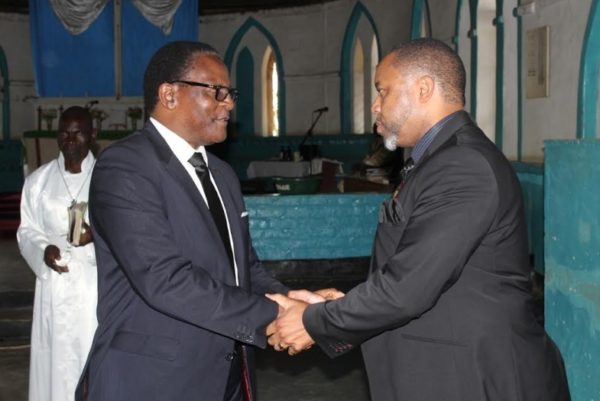
Mutharika, 78, is seeking a second and final term after winning the 2014 race against Banda, 68, whose PP is one of the opposition parties being courted by the leader of the opposition.
The test will be whether the alliance can agree on a single candidate before the watershed 2019 elections without splintering.
MCP spokesperson the Reverend Maurice Munthali confirmed that Chakwera has been having “discussions” with leaders of opposition parties including PP and UTM.
Munthali said the talks are yet to reach advanced stage.
“But, at this point, we cannot rule out a possible electoral partnership with one or both of these,” he said.
Munthali said MCP led by Chakwera stand for “national-building and not individualistic attitudes.”
MCP spokesman said the party will discuss the possible electoral partnership during its next National Executive Committee (NEC) meeting.
PP spokesman Ackson Kalaile Banda confirmed talks of electoral alliance, saying there are other parties being persuaded to band together.
Kalaile said PP executive meeting will also discuss the matter.
He said their leader Banda is currently out of the country on a tour in Rwanda and Kenya and that as soon as she return, PP will “hit the ground”.
UTM spokesman Joseph Chidanti Malunga said their newly registered party is preparing a national convention and that a route map for 2019 election will be drawn, saying “electoral alliances are always possible.”
But not everyone is convinced. Rather than providing voters with a real choice of an alternative government and a force to be reckoned with at the elections, the proposed alliance is a last-ditch effort by parties and personalities who have been bit-part players to avoid political oblivion, said some analysts interviewed.
Mutharika’s presidency has seen the economy grow at a steady 5 to 6 percent a year, with inflation slowing down to single digits but has faced criticism for not doing more to tackle corruption.
A survey by the Institute of Public Opinion and Research (Ipor) conducted between August and September this year to assess the political environment in Malawi 10 months ahead of the May 2019 Tripartite Elections and give an understanding of the political and economic environment of the country has suggested Mutharika is ahead, although narrowly.
However, voting in Malawi in the past has tended to be driven by tribal loyalties rather than policy.
The Ipor survey shows the DPP is likely to win the 2019 elections with a stronger base in the populous Southern Region, followed by MCP in the Central Region and then UTM in the minority Northern Region.
Governance commentator Henry Chingaipe said the survey results were within the reasonable expectation of the electoral outcomes.
He said DPP has the advantage of incumbency while MCP is a serious contender but the margin between them was small and anything can happen in the next six months, depending on how parties will use these results to inform their electoral campaign strategies.
“The results give momentary relief to DPP that despite their integrity being spoiled too much and their performance being suboptimal, they still have an edge. Given recent political discourse, one would have expected the urban support for DPP to go down sharply,” he said in quotes reported by the press.
Chingaipe said UTM was a force to reckon with considering that they have been able to mobilise more support than UDF and PP.
The survey had a national representative final sample of 1 350 of eligible voters and was led by social and political scientists Blessings Chinsinga, Boniface Dulani, Joseph Chunga and Mwayi Masumbu.
The build-up to next year’s vote has already been marred by political violence perpetrated against the opposition and vote rigging fears following the missing of a biometric registration kit.
However, MEC Chairperson Jane Ansah said the missing equipment, which belonged to the National Registration Bureau (NRB) had no effect on the registration process and that there was no data loss.
Follow and Subscribe Nyasa TV :