

Chakwera, the constitution, and why MCP’s succession row matters
Here’s the thing about the row unfolding inside Malawi’s Congress Party. On the surface, it looks like fairly standard post-defeat squabbling, the sort every party goes through after a bruising election loss. Dig a little deeper, though, and there’s a more interesting question at stake, one that goes beyond who leads the MCP and gets at something more fundamental about how the party sees itself.
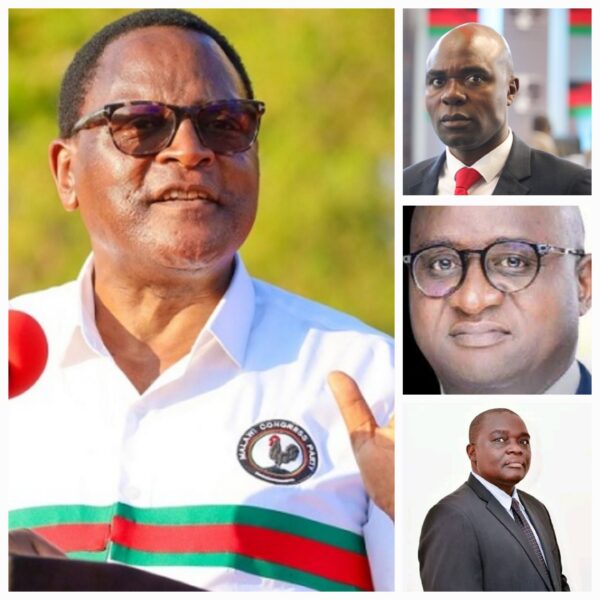
Lazarus Chakwera lost the presidency a year ago. That much isn’t in dispute. What is in dispute is whether he gets another go at leading his party into the next election, and crucially, whether the rules should be rewritten to make that possible.
Chisomo Mbembeza, the party’s Kasungu District chairperson, has been admirably candid about the mechanics of what’s being proposed. Malawian law, he points out, would allow Chakwera to stand again. The MCP’s own constitution currently would not. His solution isn’t to accept that constraint, it’s to change the constitution so the constraint disappears.
Now, plenty of parties tweak their internal rules from time to time. That’s normal politics. But when the rule change in question exists, transparently, to benefit one specific person who has just lost a general election, it’s worth pausing on what that says about the party’s priorities.
One senior figure inside the NEC, who didn’t want to be named (draw your own conclusions about why), did some arithmetic that’s worth sitting with. If Chakwera contests the convention, wins, and then goes on to seek re-election through to 2034, you’re looking at 21 years in charge of the party. Twenty-one years. That’s not a detail, it’s the whole story in one number.
And there’s a historical irony sitting right underneath this. Malawians voted in 1993, decisively, to reject life presidency. That referendum is baked into the country’s modern political identity.
So a proposal, even one confined to a political party rather than the state, that edges toward indefinite leadership sits uneasily against that backdrop, whatever the legal technicalities.
Not everyone in the party is going along with it, which is itself instructive.
Former secretary general Eisenhower Mkaka has been unwilling to entertain the idea that any convention simply hands Chakwera continuity by default.
And Alex Major, long a fixture of MCP presidential contests, has gone further still, calling for an emergency convention and alleging the existence of what he calls a “parallel vetting committee” designed to filter out rivals before they get anywhere near a ballot.
Whether that committee exists exactly as described is almost beside the point. The fact that a senior figure feels able to make that accusation publicly tells you the level of trust inside the party has broken down significantly.
Here’s the practical argument, though, and it’s one worth taking seriously regardless of where you sit on Chakwera personally. A defeated leader asking for continuity isn’t automatically wrong, incumbents do sometimes deserve another shot.
But one senior party figure put the electoral logic plainly: a fresh face capable of winning over undecided voters would likely do more for the party’s prospects than doubling down on someone who’s already lost with every advantage of incumbency behind him.
That’s not a hostile take, it’s just how opposition politics tends to work. Parties that keep backing leaders who’ve already lost, hoping loyalty will eventually be rewarded with victory, don’t have a brilliant track record.
With names like Prince Kapondamgaga, Esau Phiri, Daudi Suleman and McBride Nkhalamba being floated as alternatives, the MCP clearly isn’t short of options.
What it seems to be short of is agreement on whether those options should even get a fair hearing, or whether the rulebook gets quietly rewritten first to make sure they don’t need to.
Follow and Subscribe Nyasa TV :