

Chaponda slams UN ‘talk shop’: Malawi demands bold UN reforms on debt, climate and African veto
Malawi has delivered a trenchant critique of global governance at the United Nations in New York, calling on the international body to abandon performative diplomacy and transform itself into an “engine of delivery” for the Global South.
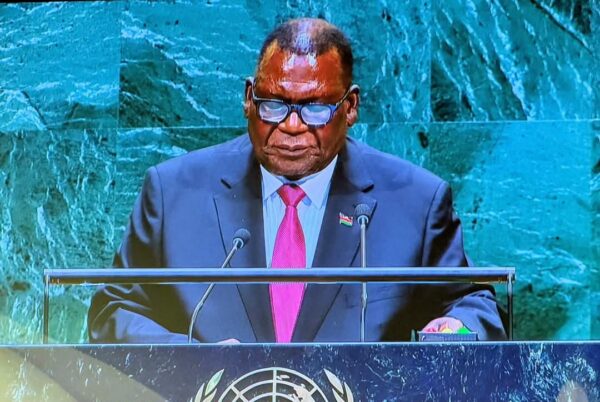
Addressing the 81st UN General Assembly General Debate, Malawi’s Minister of Foreign Affairs and International Cooperation, Dr George Chaponda, warned that public faith in multilateralism was collapsing under the weight of unfulfilled promises.
”Restoring trust in the international system requires concrete action on development, climate change, debt, global governance, health and peace,” Chaponda told delegates, arguing that traditional international institutions continue to leave developing economies exposed to systemic shocks.
Central to Chaponda’s address was a call for comprehensive debt relief and expanded access to concessional financing aimed at boosting agriculture, industrialisation, and infrastructure across southern Africa.
He also demanded the immediate, full capitalisation of the Loss and Damage Fund—a key mechanism designed to compensate climate-vulnerable nations suffering the brunt of global warming despite contributing negligible global emissions.
Turning to global security and representation, the foreign minister reiterated longstanding calls for a fundamental overhaul of the UN Security Council.
Chaponda argued that permanent African representation, complete with veto rights, is essential to rectify the historic underrepresentation of a continent home to 1.4 billion people.
He further pressed for a legally binding global Pandemic Treaty and robust investment in African pharmaceutical manufacturing to prevent a repeat of the stark vaccine inequities witnessed during recent health emergencies.
Chaponda’s intervention comes at a critical juncture for Malawi and the broader Southern African Development Community (SADC). The landlocked nation has faced severe economic headwinds in recent years, compounded by climate-induced extreme weather events—including devastating tropical cyclones and prolonged droughts linked to El Niño patterns—that have crippled agricultural output and heightened food insecurity.
These environmental shocks have exacerbated an acute debt crisis, squeezing fiscal space and limiting public spending on healthcare, education, and climate adaptation.
Like many low-income countries, Malawi spends a disproportionate share of its national revenue on debt servicing, leaving its economy reliant on external concessional loans and international aid.
Politically, Chaponda’s remarks align with a growing, unified push among African leaders to demand institutional parity on the world stage.
The continent’s campaign for structural reform within the UN Security Council and international financial institutions like the IMF and World Bank has gathered momentum, driven by frustration over Western-centric decision-making and delayed climate finance.
Despite the sharp critique, Chaponda reaffirmed Malawi’s foundational commitment to economic diplomacy and multilateralism, declaring that the country remains “open for business” to international partners willing to invest in sustainable development.
Follow and Subscribe Nyasa TV :