

Chipungu tells UN meeting Malawi needs ‘decisive implementation’ on urban growth
Malawi’s Minister of Lands, Housing and Urban Development, Chimwemwe Chipungu, told the United Nations General Assembly’s High-Level Meeting on the Midterm Review of the New Urban Agenda on Wednesday that the coming decade “must be defined by decisive implementation,” as the organisation marked ten years since the agenda’s adoption.
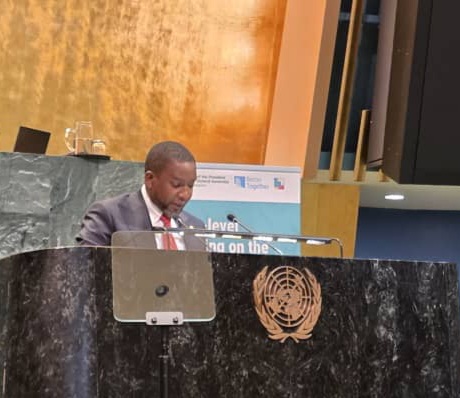
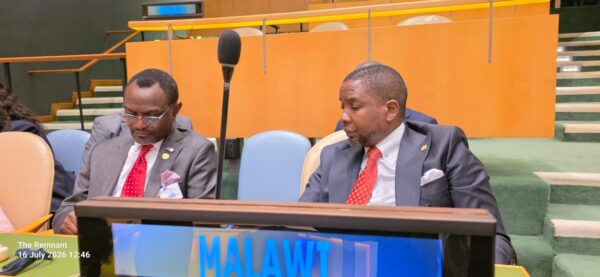
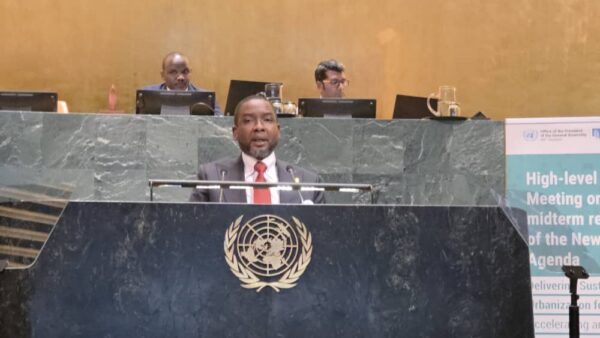
Delivering Malawi’s national statement in New York, Chipungu aligned the country with remarks made by Uruguay on behalf of the Group of 77 and China, before setting out Malawi’s own urbanisation challenges and priorities to the assembled member states.
Although only 20 per cent of Malawi’s population currently lives in urban areas, the minister said the country’s towns and cities are expanding at an unprecedented pace, placing mounting pressure on housing, infrastructure and basic services.
Almost 70 per cent of Malawi’s urban population lives in informal settlements, he said, underscoring the scale of the challenge facing policymakers as urban growth accelerates.
In response, Malawi has designated sustainable urbanisation a national development priority under its long-term Malawi 2063 Vision, with a strategy centred on developing secondary cities to promote territorial development.
The approach is intended to create growth points across the country and strengthen rural-urban linkages, so that the economic benefits of urbanisation extend beyond the largest cities.
Chipungu said government had also embraced decentralisation, aimed at giving local government authorities the capacity to implement urban development programmes considered central to achieving the Sustainable Development Goals, the New Urban Agenda and Malawi 2063 alike.
The minister called for greater investment in affordable housing, resilient infrastructure, basic urban services and the upgrading of informal settlements, arguing that such objectives depend on stronger collaboration among national and local governments, the private sector, civil society, communities and development partners.
As an example of that collaborative approach, Chipungu pointed to a partnership between Malawi, Habitat for Humanity Malawi, service providers and a local government authority that delivered a slum-upgrading intervention transforming an informal settlement in the City of Lilongwe.
He said improved access for developing countries to climate finance, technology transfer and technical assistance remained equally important to building more resilient and sustainable cities.
Chipungu closed his remarks by reaffirming Malawi’s commitment to multilateral cooperation, stating that the country remains “firmly committed to working with UN-Habitat and all partners to ensure that urbanization becomes a driver of inclusive growth, resilience and prosperity, leaving no one and no place behind.”
The statement forms part of Malawi’s broader diplomatic engagement at the midterm review, where the country is co-chairing the process alongside Poland and helping lead the drafting of a Political Declaration intended to accelerate global implementation of the New Urban Agenda through to 2036.