

Constitutional Court Draws a Hard Line: Begging Remains a Crime Despite Rights Challenge by Persons with Disabilities
The High Court of Malawi has delivered a blunt and far-reaching ruling: begging is still a crime under Malawian law.
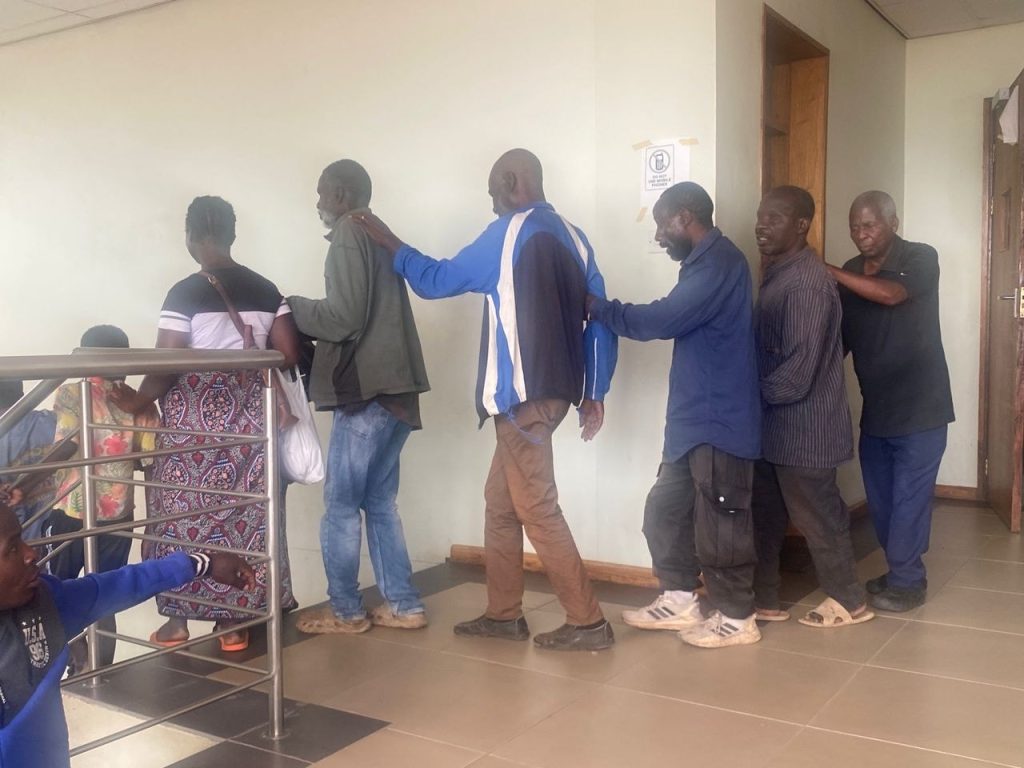
In a unanimous decision that shuts down a high-stakes constitutional challenge, a three-judge panel—John Mashikizo Chirwa, Anneline Kanthambi and Chimwemwe Kamowa—dismissed an application by 13 persons with disabilities who sought to have Section 180(b) of the Penal Code declared unconstitutional.
The applicants had argued that criminalising begging is not just outdated, but discriminatory—violating basic rights to personal liberty, dignity and participation in economic life. They pushed the court to recognise begging as a survival strategy in a country where social protection remains fragile.
The court was not persuaded.
“It is the finding of the court that there is no merit in the claimants’ application,” Justice Chirwa said as he delivered the judgment, effectively affirming that the law stands as it is.
That law—Section 180(b)—is explicit and uncompromising. It criminalises anyone found begging or soliciting alms in public spaces, including those who encourage others, even children, to do so. First-time offenders face fines or imprisonment, with harsher penalties for repeat offences.
The ruling sends a clear message: public begging is not recognised as a lawful means of survival, but as an offence punishable by law.
For the applicants and their legal team, the decision is a heavy blow. Lawyer Chikondi Chijozi Jere said her clients were deeply disappointed and are now weighing their options, including a possible appeal to the Supreme Court.
“We will study the full judgment and determine the way forward,” she said.
On the other side, the State wasted no time asserting victory. Senior State Advocate Ndoli Chume defended the law, arguing that begging cannot be classified as an economic activity and therefore does not fall under protections claimed by the applicants.
The case has a long and revealing history. The 13 applicants were first arrested and convicted in 2017, receiving suspended sentences. Their legal battle escalated into a constitutional challenge, eventually certified as such by the Chief Justice in February 2025, with hearings beginning later that year.
Backed by regional rights organisations, the applicants had hoped the court would take a progressive stance—one that reflects the realities of poverty, disability and limited economic opportunity.
Instead, the court has reinforced the status quo.
The judgment now leaves Malawi facing an uncomfortable tension between law and lived reality. On paper, begging remains a criminal act. On the streets, it remains a daily reality for some of the country’s most vulnerable citizens.
What this ruling does is remove any ambiguity: until the law is changed by Parliament or overturned on appeal, begging is not just discouraged—it is illegal.
And that line, the court has made clear, is not shifting anytime soon.
Follow and Subscribe Nyasa TV :