

CSOs warn reformed CDF faces collapse due to delays in disbursement of funds
A coalition of 11 civil society organisations (CSOs) has faulted government for the slow pace of disbursement and implementation of the Reformed Constituency Development Fund (CDF), warning that at the current rate, even half of the K1.3 trillion appropriated by Parliament may not be utilised before the rainy season shuts down construction.
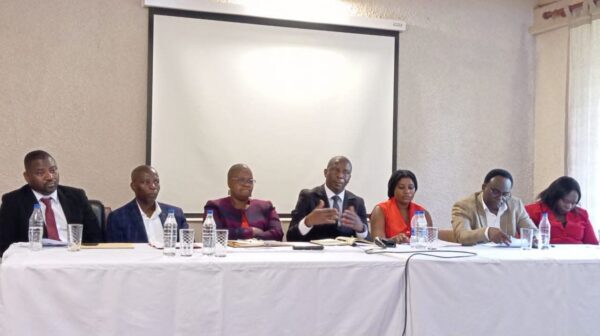
In a joint statement released in Lilongwe on Thursday, the organisations acknowledged that government has released K85.5 billion to 30 of the 36 local councils for advance payments to contractors, alongside other releases for project management, bursaries, sports development and economic empowerment.
The statement was jointly signed by Benedicto Kondowe, National Advocacy Platform (NAP) Chairperson and Joint Coalition Chair; Willy Kambwandira of the Centre for Social Accountability and Transparency; Michael Kaiyatsa, NACA Chairperson and CHRR Executive Director; Bertha Phiri, Malawi Economic Justice Network Executive Director; Lewis Msiyadungu, CCJP National Coordinator; Moses Mkandawire, Nyika Institute Executive Director; Charles Kajoloweka, Youth and Society Executive Director; Mwadidada Theu, Youth Decide Campaign Chairperson; Viwemi Chavula, Centre for Civil Society Strengthening Executive Director; Maggie Kathewera Banda, NGO Gender Coordination Network Chairperson; and Ernest Wilford Wyson, Church and Society President.
The CSOs argued that the figure released so far is negligible against the total envelope.
“While these releases are welcome, the pace of disbursement against the approximately K1.3 trillion earmarked for CDF is deeply concerning. As the financial year progresses and the rainy season approaches, the implementation window is rapidly narrowing,” reads the statement.
“At the current pace, we fear that even half of the earmarked resources may not be disbursed in time for meaningful implementation. This would be more than an absorption problem: it would represent lost development and defeat the very purpose of the Reformed CDF.”
The CSOs said the stakes could not be higher. Under the 2026 CDF Guidelines, 72 percent of CDF resources are reserved for community development projects — translating to approximately K3.6 billion per constituency for classrooms, health facilities, water systems and roads.
“Failure to release and utilise these resources means classrooms not built, health and water infrastructure delayed, roads unattended and other community priorities are deferred. A budget allocation delivers no development until it reaches communities and produces results,” they argued.
The coalition also raised alarm over six local councils that have failed to access the latest project resources because they have not met the required accountability conditions.
While insisting that conditions should not be waived, the organisations said government cannot afford to abandon those councils.
They recalled their earlier warning in the Joint CSO Statement on the 2026 CDF Guidelines of 19 April 2026 that performance-based disbursement, if not carefully implemented, could “disadvantage already under-capacitated Local Authorities, thereby entrenching inequalities in development outcomes across constituencies.”
“Government must therefore urgently provide targeted, time-bound support to enable these councils to comply. Communities should not become collateral victims of correctable institutional weaknesses,” the statement says.
Beyond the technical delays, the CSOs framed the crisis as a democratic failure. When Parliament appropriates substantial resources for local development but those resources are not released and translated into services, they argued, the link between public commitments, approved budgets and delivery to citizens is broken.
“Persistent failure to operationalise duly appropriated development resources would undermine electoral accountability. Citizens must be able to judge public institutions not by promises and allocations, but by whether approved resources actually deliver development,” the statement reads.
The statement also wades into the growing controversy over who should preside over CDF project launches and site handovers, with reports of political interference in some districts.
The organisations pointed to Guideline 10.2.2 on Project Launch and Site Handover, which they describe as unequivocal: a site handover may be presided over by the Council Chairperson or a person duly delegated by the Council Chairperson.
“This is not a discretionary protocol to be altered for convenience; it is part of the governance framework governing CDF implementation and must be observed.
“Any departure risks blurring institutional mandates, weakening accountability and undermining the integrity of the Local Authority governance framework within which the CDF is implemented,” the statement says.
In its call to action, the coalition made six demands: that government publish a clear, time-bound and council-specific disbursement and implementation roadmap showing resources already released, outstanding balances and timelines; that it accelerate the release and implementation of CDF resources before the rainy season significantly disrupts works; that it provide targeted technical support to the six struggling councils; that it ensure strict adherence to mandates prescribed by the Guidelines, including Guideline 10.2.2; that it strengthen transparency by regularly disclosing council-specific information on disbursements, projects, contractors, implementation progress and expenditure; and that accelerated implementation should not compromise procurement integrity, financial management, audit, project quality or anti-corruption safeguards.
“The resources have been appropriated. The communities are waiting. The implementation window is closing. What is required now is urgent delivery within the Guidelines, with transparency and accountability. The promise of the Reformed CDF must translate into visible development on the ground,” the CSOs stated.
They said they remain ready for constructive engagement while reserving the right to pursue appropriate lawful accountability measures to protect public resources.
Follow and Subscribe Nyasa TV :