

DPP continues to abuse public resources: ‘Fertile ground for corruption’
Malawi ruling Democratic Progressive Party (DPP) is in the headlines for bad reasons again, this time over the continue abuse of public resources by among others using government vehicles to ferry its supporters to and from different venues of party functions at the expense of critical activities in the affected institutions, according to published report.
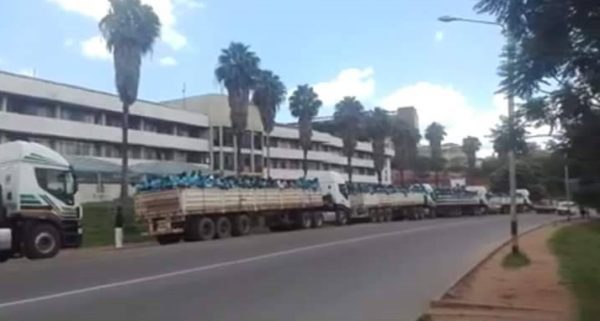
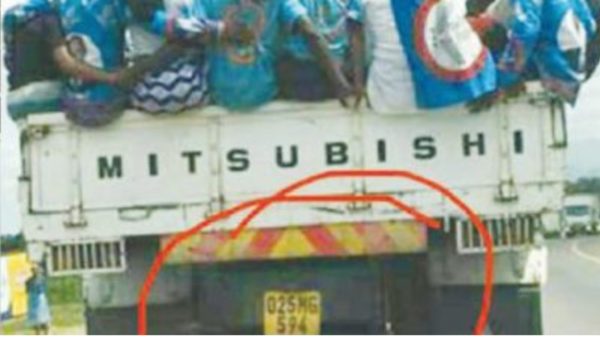
Vehicles with government registration numbers were seen ferrying DPP cadets and other supporters to Chiradzulu where President Peter Mutharika presided over the memorial service in memory of John Chilembwe on January 15 as well as to and from a public rally held in Lunzu – Blantyre last Sunday.
Analysts say there is no clear distinction between a party in power and government activities in Malawi, unlike in established democracies. In Malawi, the party in power is the de facto government.
In Malawi, a party in power calls itself boma (a government). Ordinary Malawians look at abuse of state resources by those in power as acceptable. It is almost impossible to tell a party in power from the government.
Even more serious is the fact that political parties in Malawi are not mandated to declare their sources of funding. This breeds corruption and fosters abuse of public resources. This is not unique to Malawi. But in countries like Botswana, hailed as one of the model democracies on the continent, they at least have a debate on political party funding. Debates are also taking place in Nigeria and South Africa, respectively the continent’s largest and second-largest economies.
Another contributing factor is that after 21 years of multiparty democracy, governance in Malawi remains heavily centralised. Although the country has been independent since 1964, it only became a democracy in 1994.
Until then, it had been a one-party state decreed by its first post-colonial leader Kamuzu Banda, who banned political parties. He became president for life in 1971. Since 1994, the country has had local government representation for only six years – from 1999 to 2004 and from 2014 to now.
The central government has been reluctant to relinquish some of its powers. The president makes even the smallest of decisions and undertakes mundane tasks that should be reserved for line ministries. This encourages a system of patronage.
Lastly, government contracts, tenders and board memberships all go to sympathisers of the party in power and not necessarily to the best bidder or the most competent applicant. Government sympathisers or ruling party members get contracts regardless of their levels of competence.
This unfairly benefits the incumbents and weakens opposition parties. Businesspeople are afraid of funding opposition parties because they could lose state contracts and other business opportunities.
However, both Government spokesperson Nicholas Dausi and DPP secretary general Greselder Jeffery denied seeing any government vehicle ferrying DPP supporters.
Political commentator Mustafa Hussein in a local newspaper interview said the DPP was wrong to use government resources for party functions and urged the party to stop using public resources for partisan interests.
Hussein commented on a story that four people were left stranded at Nkhotakota District Hospital as a hospital truck was on an errand ferrying DPP members to Kamuzu International Airport in Lilongwe to see off President Peter Mutharika as he left for the United States of America.
Government departments and agencies in Malawi continue to face critical shortage of resources amid budget constraint and such abuse adds more pressure to the already scarce resources.
Follow and Subscribe Nyasa TV :