

Finance Minister Mwanamvekha: Dedza border is a “strategic revenue point” — but smuggling and porous borders remain a headache
Minister of Finance, Economic Planning and Decentralisation Joseph Mwanamvekha has described the Dedza One Stop Border Post as one of Malawi’s most strategic revenue-generating points, following a hands-on inspection visit to the facility.
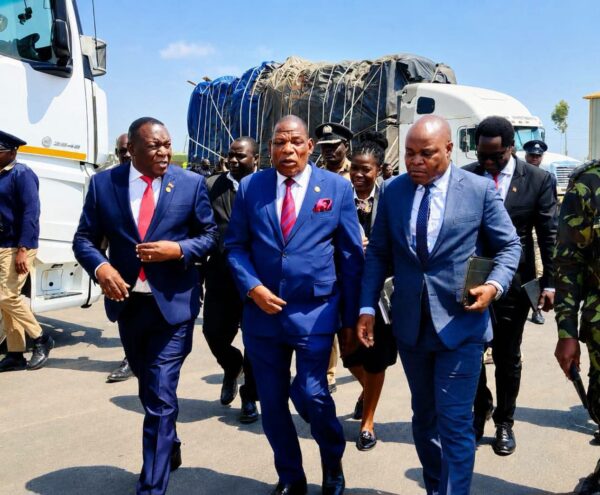
Speaking during his tour, Mwanamvekha said the vast majority of goods passing through Dedza are destined for Lilongwe, Mzuzu, Zambia and other neighbouring countries, underlining the border’s crucial role in Malawi’s trade network.
He noted that government has made significant investment in the border’s infrastructure and used the visit to assess both customs and domestic revenue performance, while gaining first-hand insight into the operational challenges facing staff on the ground.
According to the minister, Dedza has already met its revenue target for the period April to August 2026 — but he insisted there remains significant room for growth, given the sheer volume of trade flowing through the post.
“We expect more from Dedza border compared to other border posts,” he said.
Mwanamvekha highlighted that Malawi’s Central Region serves as the country’s production hub for major cash crops including soya, groundnuts and tobacco, all of which are exported via Dedza, making the border post critical to national revenue collection.
However, he identified smuggling as one of the biggest challenges undermining revenue collection at the facility, noting that the porous nature of Malawi’s borders makes it dangerously easy for goods to evade official channels entirely.
“Other challenges raised include inadequate staffing and lack of equipment needed to facilitate smooth and effective operations at the facility,” he explained.
The minister stressed the need for greater integrity among both Malawi Revenue Authority (MRA) officers and traders, urging customs officials to ensure all goods passing through the border are properly assessed so that owners pay the taxes required of them.
“We want to make sure that taxpayers should be able to pay what is required, we should avoid under-declarations, everyone has to pay,” he said, clarifying that government’s aim is not to punish taxpayers, but rather to ensure fairness and full compliance across the board.
Mwanamvekha described the visit as a success, saying it allowed government to assess performance, understand challenges firsthand, and agree on strategies to grow revenue collection at the border going forward.
He said tackling smuggling, boosting staffing levels and properly equipping officers would be key to unlocking Dedza’s full potential as a revenue driver for the country.
Dedza Domestic Taxes Station Manager Joseph Mkandawire assured government that the station remains on track to meet its revenue targets for September 2026 and for the remainder of the financial year ending March 2027.
Mkandawire said performance so far had been broadly positive, with the station meeting its target in the first quarter and recording only a small deficit in the second quarter, which is expected to be absorbed by the earlier surplus.
He did, however, flag several challenges affecting tax collection, including inadequate computers, persistent network problems and low compliance levels among taxpayers, noting that most businesses in Dedza are small and medium enterprises with limited understanding of their tax obligations.
“To address this, the station is rolling out outreach programs to trading centres such as Kasiya, Golomoti, Mayani and Mua to educate people on tax obligations.
“Through these outreach programs we are seeing a big change in compliance among our taxpayers,” he explained.
Follow and Subscribe Nyasa TV :