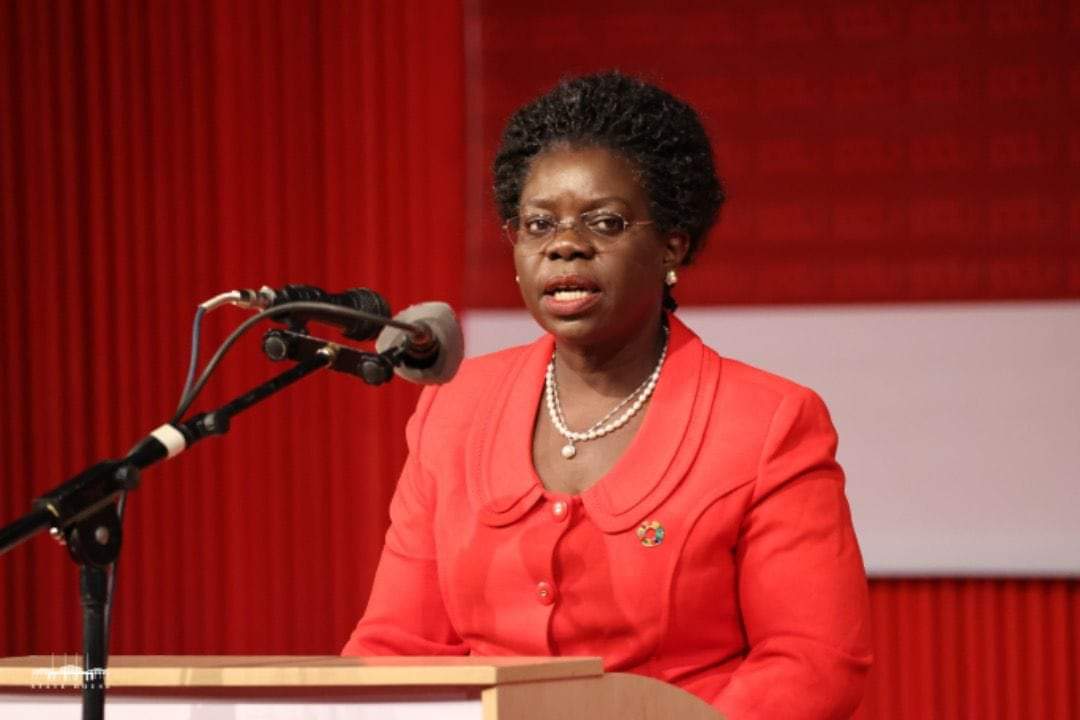
A dramatic and potentially scandalous turn has emerged in Parliament, where suspended Public Service Pension Trust Fund principal officer George Jim has admitted that powerful external pressure—linked directly to former Secretary to the President and Cabinet Colleen Zamba—forced him to fast-track the controversial purchase of the Amaryllis Hotel.
Former SPC Zamba: Implicated in the Amyrillis Deal
Appearing before the Public Accounts Committee (PAC) in Lilongwe, Jim painted a picture of a transaction driven not by institutional processes, but by what he described as an “invisible hand” operating from high-level government offices.
At the centre of the storm is the K128.7 billion acquisition of the luxury hotel—an amount that has shocked lawmakers, given that a July 2023 valuation by Knight Frank placed the property at just K47 billion.
In tense exchanges with MPs, Jim admitted that he issued commitment letters authorising the deal on March 7 and March 18, 2024—despite the absence of board approval.
His explanation was blunt and damning.
“There was the invisible hand of external pressures. The letter was written under duress from the office.”
Jim directly linked this pressure to Colleen Zamba, revealing that she persistently pushed for the deal to be expedited.
Members of Parliament heard that the directives came immediately after high-level meetings and were treated as urgent instructions that could not be ignored.
The committee also heard that Chizaso Nyirongo, Director of Legal Services in the Office of the President and Cabinet (OPC), was actively involved during the process.
According to testimony, both Zamba and Nyirongo were in direct communication with the seller and the pension fund’s secretariat—raising serious concerns about possible interference in what should have been an independent investment decision.
MPs are now probing whether these interactions effectively manufactured contractual obligations that did not formally exist, thereby cornering the pension fund into proceeding with the transaction.
In a striking political contrast, Jim told the committee he did not face similar pressure under the Democratic Progressive Party (DPP).
When pressed to identify any figure within the DPP who exerted influence comparable to Zamba’s, Jim was categorical: There was no one he could liken to her.
This admission has intensified scrutiny on the role of senior officials during the previous administration, suggesting that the push for the deal may have been unusually centralised and forceful.
At the heart of the inquiry is a troubling question: why did a public institution proceed with a multibillion-kwacha transaction without board approval?
Jim’s testimony suggests the answer lies in a breakdown of governance, where formal structures were overridden by informal power.
MPs are now zeroing in on whether the pension fund was effectively hijacked by external actors, turning it into a vehicle for executing decisions made elsewhere.
PAC Chairperson Steven Malondera has confirmed that Attorney General Frank Mbeta is scheduled to appear before the committee, a move expected to deepen the legal and constitutional dimensions of the scandal.
This is no longer just about an overpriced hotel. It is about whether senior government officials abused their positions to pressure a public pension fund into committing K128.7 billion of contributors’ money—without proper oversight, without board consent, and under what the principal officer himself describes as duress.
If Jim’s claims hold, the Amaryllis transaction could become one of the most serious cases of executive interference in public financial management in recent years—one that may carry legal, political, and institutional consequences far beyond the walls of Parliament.