

Golden Harvest, Empty Pockets: How Tobacco Traps Malawi’s Farmers in Endless Poverty
Tobacco farming in Malawi is a gilded prison—promising wealth while silently ensnaring smallholder farmers in an unforgiving cycle of debt and exploitation. The leaf that powers Malawi’s economy enriches multinational corporations, yet leaves the very hands that cultivate it in deepening poverty.
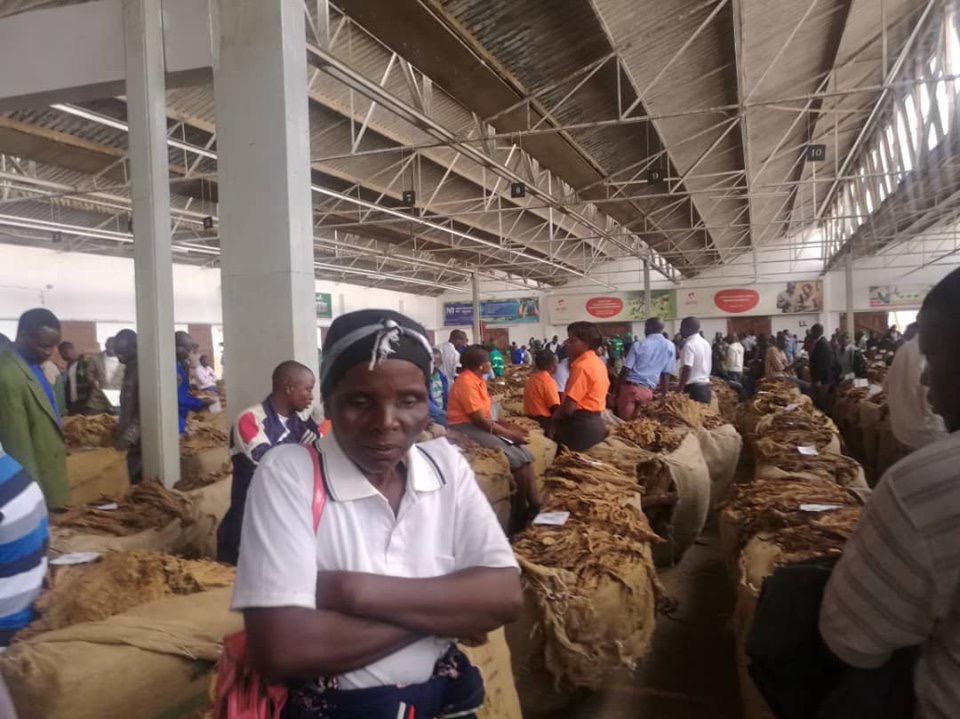
For over four decades, tobacco has been Malawi’s economic backbone—its so-called “green gold.” Yet, the 95% of producers who are smallholder farmers have seen little of that wealth. They are pawns in a rigged game, where contracts, loans, and corporate deceit strip them of agency and trap them in generational poverty.
A 2024 investigation by the Sustainable Development Initiative (SDI), in partnership with global tobacco watchdog STOP, has laid bare the sinister machinery behind Malawi’s tobacco industry. The February 2025 report, “Sowing the Status Quo: How Crop Diversification Is Failing Tobacco Farmers in Malawi,” exposes how tobacco companies use sham crop diversification programs to tighten their grip on farmers rather than liberate them.
The Debt Trap
Tobacco companies present contracts as partnerships, but they are chains disguised as lifelines. These contracts lock farmers into loans for seeds, fertilizers, and pesticides—debts that must be repaid with tobacco yields. What’s sold as a win-win arrangement is, in truth, a system designed to extract maximum value from farmers while offering them the bare minimum in return.
“They say it’s a choice, but taking the loan is mandatory. It pulls us deeper into debt we can’t escape,” one farmer from Mchinji told SDI investigators.
Even when farmers agree to grow other crops alongside tobacco, the contracts prioritize tobacco fields—leaving little land or resources for genuine diversification. Worse still, farmers receive no market guarantees for alternative crops like groundnuts or maize. The result is predictable: unsold produce, unpaid loans, and an inevitable return to tobacco contracts.
Diversification or Deception?
Corporate giants like Universal Corp., Pyxus International, British American Tobacco (BAT), and Philip Morris International (PMI) trumpet their crop diversification initiatives as beacons of progress. But the SDI report exposes these schemes as cynical public relations exercises designed to maintain the status quo.
“Our research suggests that tobacco companies oblige farmers to grow other crops without providing a stable market,” said Maynard Nyirenda, Executive Director of SDI. “This means more labour, less income, and deeper reliance on tobacco—while tobacco companies get to claim they’re promoting diversification.”
The same companies funding diversification programs are the ones buying tobacco—creating a conflict of interest that perpetuates dependency rather than breaking it. The report accuses tobacco firms of using front organizations to funnel millions into research institutions, shaping agricultural policies that serve corporate interests at the expense of farmers.
None of the companies responded to requests for interviews.
Health Costs Ignored
The toll on farmers goes beyond financial ruin. Yohane Chikuse from Kasungu has grown tobacco for a decade, hoping to secure a better life for his wife and five children. Instead, he earns barely enough to survive—and suffers from Green Tobacco Sickness, a condition caused by absorbing nicotine through the skin during harvesting.
“I don’t smoke, but I still feel dizzy and nauseous every time I work in the fields,” Chikuse said.
While tobacco companies polish their reputations with glossy CSR reports, the human cost of Malawi’s tobacco industry remains largely hidden—until lawsuits like the one filed in 2020 by Leigh Day, representing over 10,000 Malawian tenant farmers (many of them children) against BAT and Imperial Brands. The case, still ongoing, accuses the companies of profiting from forced and child labor on Malawian farms.
The Government’s Complicity
Malawi’s government is no innocent bystander. President Lazarus Chakwera’s 2020 State of the Nation Address openly endorsed collaboration with tobacco companies to promote crop diversification—a move critics say further entrenched corporate influence.
Ironically, Malawi is a signatory to the World Health Organization’s Framework Convention on Tobacco Control (FCTC), which obliges governments to help farmers transition away from tobacco. Yet, the SDI report argues that the government’s willingness to let tobacco companies lead diversification efforts has sabotaged any meaningful transition.
“By working with tobacco companies, we can help blend other crop types into the farmers’ mix over time,” Chakwera said.
But as long as tobacco corporations are at the helm, the only thing blending into farmers’ fields is more tobacco.
Breaking the Chains
The SDI report makes one thing clear: genuine diversification cannot come from the very companies profiting from farmers’ misery.
It calls for a radical overhaul—demanding that the Malawian government strip tobacco companies of any role in diversification programs and assume full control over helping farmers transition to alternative livelihoods. The report urges investment in infrastructure, extension services, and guaranteed markets for alternative crops.
If Malawi is to escape the chokehold of tobacco, the government must heed the report’s call and learn from countries like Kenya, where the Tobacco-Free Farms initiative has helped farmers shift to food crops with tangible results.
“Shifting away from tobacco won’t happen overnight, but Malawi must act now to start the transition,” the report concludes.
The Exploitation Must End
Tobacco has drained the lifeblood of Malawian farmers for far too long. Behind every exported kilogramme of tobacco lies a story of debt, disease, and dashed hopes. The global decline in cigarette consumption presents a chance to break the cycle—but only if the government seizes control of diversification and prioritizes the wellbeing of farmers over corporate profits.
If Malawi’s leaders fail to act, they will not only betray the farmers who have toiled for generations but condemn another generation to poverty.
The golden leaf has lined the pockets of multinational giants long enough. It’s time to unshackle the hands that grow it.
Follow and Subscribe Nyasa TV :