

The Poverty-Industrial Complex: How NGOs and Journalists Profit from Misery
About two decades ago, as a fresh-faced cub reporter at one of the country’s two print media giants, I was the newsroom equivalent of a paperweight—of little consequence, mostly ignored, and occasionally useful. My editors, in their infinite wisdom, assigned me a role that required neither talent nor influence: the designated NGO correspondent.
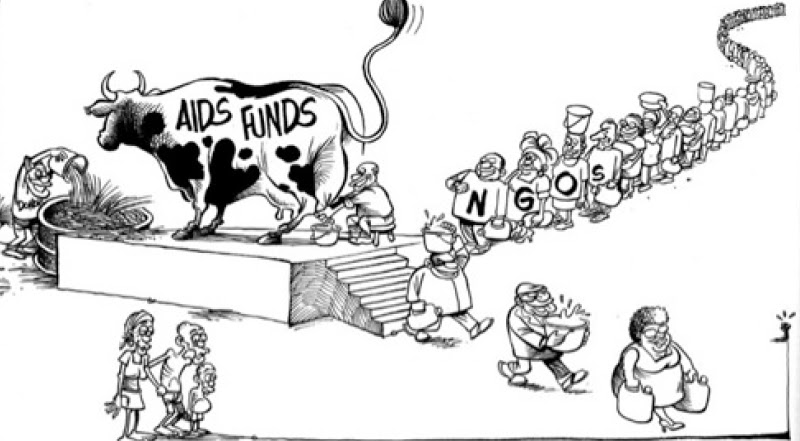
This meant I was perpetually on call, ready to hop onto a dusty Land Cruiser and traverse the country, documenting glowing success stories (only the glowing ones) for the newspaper’s features page. The NGOs, in turn, got free publicity, donors got their warm fuzzies, and I got a modest per diem, which I promptly converted into weekend survival funds. A symbiotic relationship, if ever there was one.
It was during these excursions that a new buzzword wormed its way into my lexicon: holistic approach.
This phrase had no clear proprietor in the NGO sector, yet it was everywhere—adorning PowerPoint slides, peppering grant proposals, and falling from the lips of every development worker with a pulse. It was meant to signify a comprehensive, all-encompassing strategy that addressed every facet of human existence—from health and education to sanitation and “empowerment.”
For clarity, the quasi-dictionary installed on my laptop defines a holistic approach as the act of considering something in its entirety rather than in isolated parts. Sounds noble, doesn’t it?
But for most NGOs, holistic approach was little more than a sophisticated scam—a sugar-coated lie wrapped in donor-friendly jargon. It meant building a well, distributing mosquito nets, and wrapping it up with a half-day sensitization workshop on the dangers of open defecation. Poverty cured—at least on paper.
Manufacturing Hope, Selling Misery
The harsh truth is that the stories I churned out were little more than glorified PR pieces—propaganda masquerading as journalism. The projects were never interrogated. Their sustainability was never questioned. Their real impact? Left buried beneath layers of donor-pleasing reports and flowery language.

And I wasn’t alone.
Even today, walk into any newsroom on a Friday afternoon and you’ll hear the same code whispered: “Kodi pali assignment?”—a euphemism for a paid NGO trip, complete with a feel-good feature and a guaranteed per diem. By Sunday or Monday, the newspapers will be flooded with chipondamtengo stories—those saccharine NGO-funded features that uplift donors while blinding the nation to the slow-motion disaster unfolding beneath the surface.
The Unholy Alliance: Journalists and NGOs
This is the unspoken pact between the media and the NGO sector—a mutually beneficial relationship built on deception.
Journalists pocket their allowances. NGOs secure their donor funding. The media gets a few “positive” stories to fill their pages. And the villagers? They remain trapped in the same grinding poverty that has plagued them for generations.
Meanwhile, the true rot festers beneath the surface.
Reports of corruption within the NGO sector are whispered behind closed doors, but rarely make it to print. When they do, they are treated as footnotes—devoid of the same fiery outrage that accompanies government scandals. But why? Is it because these NGOs are seen as the benevolent saviours of the poor? Or is it because too many editors fear biting the hand that feeds them?
What Has 40 Years of NGOs Achieved?
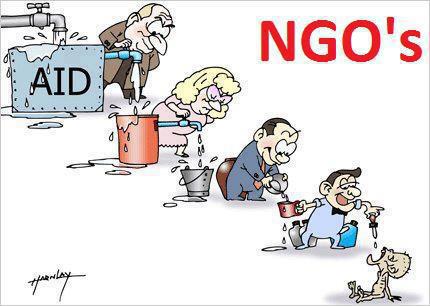
Malawi has hosted NGOs for over four decades, with billions of dollars poured into poverty eradication. Yet the Global Poverty Index shows Malawi is poorer today than it was twenty years ago.
Where is the tangible evidence of impact?
District Commissioners in Ntchisi, Rumphi, and Balaka have consistently raised concerns about the NGO clustering syndrome—where dozens of NGOs concentrate in one area, creating pockets of development while entire regions remain forgotten. It’s development by tokenism—designed not to transform lives, but to generate photogenic success stories for donor reports.
NGOs cry that they are merely “complementing government efforts”—but if that’s the case, why shouldn’t they be subjected to the same scrutiny? If government corruption is a national scandal, why should NGO corruption be a dirty little secret?
Who Will Hold NGOs Accountable?
The time has come for the Malawian media to break this code of silence.
We must rediscover our duty as gatekeepers—not stenographers. We must ask the hard questions: How many NGOs have been held accountable for their failures? How many have been exposed for misallocating resources? How many villages have been left worse off once the donor money dried up and the Land Cruisers vanished?
If the media continues to treat NGOs as untouchable saints, we are not just complicit—we are collaborators in the business of poverty.
It is time to rip the veil off the poverty-industrial complex.
Because if the media won’t ask these questions, then who will?
If the media won’t expose this grand deception, then perhaps it is time for the villagers themselves—the so-called beneficiaries—to become their own journalists, armed with nothing but smartphones and the truth.
Let the NGOs explain themselves. Let them show us the receipts.
Until then, let us not pretend that poverty is anyone’s business—except theirs.
Follow and Subscribe Nyasa TV :