

Health minister admits Malawi facing medicine shortage ‘crisis’; KCH faces 5,000-patient surgical backlog
There is a kind of honesty that only arrives once denial has become impossible, and Malawi’s health system produced two versions of it in the space of a single news cycle this week.

At Kamuzu Central Hospital, it took the form of a number: nearly 5,000 people now waiting for surgery, a queue grown so long that the hospital’s own director general fields daily calls from families asking, in effect, whether grief or desperation can be converted into a shorter wait.
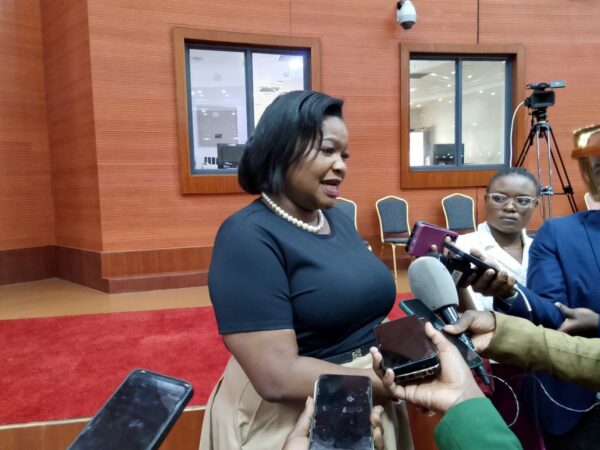
At the Ministry of Health, it took the form of a sentence blunt enough to need no translation: “We have to admit. There are no drugs. It is a crisis.”
Taken separately, each story reads as a familiar strain on a stretched public system. Taken together, they describe something closer to a system running out of the two things medicine cannot function without — capacity and supply — at the same time, for overlapping reasons.
Start with the waiting list. Amos Msekandiana, KCH’s director general, described a situation that has moved past routine overcrowding into something more personal and harder to manage: relatives calling him directly, asking whether a loved one’s name might move a few places up the list.
That is not merely an administrative headache. It is what happens when a referral hospital becomes the only hospital that functions as one — when, as health rights activist Dorothy Ngoma put it, conditions as ordinary as malaria, chest infections and diarrhoea are still finding their way to a central facility meant for complex surgical care, because the district and community hospitals that should be absorbing them cannot.
Ngoma’s point deserves to be taken as the structural diagnosis it is, rather than a passing quote.
A central hospital clogged with conditions that lower-level facilities should be treating is not evidence that KCH is failing; it is evidence that the tiers beneath it are.
Msekandiana’s own proposed remedy — shifting some surgical procedures out to district hospitals, partly to save patients the cost of travelling to Lilongwe at all — is a tacit acknowledgment of the same thing: the fix for an overloaded top of the system is not more capacity at the top, but functioning capacity further down.
In the meantime, there is the Benjamin Mkapa Hospital partnership, a visiting surgical camp from Tanzania working through orthopaedics, neurosurgery, cardiology and more over five days in October.
Cardiologist Kelvin Masava’s account of the preceding week in Mzuzu — 526 patients assessed, 44 surgeries performed — is a genuinely useful contribution, and Bart Kruijsen’s framing of the mission, that more equal access to surgical care makes life “more valuable” in the communities it reaches, is not empty rhetoric.
But it is also, by its nature, a temporary intervention layered onto a permanent shortfall. A camp that arrives for five days cannot be the architecture a 5,000-patient backlog depends on; it can only be the proof, each time it returns, that the backlog is still there.
The medicine shortage runs on a parallel logic, and Minister Madalitso Baloyi’s confrontation with local manufacturers in Blantyre makes the mechanism unusually visible.
Her question to them was almost provocative in its specificity: if the ministry had the money today for a million units of Panado and Aspirin, could they actually deliver? It is the kind of question that exposes where a supply chain’s weak link actually sits — and the answer that came back was not capacity.
Manufacturers said they were holding millions of units in stock already. What they lacked was payment, certainty, and the foreign currency to keep producing at all.
That is the detail worth sitting with. This is not, primarily, a story about Malawi being unable to make or source medicine. It is a story about a government owing money to the companies that can, in a currency environment where those companies then cannot themselves buy the imported raw materials needed to keep making it.
Tawanda Musasa’s appeal — consistent procurement, faster regulatory turnaround, support that outlasts the crisis rather than responding to it — is less a request for charity than a description of what it would take to stop the shortage from becoming cyclical: drugs run low, government scrambles to pay, manufacturers produce what they can, the debt accumulates again, and the shortage returns.
Neither story, read carefully, is really about doctors, nurses or pharmacists falling short. KCH’s staff are recruiting locums and running weekend surgical camps to outpace a queue that keeps growing anyway.
Local manufacturers are sitting on stock they cannot yet get paid to release. The strain, in both cases, is structural and financial before it is clinical — a health system whose people are working at capacity inside a funding and currency environment that keeps moving the ceiling lower.
The minister’s admission was, in that sense, the easy part. The harder test is whether “we have to admit it is a crisis” becomes the sentence that precedes sustained investment, or simply the sentence Malawians will hear again the next time the shelves run bare.
Follow and Subscribe Nyasa TV :