

How George Jim Turned Malawi’s Pension Fortress Into a Theatre of Chaos and Suspected Corruption
For years, the Public Service Pension Trust Fund (PSPTF) sold itself as the guardian of Malawi’s civil servants — a trillion-kwacha fortress protecting the retirement hopes of teachers, nurses, soldiers, police officers and ordinary government workers.
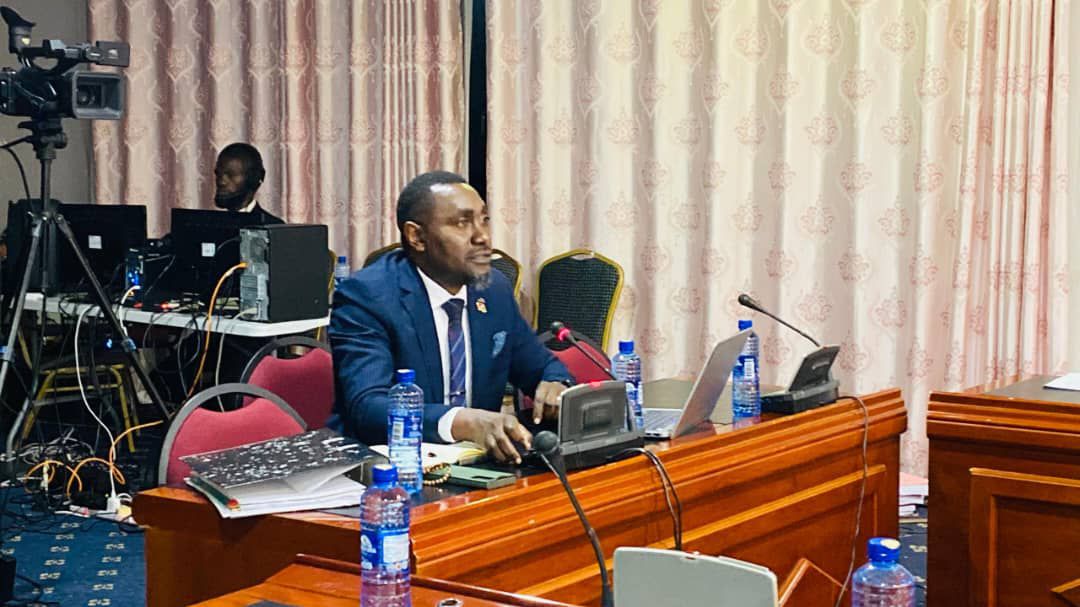
But behind the polished corporate language and glass offices in Lilongwe, investigators are now uncovering what appears to have been one of the most reckless collapses of public financial governance in modern Malawi.
At the centre of the scandal sits George M. Jim, the now-suspended Principal Officer accused of presiding over what regulators and board members describe as deceit, manipulation, illegal expenditure and institutional collapse.
Long before the K127 billion Amaryllis Hotel scandal exploded into public view, the PSPTF was already rotting from within.
Documents and audit findings reviewed by investigators paint a devastating picture: billions spent without oversight, pension records managed on vulnerable Excel spreadsheets, missing member data, manipulated government channels, questionable land transactions and a leadership structure that allegedly operated like a private empire during a thirteen-month governance vacuum.
And throughout that period, George Jim remained the man in charge.
The most explosive revelation is that from October 2024 to June 2025, the Fund operated without a Board of Trustees after government failed to appoint one.
In effect, more than K1.1 trillion belonging to 139,000 public servants was left exposed.
Instead of slowing operations or demanding legal safeguards, the Fund allegedly continued approving massive expenditures under Jim’s authority. During this “shadow period,” about K4.9 billion reportedly went toward hotel construction projects without the statutory oversight required under pension laws.
A confidential Reserve Bank of Malawi audit reportedly concluded that risk management had been “heavily compromised.”
What emerged was not merely administrative incompetence. It was a system dangerously concentrated around one office and one man.
When confronted by trustees during a tense meeting at Sigelege Hotel in Salima in October 2025, Jim allegedly first denied ownership of official correspondence tied to controversial transactions.
According to the Board’s suspension letter, he only changed his position after trustees physically produced documents bearing his signature.
Even then, instead of accepting responsibility, Jim reportedly claimed he had been “coerced” by political operatives linked to the previous administration.
That defence has done little to calm outrage.
Critics say the coercion narrative is now being used as a convenient shield by a senior official who enjoyed enormous unchecked authority while pension governance collapsed around him.
Because the deeper investigators dig, the uglier the picture becomes.
The Fund reportedly failed to produce audited financial statements for four years — from 2021 onward — creating what experts describe as a perfect breeding ground for abuse and concealment.
One land transaction alone exposed shocking discrepancies. PSPTF allegedly purchased land in Lilongwe for K1.4 billion, only for an independent valuation to later estimate its actual value at K937 million.
That is nearly half a billion kwacha potentially evaporated from pensioners’ money.
Meanwhile, the retirement data of 139,000 civil servants was allegedly being managed through ordinary Excel spreadsheets with non-functional backup systems.
More than 1,100 contributors were reportedly missing entirely from the records.
In any functioning pension institution, such failures would trigger immediate resignations, criminal investigations and regulatory intervention.
At PSPTF, the dysfunction allegedly continued for years.
Even more disturbing is the revelation that approximately K11.5 billion in contributions already deducted from workers had not been allocated to their individual pension accounts because of reconciliation failures.
For thousands of public servants, that means the money they sacrificed from their salaries may not even reflect properly in their retirement balances.
While ordinary Malawians worried about survival, those entrusted with their future allegedly played bureaucratic games with their money.
Investigators also believe Jim may have attempted to weaponise state machinery against his own oversight body.
On October 24, 2025, just as the newly appointed Board prepared to scrutinise the Fund’s operations, a letter surfaced from the Ministry of Finance instructing trustees to cancel their meeting.
The Board later accused Jim of soliciting the directive through misrepresentation and using it to intimidate trustees and sabotage investigations into the Fund.
Although the directive was later withdrawn, the incident deepened suspicions that powerful actors inside the institution were desperately trying to stop scrutiny.
Jim, however, reportedly portrayed himself as a whistleblower under siege by politically connected interests.
But for many observers, that defence is collapsing under the weight of the evidence emerging from the forensic audit.
Because this scandal is no longer just about political pressure.
It is about stewardship.
It is about how a trillion-kwacha pension institution allegedly descended into chaos under George Jim’s watch while basic governance systems disappeared.
It is about how pensioners’ money was exposed to questionable investments, accounting silence and operational recklessness.
And above all, it is about trust betrayed.
For the ordinary civil servant in Kasungu, Nsanje, Karonga or Lilongwe, this is not an abstract corporate scandal.
This is school fees.
This is medicine.
This is retirement dignity.
This is the difference between surviving old age and dying in poverty after decades of service to the State.
Now, with a forensic audit underway and pressure mounting for criminal accountability, Malawi is staring at an uncomfortable question:
How did one of the country’s most important financial institutions become so vulnerable under George Jim’s leadership — and who else benefited while pensioners were left exposed?
Follow and Subscribe Nyasa TV :