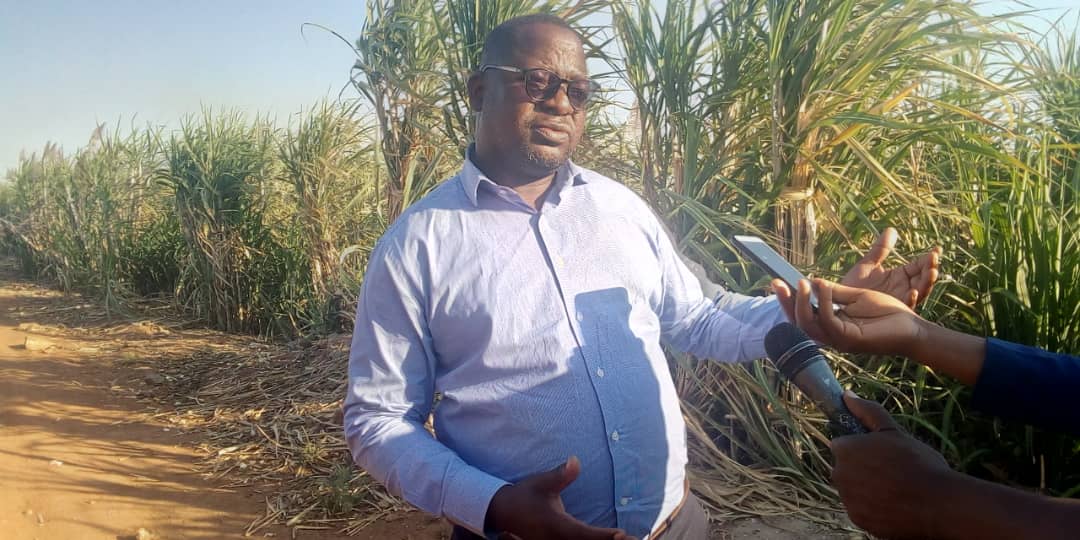
Malawi’s fuel crisis is no longer just an economic story told in statistics and policy statements—it is now a lived, shared struggle, cutting across ordinary citizens and government officials alike. When Information Minister Shadric Namalomba admitted that he personally struggled to find fuel in Zomba over the weekend, it stripped away any remaining distance between leadership and the daily hardships faced by Malawians. In that moment, the crisis stopped being abstract. It became painfully human.
Shadreck Namalomba
Across the country, the familiar but deeply frustrating scenes have returned. Long, winding queues snake through filling stations, tempers flare under the sun, and many leave empty-handed after hours of waiting. Since the weekend, most stations have simply run dry, reinforcing a cycle of disruption that has haunted Malawi for years despite repeated policy shifts and assurances that solutions were in place.
Speaking on Zodiak Broadcasting Station’s Sunrise Malawi programme, Shadric Namalomba did not attempt to downplay the severity of the situation. “The situation is not good because I am also a witness,” he said, recounting his own failed attempt to access fuel in Zomba. It is a rare admission—one that captures the scale of the breakdown more powerfully than any technical briefing could.
Government is now scrambling for a lifeline, turning to external borrowing in a bid to stabilise supplies. Namalomba revealed that authorities are planning to secure $120 million from Afreximbank to finance fuel purchases. But even this effort faces a deeper, more troubling obstacle: suppliers are no longer willing to sell fuel to Malawi on letters of credit.
That refusal signals a serious erosion of confidence. Letters of credit are a standard mechanism in international trade, allowing countries to import essential goods without immediate cash payment. When suppliers begin to reject them, it suggests growing doubts about payment security and financial reliability. In simple terms, Malawi is not just short of fuel—it is struggling to convince suppliers that it can pay for it.
Namalomba attributed part of the crisis to global instability, particularly the ripple effects of conflict in the Middle East. Government, he admitted, underestimated the scale and duration of the disruption. “We thought the war would last a few days, maybe a week,” he said, explaining why authorities delayed adjusting fuel prices despite rising global costs. That miscalculation has proven costly, leaving the country exposed just as global pressures intensified.
Yet analysts argue that external shocks only tell part of the story. Economist Mavin Banda points to deeper structural weaknesses in how Malawi manages fuel procurement and foreign exchange. According to Banda, successive policy changes have failed to resolve the underlying vulnerabilities. He notes that while a government-to-government fuel procurement arrangement once offered some stability, the shift to an open tender system introduced new uncertainties without fully addressing the core challenges.
At the heart of the crisis lies a persistent imbalance: Malawi’s demand for fuel continues to rise—driven in part by changing transport patterns such as increased motorcycle use—while its capacity to generate foreign exchange remains limited. This mismatch places constant strain on supply systems, making shortages not an exception, but an expectation whenever pressure builds.
Even civil society has weighed in. The Public Affairs Committee has criticised the timing of government interventions, arguing that earlier action could have prevented the current breakdown. Their concern echoes a broader sentiment—that the crisis was not entirely unavoidable, but worsened by delayed responses and reactive decision-making.
For now, authorities say the situation could improve within seven days. But such assurances have been given before, often followed by temporary relief and then a relapse into scarcity. What makes this moment different is the visible strain, the admission of personal struggle at the highest levels, and the growing reluctance of international suppliers to extend trust.
The image of a minister unable to find fuel in Zomba is more than symbolic. It is a reflection of a system under stress, where even those in power are not insulated from the consequences. And for millions of Malawians who depend on fuel to move, work, and survive, it is a stark reminder that this is not just a supply problem—it is a national vulnerability that remains unresolved.