

Judge Kenyatta dismisses bid to lift stay on MEC relocation case
The government has suffered another setback in its bid to relocate the Malawi Electoral Commission (MEC) headquarters from Lilongwe to Blantyre, after High Court Judge Kenyatta Nyirenda dismissed an application to lift a stay on judicial review proceedings.
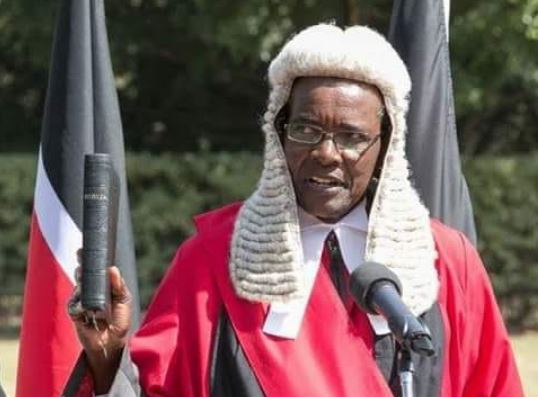
The dismissal blocks the State from immediately seeking to have the judicial review case thrown out – dealing a fresh blow to government efforts to push through the controversial relocation.
The State, represented by Attorney General Frank Mbeta on behalf of Chief Secretary Justin Saidi and Minister of Lands, Housing and Urban Development Chimwemwe Chipungu, had sought an order setting aside the stay in order to apply for the discharge of permission granted for judicial review.
The application followed a June 5 ruling in which Nyirenda granted the opposition Malawi Congress Party (MCP) and three of its legislators an injunction restraining MEC’s relocation to Blantyre. He also referred the matter to the Chief Justice for certification over constitutional issues arising from the case.
Nyirenda subsequently stayed the judicial review proceedings pending the Chief Justice’s decision on certification. If certified, the proceedings will remain stayed until a High Court panel is constituted to determine the constitutional issues.
In his ruling on Thursday, Nyirenda said the issues raised by MCP and its legislators require determination through judicial review, which provides the necessary framework for fully addressing the constitutional questions at stake.
He said the matters could not properly be disposed of through affidavit evidence or summary adjudication, warning that doing so could trivialise issues of genuine constitutional importance and undermine the integrity of constitutional adjudication.
‘Judicial review is the only appropriate avenue through which these questions can be examined substantively, transparently and in accordance with constitutional principles,’ he ruled.
Mbeta had argued that the stay was not sought by any party and was not the subject of arguments before the court. He further argued that the stay of execution and interlocutory injunction were granted without notice to the defendants and on the basis of the claimants’ ex-parte evidence.
Mbeta said the defendants intended to apply for discharge of the leave granted for judicial review and to set aside the interlocutory orders, but could not pursue the applications while the stay remained in force.
In a robust rebuttal, MCP lawyer George Kadzipatike argued that his clients are stakeholders in electoral processes conducted by MEC, and that decisions affecting the commission’s independence could negatively affect their rights and legitimate expectations.
He argued the President had no authority to dictate where the independent constitutional body should operate from.
Nyirenda said he had found an arguable case suitable for judicial review, with the issues at stake including whether the President has constitutional authority to relocate an independent constitutional commission through an Executive Order, whether such orders are a recognised source of executive power, and whether the Executive can determine where MEC maintains its headquarters.
The court will also consider whether implementation of the order violates Sections 75 and 76 of the Constitution, and whether Saidi and Chipungu had a duty to refuse an allegedly unconstitutional directive.
The legal battle comes as MEC grapples with mounting operational challenges, after being forced to postpone fresh parliamentary elections in Nsanje South and Mangochi East – originally scheduled for September 29, 2026 – due to a lack of electoral materials.
MEC said continued sealing of its Njewa warehouse in Lilongwe, over unpaid rental fees, had made critical electoral materials inaccessible – further complicating the commission’s operations amid the ongoing relocation row.
Follow and Subscribe Nyasa TV :