

Legal Expert: President Broke Protocol, Not the Constitution, by Sending Minister Ahead of Vice Presidents
A prominent legal expert has argued that while the President’s decision to appoint a Cabinet minister to represent him at an official function attended by both the First and Second Vice Presidents may have violated political protocol and public expectations, it did not breach Malawi’s Constitution.
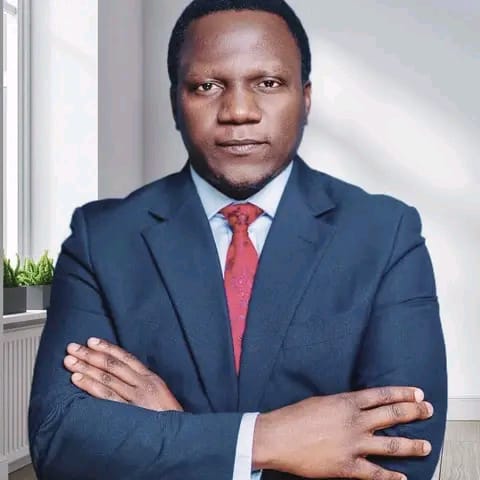
In a strongly worded legal opinion aimed at clarifying an increasingly heated public debate, constitutional lawyer Bright Theu said the controversy has been clouded by misconceptions, insisting that the law gives the President broad powers to delegate official functions.
“The answer is no,” Theu said when addressing claims that the President acted unlawfully. “The President did not contravene the Constitution by delegating a minister to represent him.”
According to Theu, Section 89(6) of the Constitution expressly empowers the President to delegate presidential powers and functions to a Cabinet minister or another government official, such as a Principal Secretary, Director or District Commissioner.
He argued that the legality of the delegation should not be judged by the absence of the Vice President from the constitutional provision. Instead, he maintained that the Constitution deliberately grants the President flexibility in assigning duties to members of government.
The legal scholar also dismissed claims that Vice Presidents have no constitutionally protected responsibilities. He pointed out that the Constitution specifically requires the Vice President to preside over Cabinet meetings in the President’s temporary absence, describing that as an example of a function that cannot legally be reassigned to someone else.
However, Theu drew a sharp distinction between constitutional legality and political convention.
He said the decision to elevate a minister as guest of honour in the presence of the country’s two Vice Presidents appears to undermine long-established protocol and the perceived hierarchy within the executive branch.
“It creates the unusual spectacle of a Vice President standing to welcome or usher away a minister acting as guest of honour,” he argued, suggesting that such scenes fuel perceptions of disorder and internal divisions within government.
Theu warned that while protocol does not carry the force of constitutional law, disregarding it can have significant political consequences by reinforcing narratives of confusion and disunity.
His intervention comes as public debate continues over the symbolism of senior government officials’ roles at state functions, with critics questioning whether such decisions diminish the stature of the Vice President’s office.
Ultimately, Theu’s position is that protocol and political optics, however important, cannot override the constitutional authority vested in the President.
“Protocol does not amend the Constitution,” he argued, maintaining that the President’s legal power to delegate functions remains intact even where the resulting optics generate controversy.
Follow and Subscribe Nyasa TV :