

Maize Wars in MCP: Mkaka Says ‘Not a Cash Crop’, Ayuba James Calls It ‘Lazy Thinking’
A fierce ideological battle has erupted within the Malawi Congress Party (MCP) over the future of maize, laying bare deep divisions in how the former ruling party understands food security, markets, and economic policy.
At the centre of the storm are two MCP legislators with radically different visions: Eisenhower Mkaka, who has publicly argued that maize should no longer be treated as a cash crop, and Silvester Ayuba James, who has dismissed that position as “laziness in thinking, drought of ideas and failure of leadership.”
The debate, now spilling into public discourse, goes far beyond maize. It strikes at the heart of Malawi’s chronic policy failures on agriculture, markets, exports, and hunger.
Mkaka: Maize Is for Food, Not Business
Mkaka’s position is blunt and restrictive.
“For all practical and theoretical purposes and intents, let’s not make maize a cash crop except for value addition,” Mkaka said.
In essence, Mkaka argues that maize should primarily serve domestic consumption, with limited commercial use confined to processing and value chains — a view that resonates with Malawi’s long-standing treatment of maize as a political crop rather than an economic one.
Ayuba James: ‘This Thinking Is Exactly Why Malawi Is Poor’
But Ayuba James has launched a scathing counter-attack, accusing leaders like Mkaka of entrenching policy paralysis and economic stagnation.
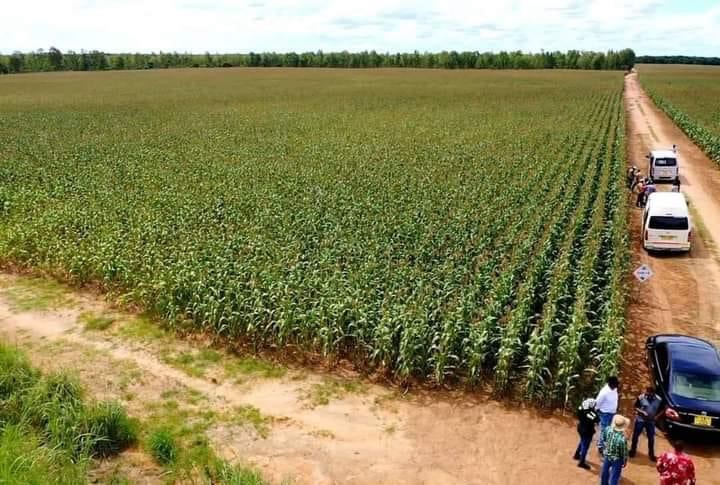
Drawing from real-world examples, Ayuba James narrated how a Chinese farmer in Chimwamkango, Mchinji, produces maize three times a year under irrigation and exports it to China via Beira, earning millions in US dollars — quietly proving that maize is not just food, but a serious export commodity.
He then revealed a far more damning episode. Around 2016, Ayuba James says Malawi had a government-to-government deal to supply maize worth hundreds of millions of dollars to South Sudan, but the deal collapsed due to political greed and incompetence.
“Politicians kept the information to themselves. Instead of helping farmers export, they wanted to steal from them and make a killing,” he said.
According to Ayuba James, while South Sudan sat with dollars in banks waiting for Malawian maize, local farmers in the Central and Northern regions were rotting with mountains of unsold maize, as the government failed to organise logistics, markets, or political support.
Today, the irony is brutal: Malawi is spending millions of dollars importing maize from Zambia, while surplus maize exists locally.
“Zambia has cashed in on us, when there is maize here at home,” Ayuba James said.
Beyond Nsima: A Radical Rethink of Food Security
Ayuba James also challenged what he called Malawi’s “nsima mentality” — the belief that maize is the only legitimate staple food.
He argued that hunger could be dramatically reduced if the state deliberately promoted sorghum (mapira) in drought-prone areas like Golomoti, Bwanje, Balaka, Chikwawa and Nsanje, where it grows without fertilizer and produces healthier and tastier nsima.
In lakeshore districts such as Nkhotakota, Nkhata Bay and Karonga, he said cassava already dominates, and could easily replace maize if supported.
This, he argued, would free maize producers to export and commercialise, while food security is maintained through diversified staples.
“Arguing that maize should no longer be a cash crop is lack of vision. It is laziness in thinking,” he concluded.
Two Visions, One Party, No Policy
The clash exposes a deeper crisis: Malawi still has no coherent agricultural doctrine. Mkaka’s position reflects Malawi’s traditional command-style thinking — maize as a politically protected staple, controlled through ADMARC, subsidies and bans.
Ayuba James represents a market-driven, export-oriented approach — maize as a commercial asset, integrated into regional and global trade. One vision protects scarcity. The other creates markets. One treats farmers as recipients of policy. The other treats them as economic actors.
The Bigger Question
As climate shocks worsen, fertilizer prices rise, and food imports drain foreign reserves, the debate now confronting MCP is unavoidable: Is maize a political symbol to be rationed, or a commodity to be exploited for national wealth?
For now, the ruling party speaks with two contradictory voices — and Malawi remains trapped between hunger economics and export potential, paying the price for a debate it should have resolved decades ago.
Follow and Subscribe Nyasa TV :