

Malawi currency swap or sovereign debt?
The other day (Nation, 12 February 2015) the Minister of Finance Goodall Gondwe was quoted to have said that one of the reasons for the Kwacha’s appreciation in value was a currency swap deal that Treasury had done with the PTA Bank. The deal worth $250 million (about K18 Billion) was not according to the Minister an indication that Malaŵi had borrowed from the PTA Bank. It was simply a currency swap and that ‘nobody will lose out’.
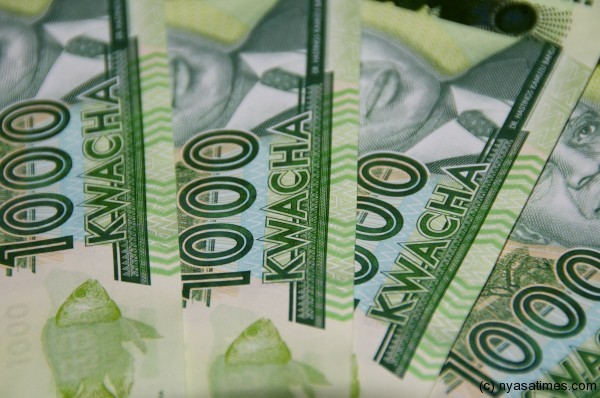
The PTA Bank paid to the Reserve Bank in US Dollars on behalf of Treasury. This immediately raised some eyebrows amongst financial and economic experts who mostly agreed that this was not a currency swap but rather an issue of sovereign debt.
Currency Swap
A currency swap involves the exchange of principal and interest of a loan in one currency for the same in another currency. It is therefore essentially a foreign exchange agreement of a loan in one currency for equivalent aspects of an equal loan in another currency.
So let us apply this to our current situation in which the Minister is quoted to have said that we have entered into a currency swap with the PTA Bank. This would mean that the PTA Bank needed Kwachas and we needed Dollars under a loan deal arrangement. We then went into a deal to pay in Kwachas for Dollars in a reciprocal loan arrangement with an agreed interest rate for a set period. Is this what happened here?
Sovereign Debt
Sovereign debt refers to bonds (IOUs) issued by governments in a foreign currency. Sovereign debt is guarantee by the state. Debt from developing countries is usually perceived as riskier and to hedge against risks associated with it, may be sold only if the returns (dividends) are much higher. The term junk bonds is sometimes used to bonds considered of non-investment grade.
Analysis of the Minister’s words
Looking at what happened here, there seems to be confusion of corporate finance principles. The agreement with PTA Bank to provide $250 million is clearly a loan, involving sovereign debt. We are selling our national debt to the PTA Bank. The second and rather contradictory aspect is that Malaŵi and the PTA Bank have agreed to sell each other something.
PTA Bank has agreed to buy some unnamed Malaŵi assets for the price of $250 million. RBM is said to have bought the Dollars and PTA to have bought our assets. If this ‘asset’ is not sovereign debt, then what asset have we sold to the PTA Bank? If it is sovereign debt then there is no currency swap and the issue is settled. But even if it was not sovereign debt, would it still qualify as currency swap?
Further thoughts
Looking at what happened it is clear that this is not a currency swap. We have sold sovereign debt to the PTA Bank and there is need to disclose the full deal in terms of maturity and the interest (yield) that is payable and when this is payable. The agreement is not just a financial one, it is a legal one too. Legal rights and obligation arise from it. Considering that the Minister of Finance is an expert in finance, I can only conclude that he has been misquoted.
- The author is a lecturer in Corporate Finance Law
This is an abridged version. To read the full article visit: http://sunduzwayo.blogspot.co.uk/2015/02/currency-swap-or-sovereign-debt.html
Follow and Subscribe Nyasa TV :